Downloads
Solutions for enabling IT/OT convergence

What does this application do?
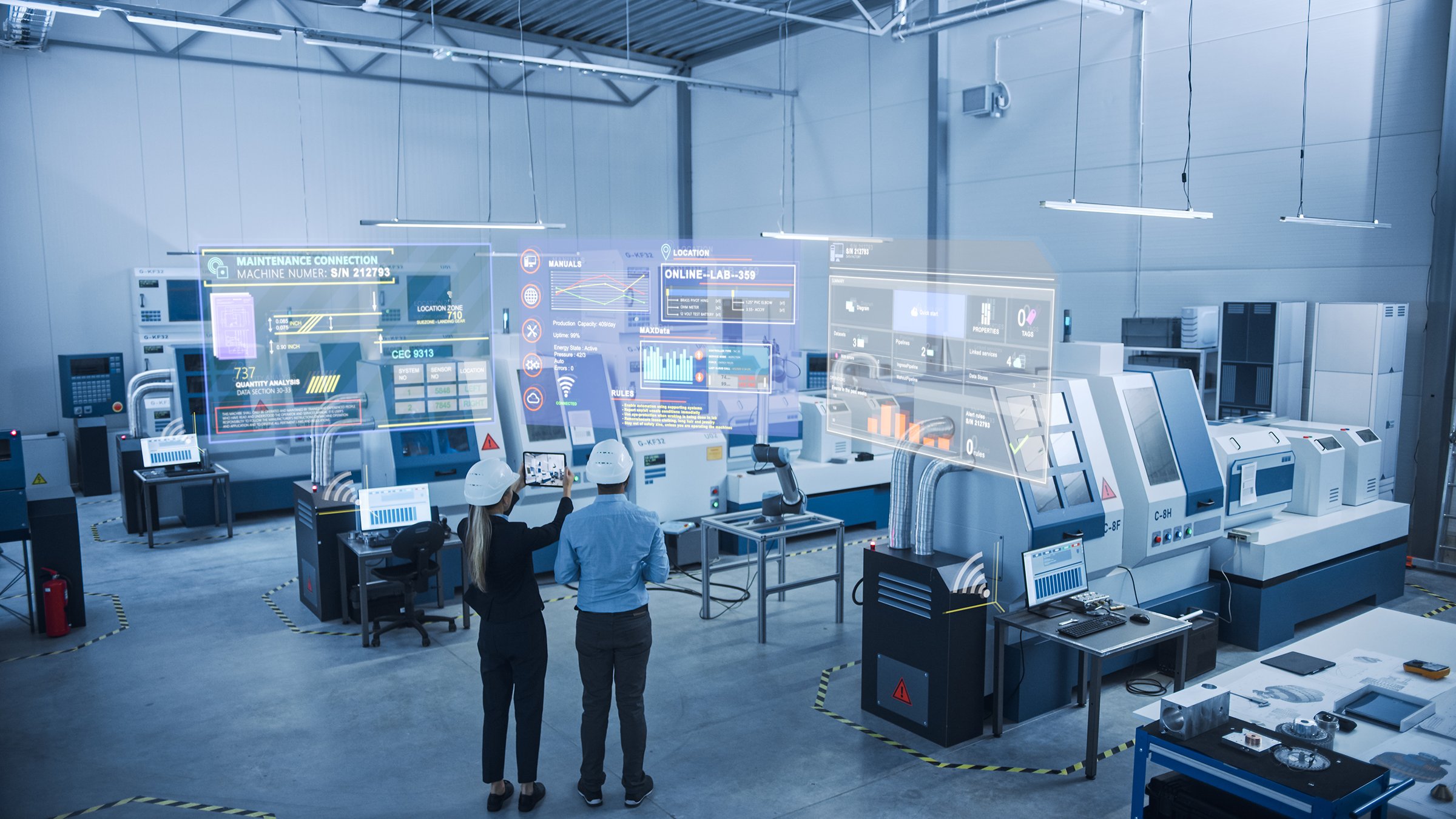
OT/IT Convergence Solution provides the right foundation to drive edge-to-cloud integration at the enterprise level to accelerate IIoT digital transformation. It simplifies and automates collection, contextualization, and organization of industrial equipment data across machines, devices and automation assets at the plant floor while enabling high data integrity.
This is especially useful when working with operational data locked in disparate devices or siloed in systems of record. High-speed, contextualized OT data from controllers is discovered and packaged automatically in a logical, common information model that control engineers can configure. This common information model speeds setup for similar assembly lines and can be enriched with third-party data. It can be mapped to on-prem or cloud applications and easily consumed. Solution unifies data from industrial sources and control or automation systems.
It integrates with a variety of cloud, IIoT, and big data applications including ThingWorx, Microsoft Azure IoT Hub, Microsoft SQL and more. It also uses OPC-DA to access KEPServer Enterprise data for third party connectivity. With access to OT contextualized data, IT applications can help users to extract equipment insights across the enterprise: Quickly, easily and proactively identify process and production inefficiencies and product defects; allowing to focus on using the data to detect and resolve equipment issues and improve production output.
General Features
The OT/IT convergence solution provides the following features:
- Simplifies and automates industrial data collection, contextualization and organization across equipment, devices and automation assets.
- Unlocks key industrial performance insights from OT data.
- Enables high IT data integrity.
- Integrates with a variety of cloud, IIoT and big data applications.
- Reduces the need for IT technical expertise.
- Automatic creation of information, application content and databases.
- Organize large volume of high-speed data with OT-based information models.
- Connect disparate data sources, add application context and enable contextual data delivery.
Advantages
Supports OT/IT collaboration by empowering control engineers to identify the most appropriate data sets and send information directly to the IT layer.
Limitations/Disadvantages
- Licensed software required, subscription only.
- License tag counts are not additive.
- Tags are counted when information models are deployed, a tag used in multiple applications on the same gateway is counted only once.
Please note: You will need to agree to the Terms & Conditions for each download.

Need Help?
If you need help with an application or have feedback from the Innovation Center, please contact us.
Is this application relevant to me?
Convergence solutions are suitable for OT engineers interested in automate the contextualization of the operational data as close to the source before populating the information at the IT level for other analytical applications. Typical use case examples:
- Data collection and contextualization.
- Create organization structure aligned with intended data analysis utilization whether via information modeling alone or smart objects and information modeling combined.
- Perform intended data analysis with other analytics software.
Application areas
Food and Beverage, Automotive and Tire, Manufacturing, etc.
Benefits of applications with OT/IT convergence solutions:
- Baseline benefit comes from the information model and ability to contextualize to the asset hierarchy.
- For users that have a Rockwell Automation Integrated Architecture system, additional benefit is realized by adding Smart Objects configuration properties and achieving synchronized data collection at high resolutions.
- The data collection and organization capabilities provide value by empowering OT collaboration with IT and also provides the ability to egress contextualized data sets for big data analysis projects.
- Improve engineering efficiency for project deployment and accessibility to data.
How can I make it work?Requirements: products, tools, prior knowledge.
Hardware:
- PowerFlex 525
- CompactLogix, ControlLogix
- Firmware revision 30 or high.
Software:
- Programs: FTEGSmartObjects.ACD, ACMTR88HMI.apa
- Studio 5000 Logix Emulate v33
- Studio 5000 Logix Designer v34
- FactoryTalk Logix Echo v33.11.00
- Studio 5000 Application Code Manager v4.02.00
- FactoryTalk ViewME v12.00.00
- FactoryTalk Edge Gateway v3.00.00
- ThingWorx 9.0
- FactoryTalk Administration Console v6.30.00
- Microsoft SQL Server Management Studio v18.9.1
- SQLServer/SQLExpress
- Azure IoT Explorer Preview v15.00
- Azure IoT Hub
Previous Knowledge
- Familiarity with control theory, controller coding skills, application knowledge (Preferable OT engineer) that can relate with the intended use case and analysis once the data has reached its intended destination.
- Intermediate knowledge of programming and configuration in Logix Design Studio 5000 software.
Implementation Guide
- Step 01
- Step 02
- Step 03
- Step 04
Step 01
1. Identify the use cases for implementation:
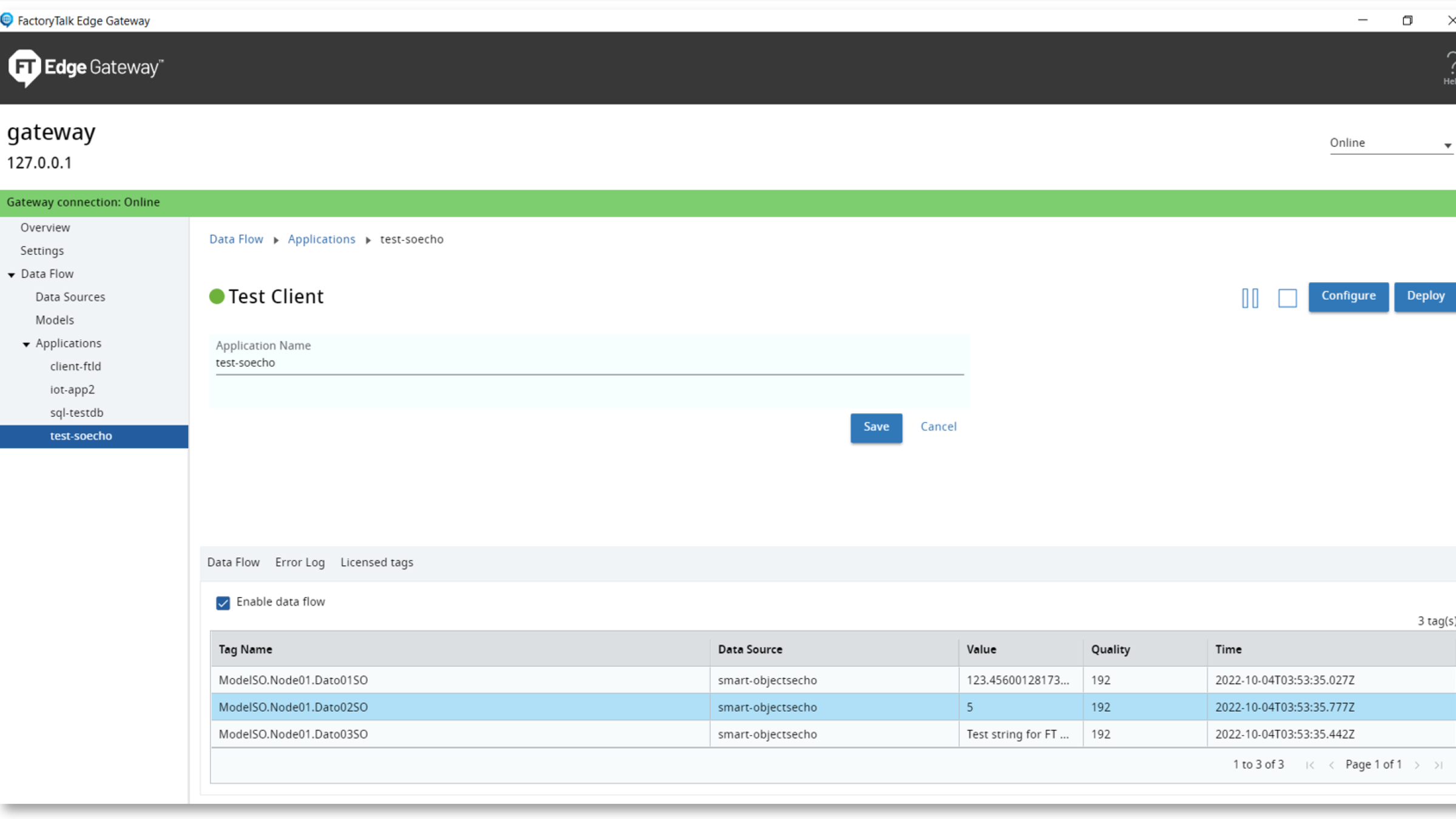
1.1 Test Client Application
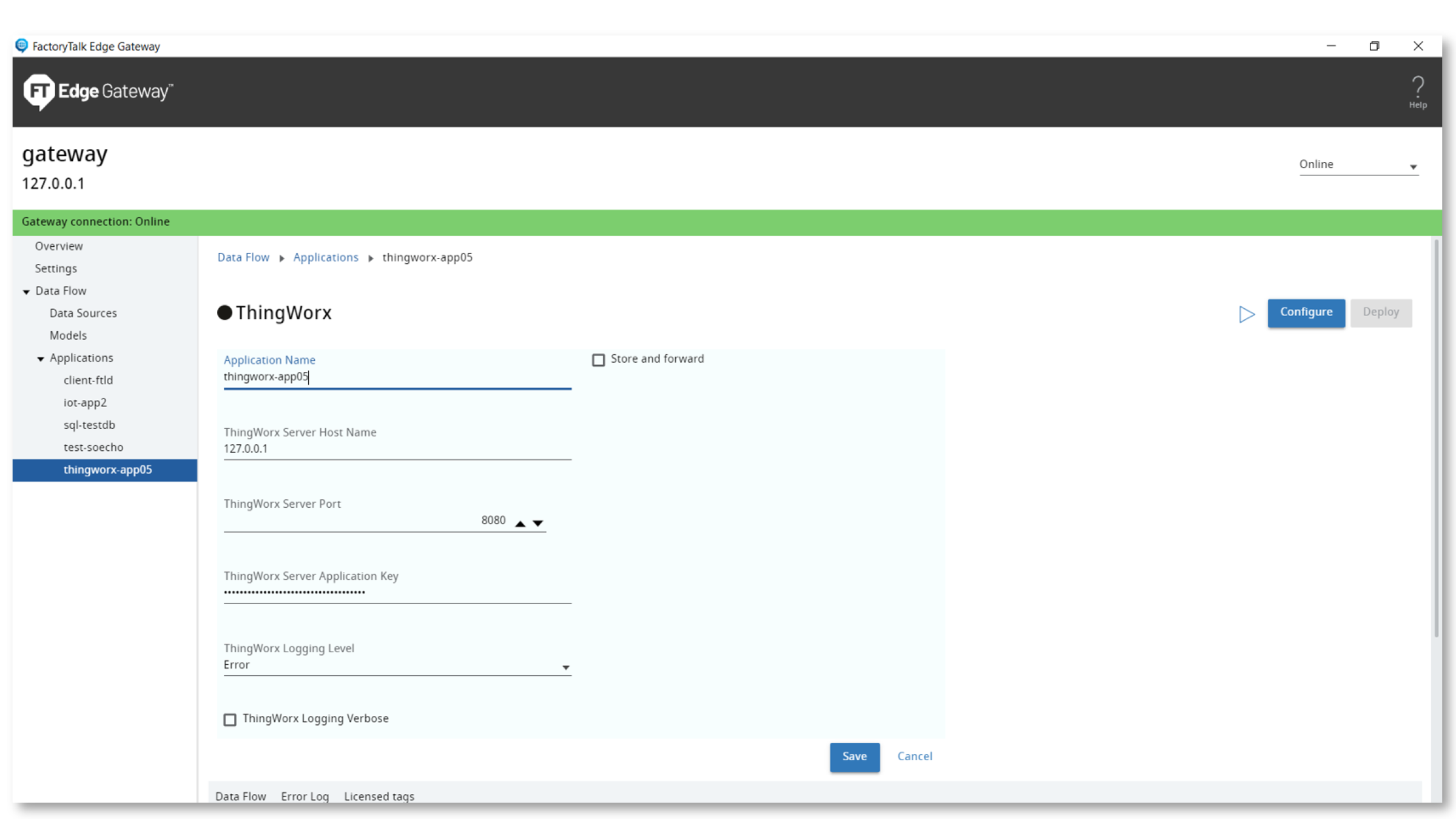
1.2. ThingWorx Application
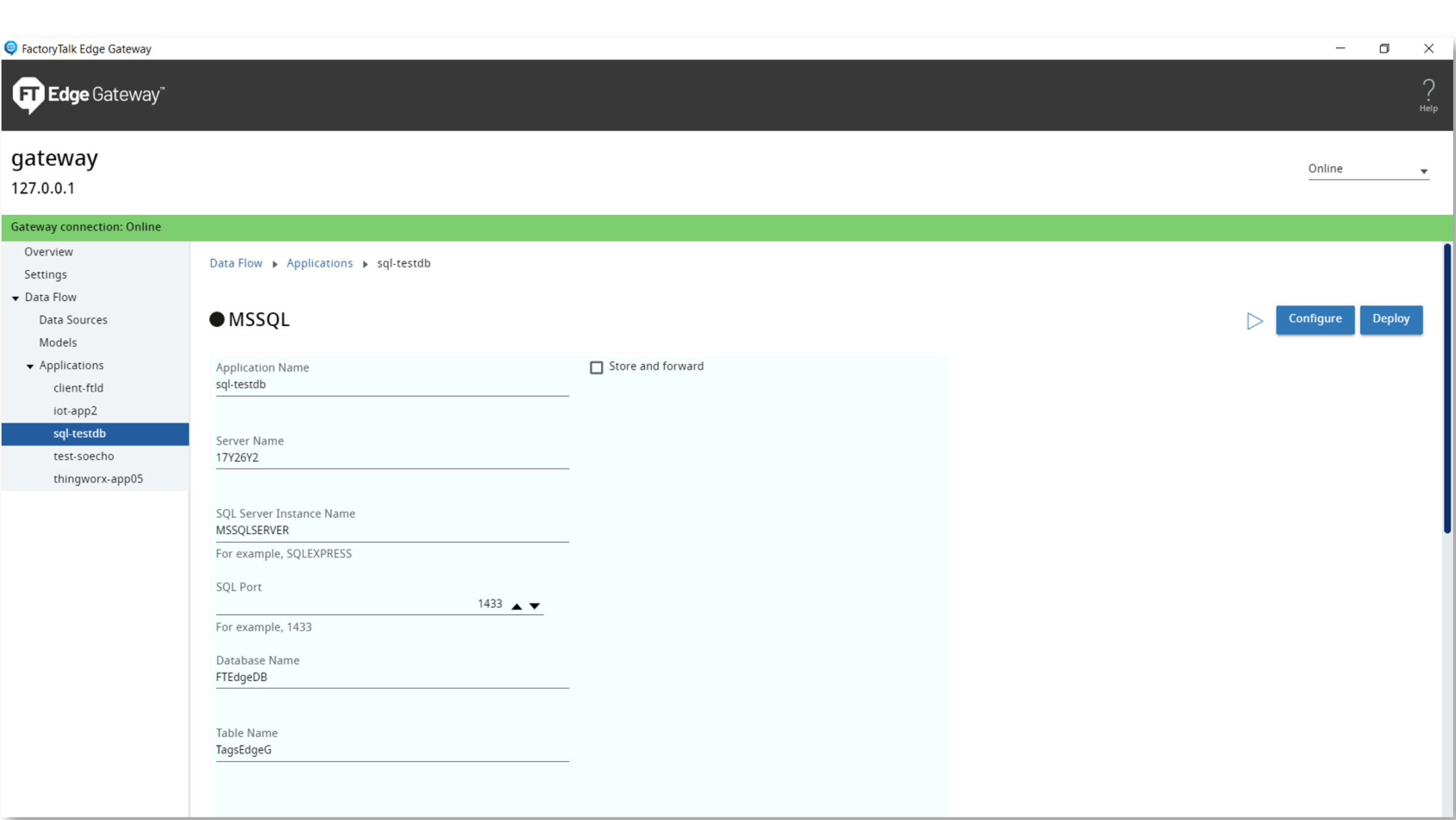
1.3. SQL Server Application
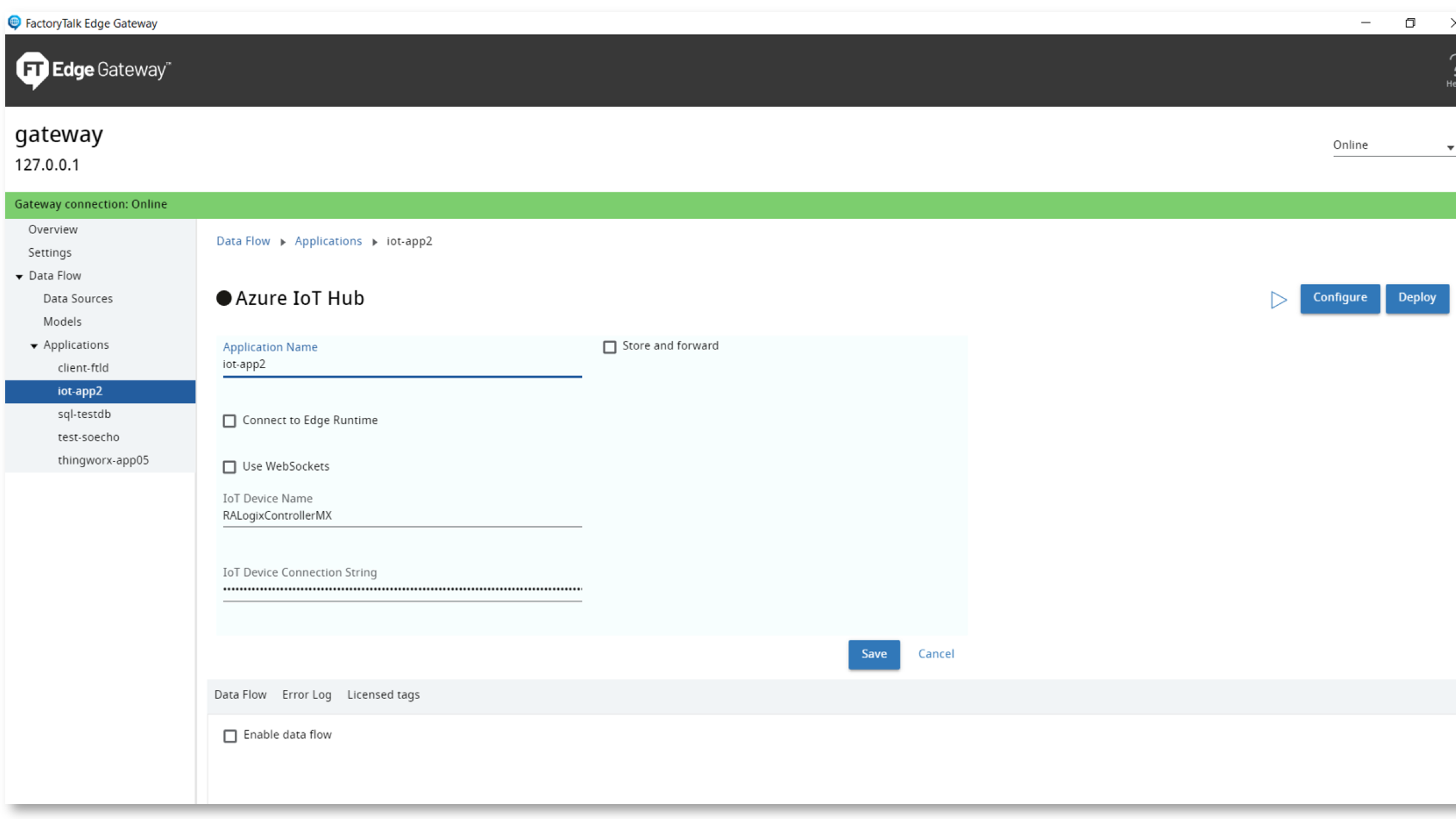
1.4. Azure IoT Hub Application
Step 02
Add a driver:
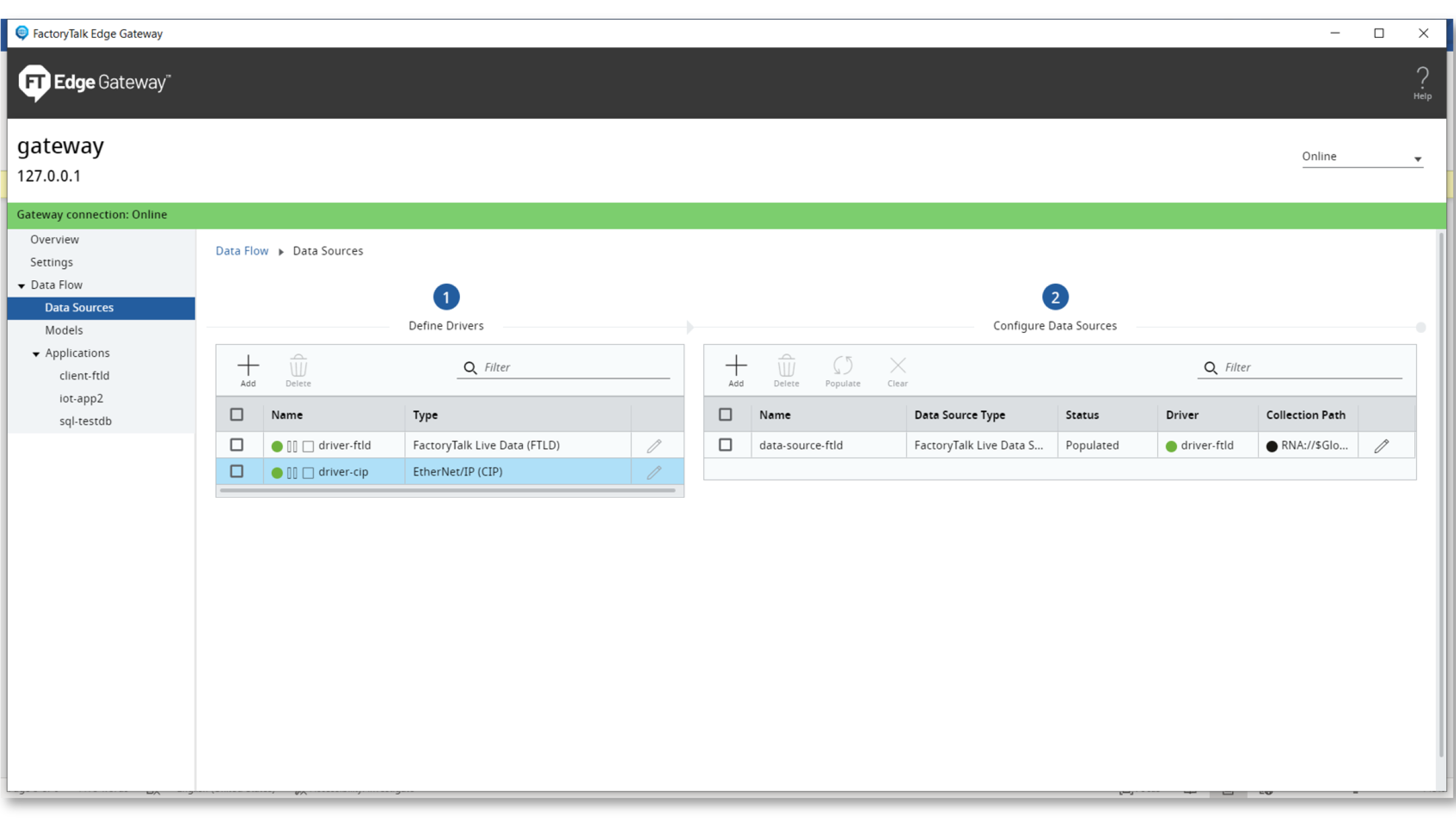
1. Select Data Flow > Data Sources.
2. From Define Drivers, select Add to add a driver to the gateway.
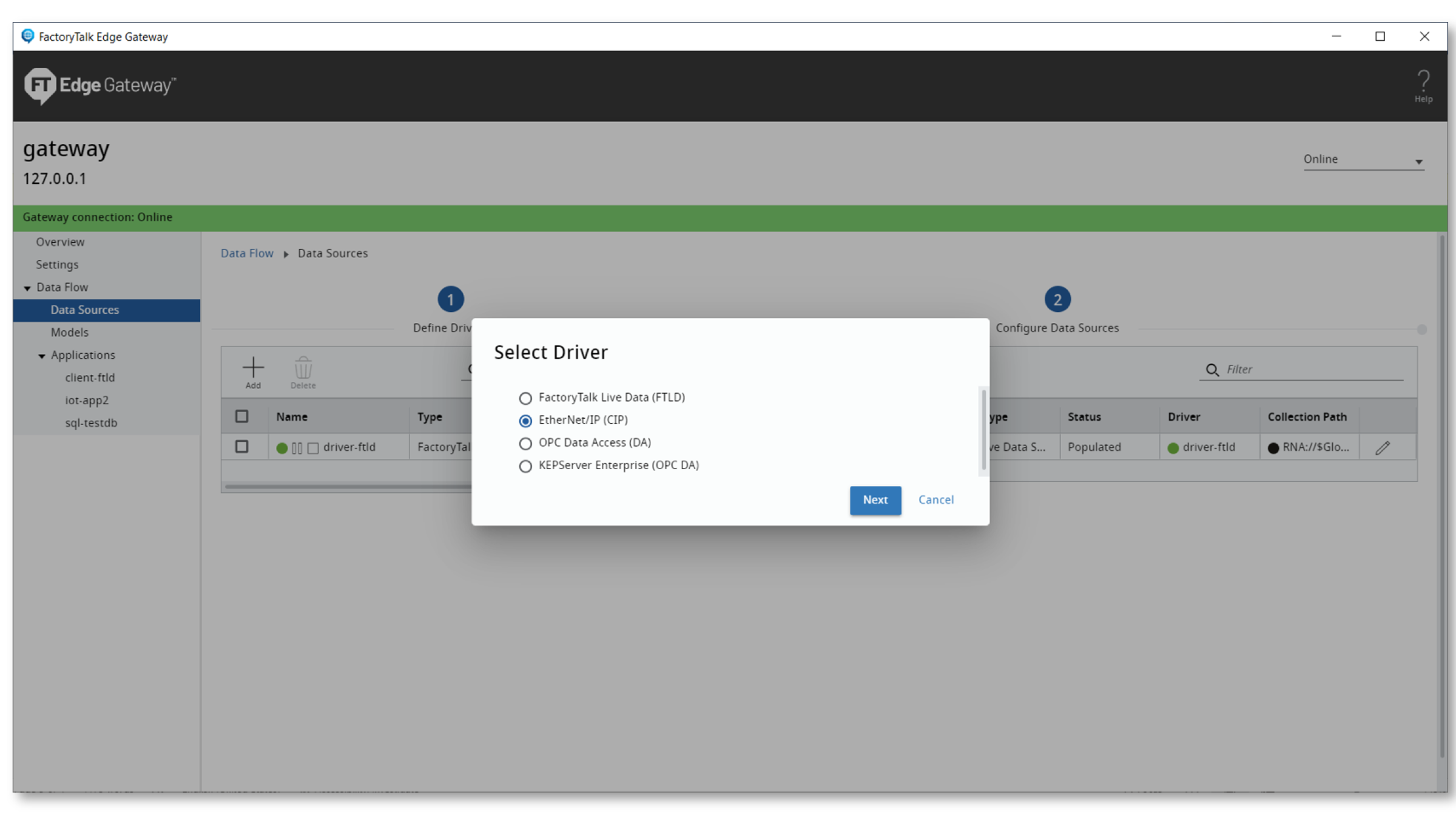
3. From Select Driver, select the driver type to configure:
- FactoryTalk Live Data (FTLD)
- EtherNet/IP (CIP)
4. Select Next.
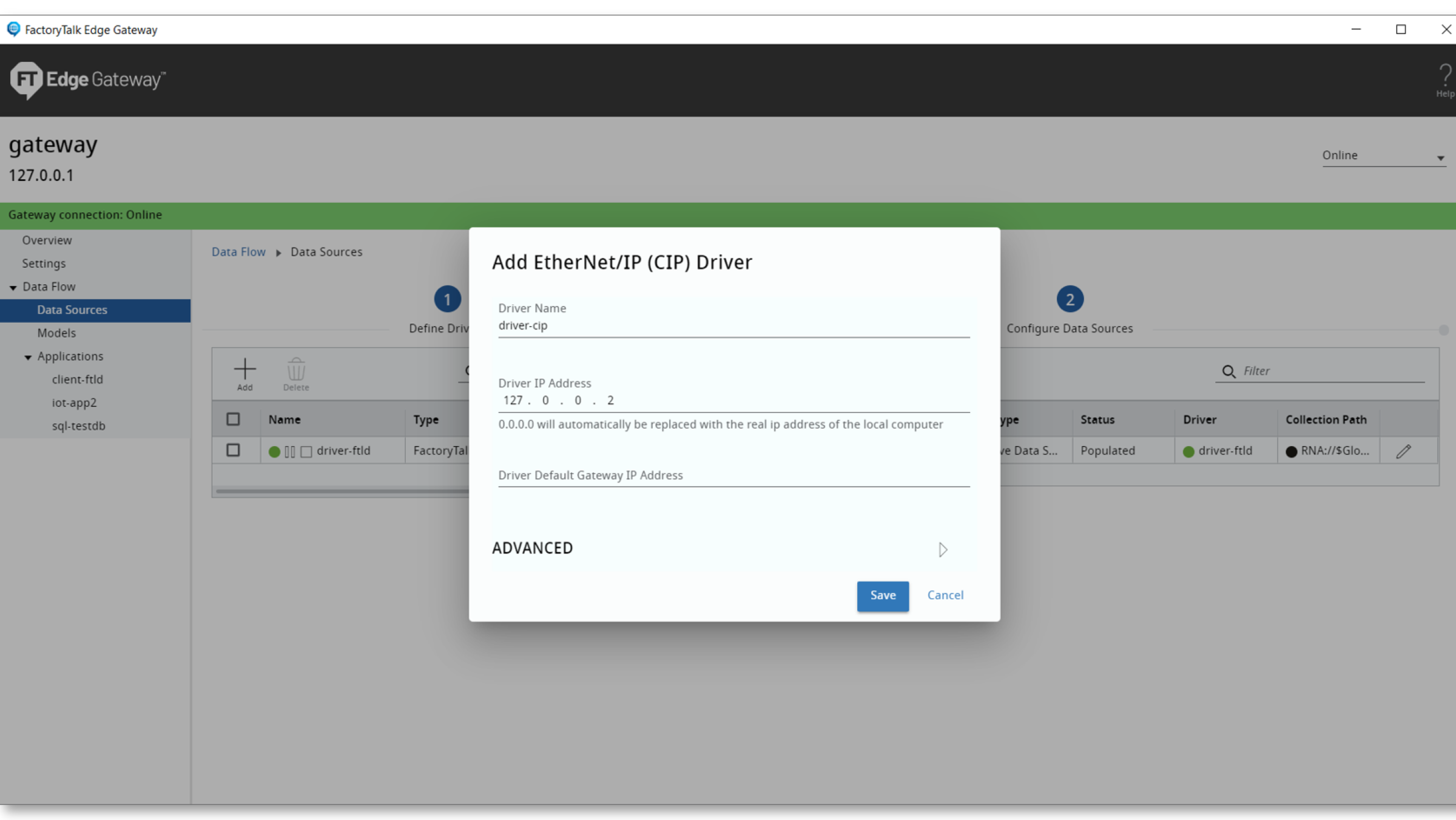
5. Enter the Driver Name and define the settings.
- The name must contain only letters, numbers, and hyphens.
- The settings differ for each driver type.
6. Select Save.
Step 03
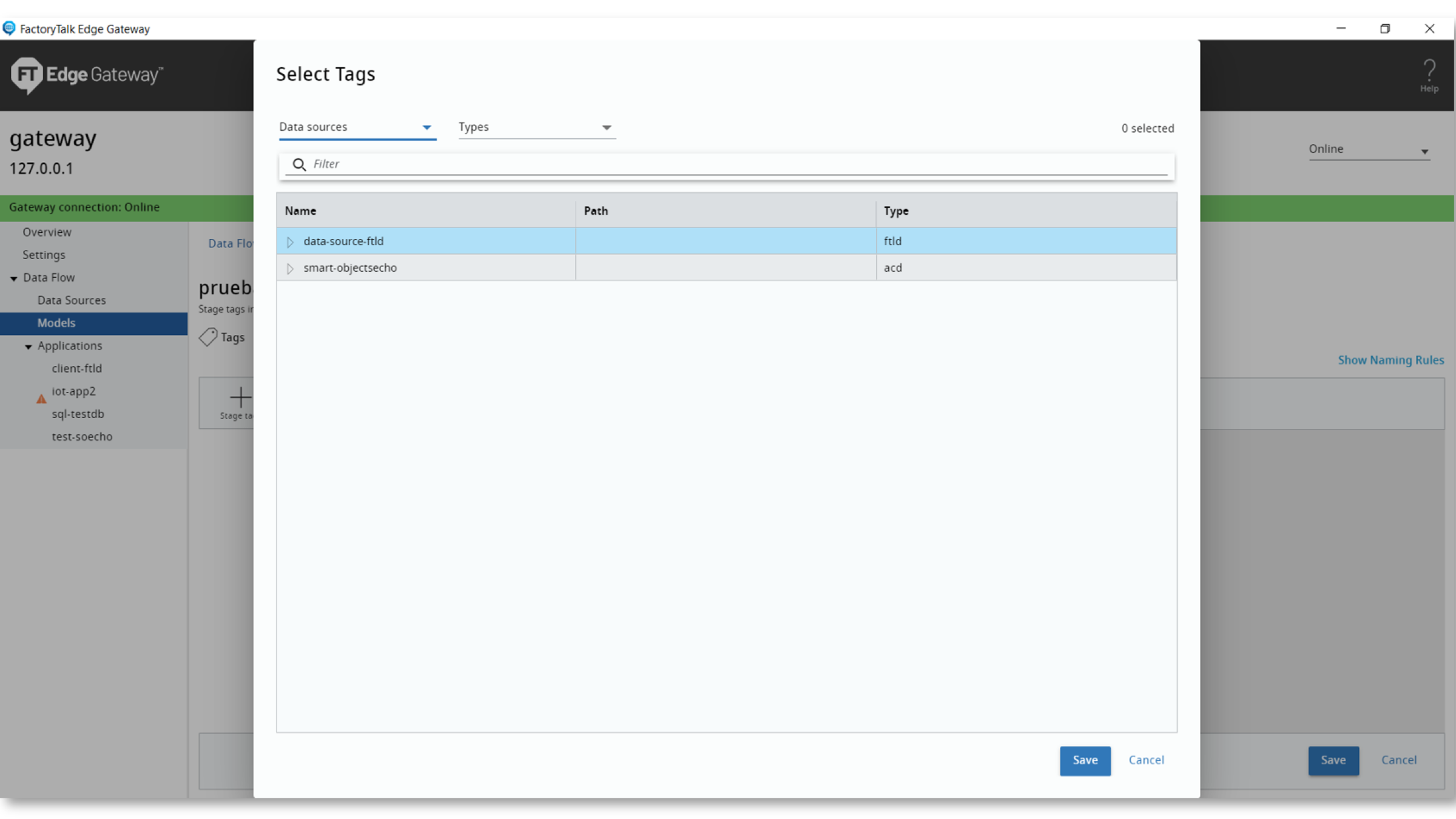
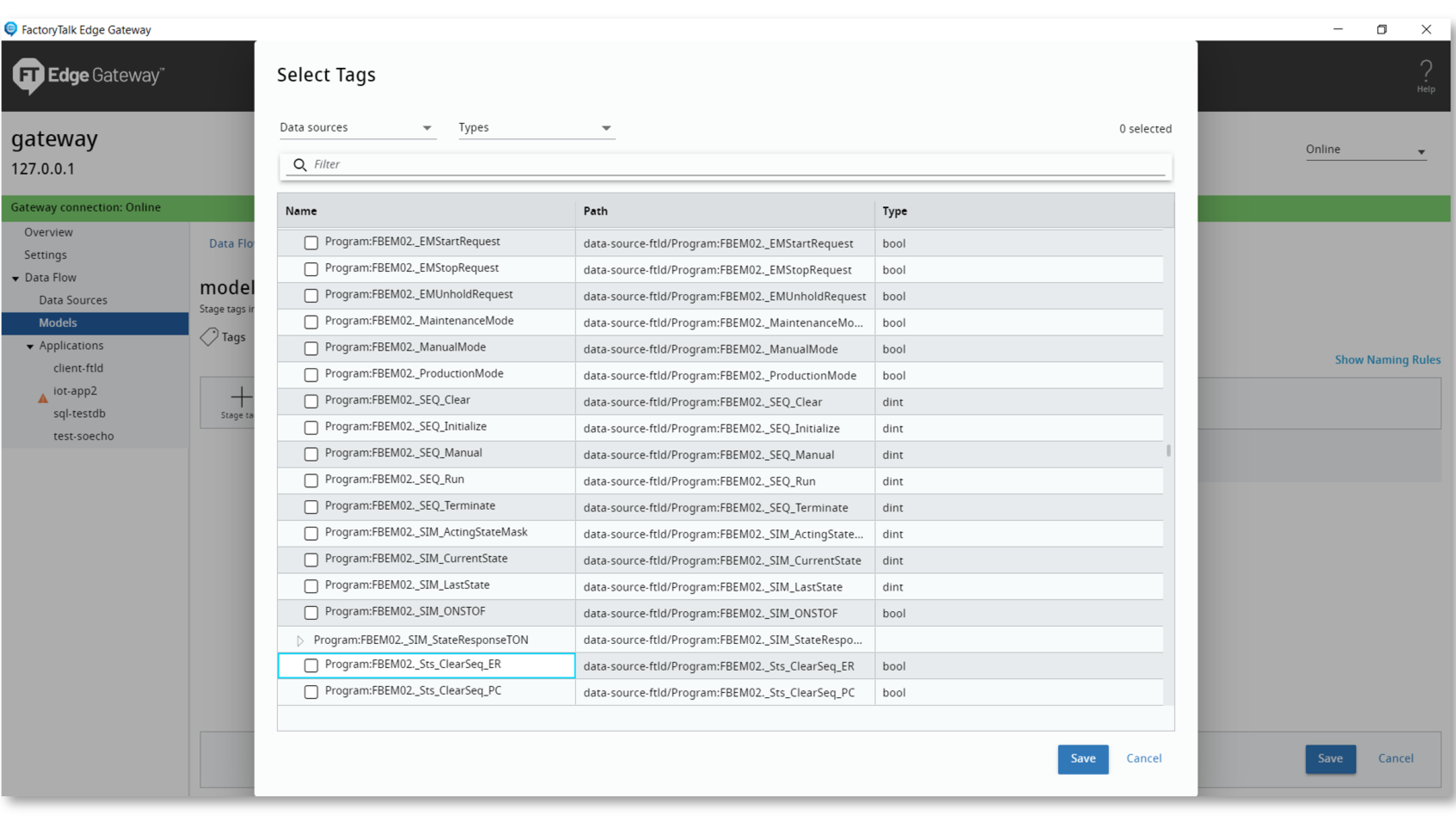
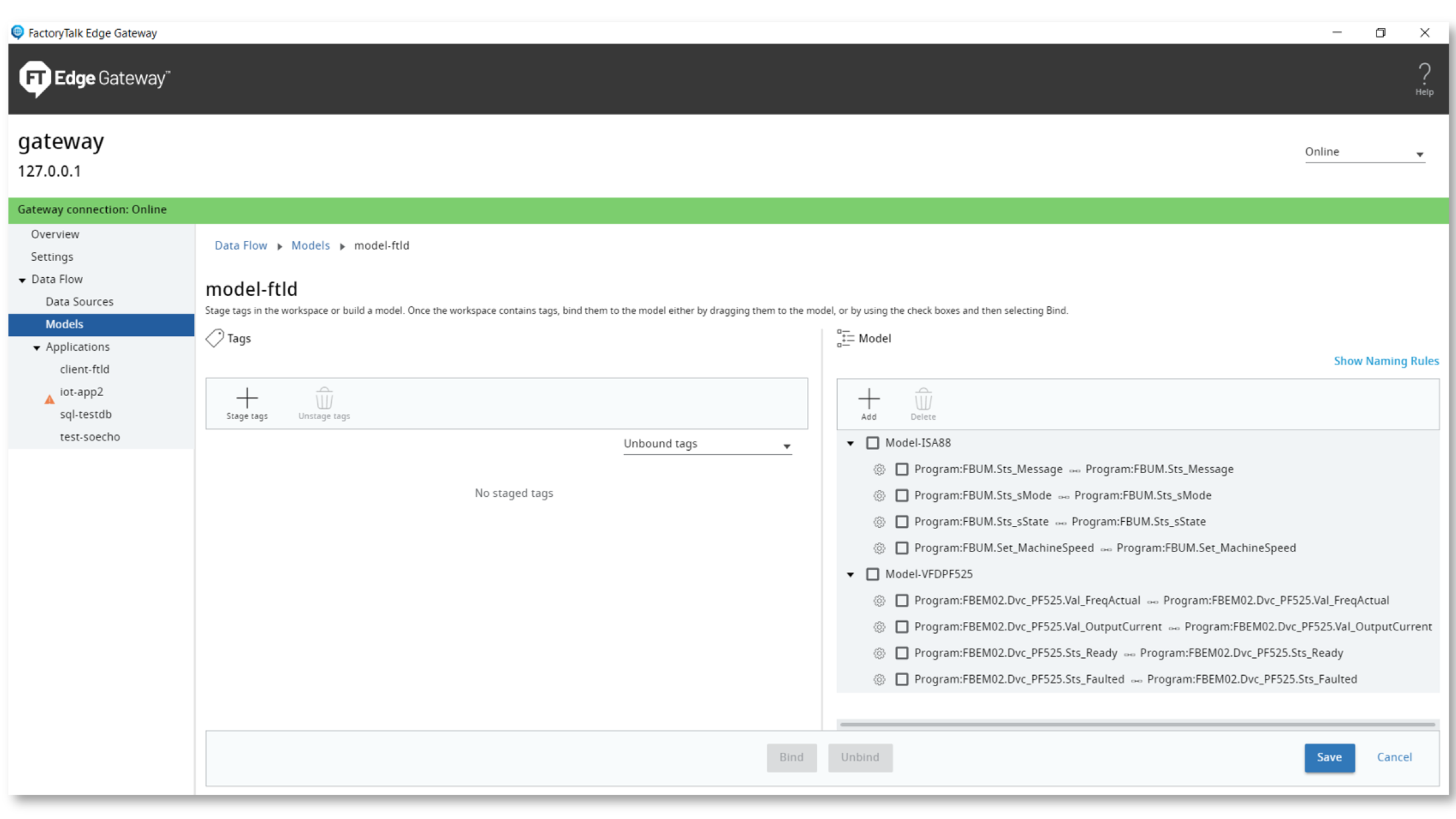
Add a data source:
1. Select Data Flow > Data Sources, and then from Configure Data Sources, add a data source.
- To add the first data source, select Add Data Sources.
- To add a subsequent data source, select Add.
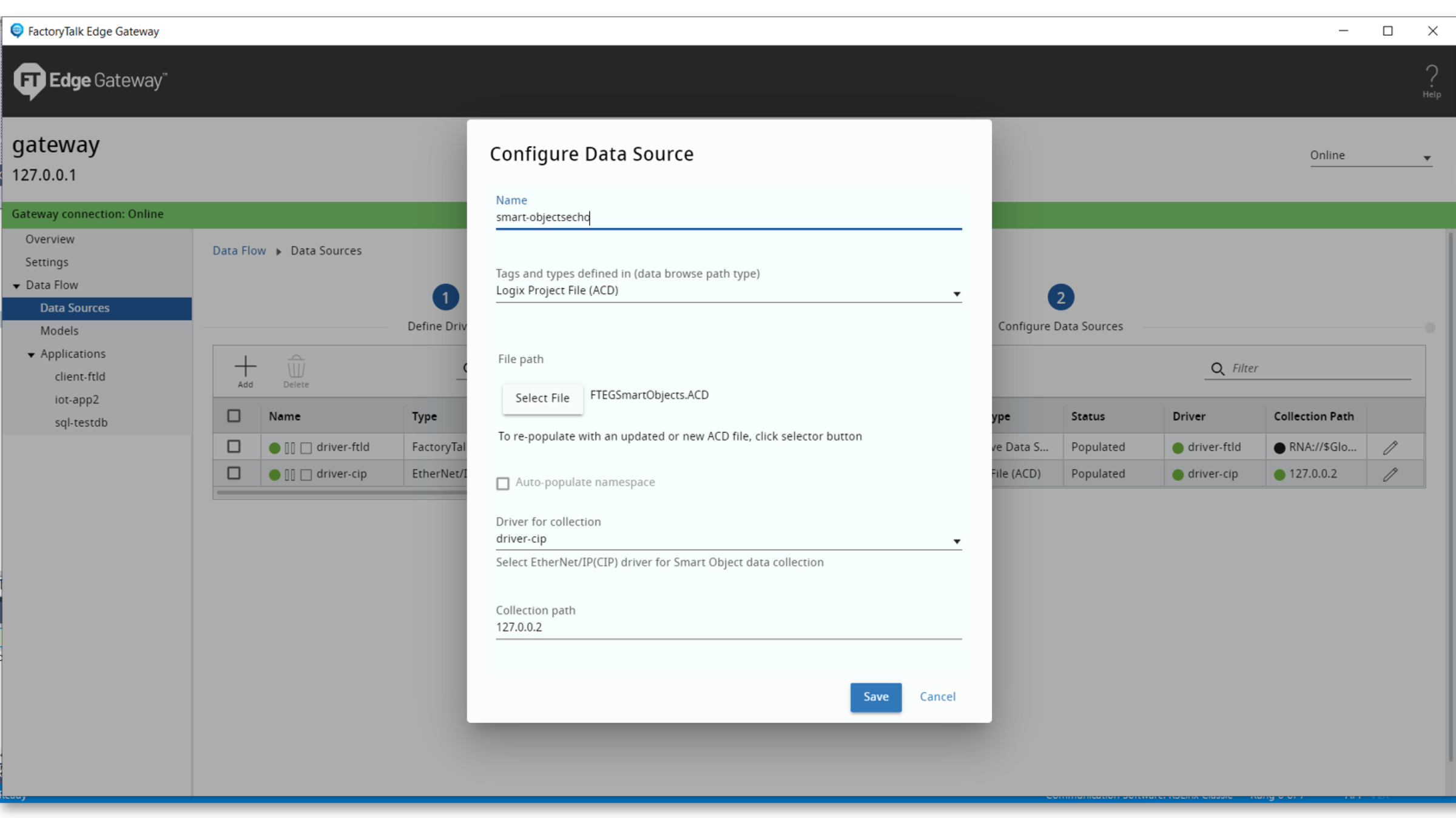
2. Enter the name and then from Data Browse Path Type, select Logix Project File (FTEGSmartObjects.ACD).
• The name must contain only letters, numbers, and hyphens.
3. Browse for the file path and select the .acd file.
4. (optional) To generate the namespace, select Auto-populate namespace.
5. From Driver for Collection, select the FactoryTalk Live Data or EtherNet/IP (CIP) driver.
6. Enter the collection path.
7. Select Save to add the data source.
Step 04
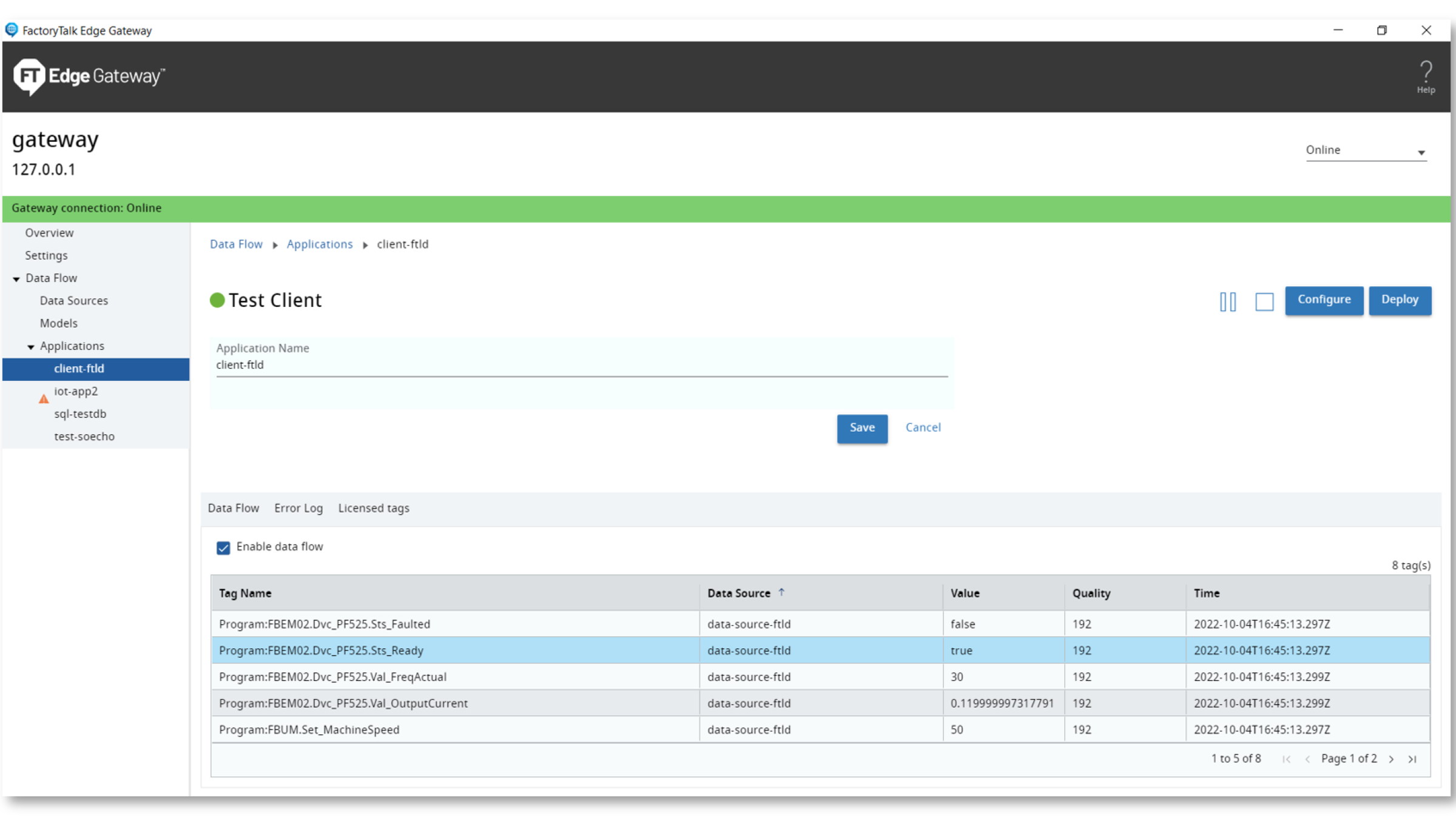
Test the application
1. Test Client. The Test Client application displays live data streaming into the gateway when Enable Data Flow is selected.
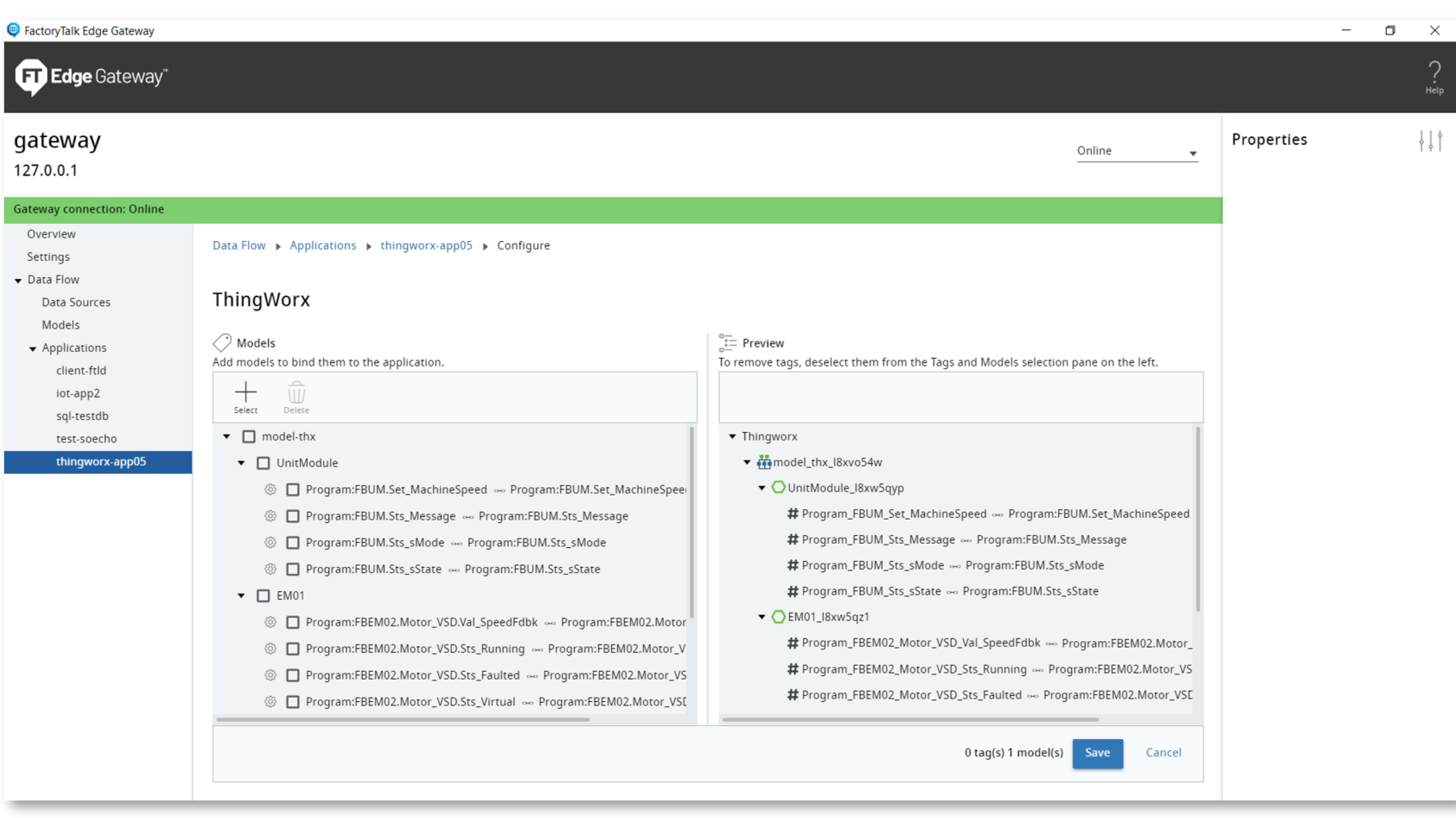
2. ThingWorx. Collect information from Rockwell Automation and third-party sources and send it to a ThingWorx Foundation server.
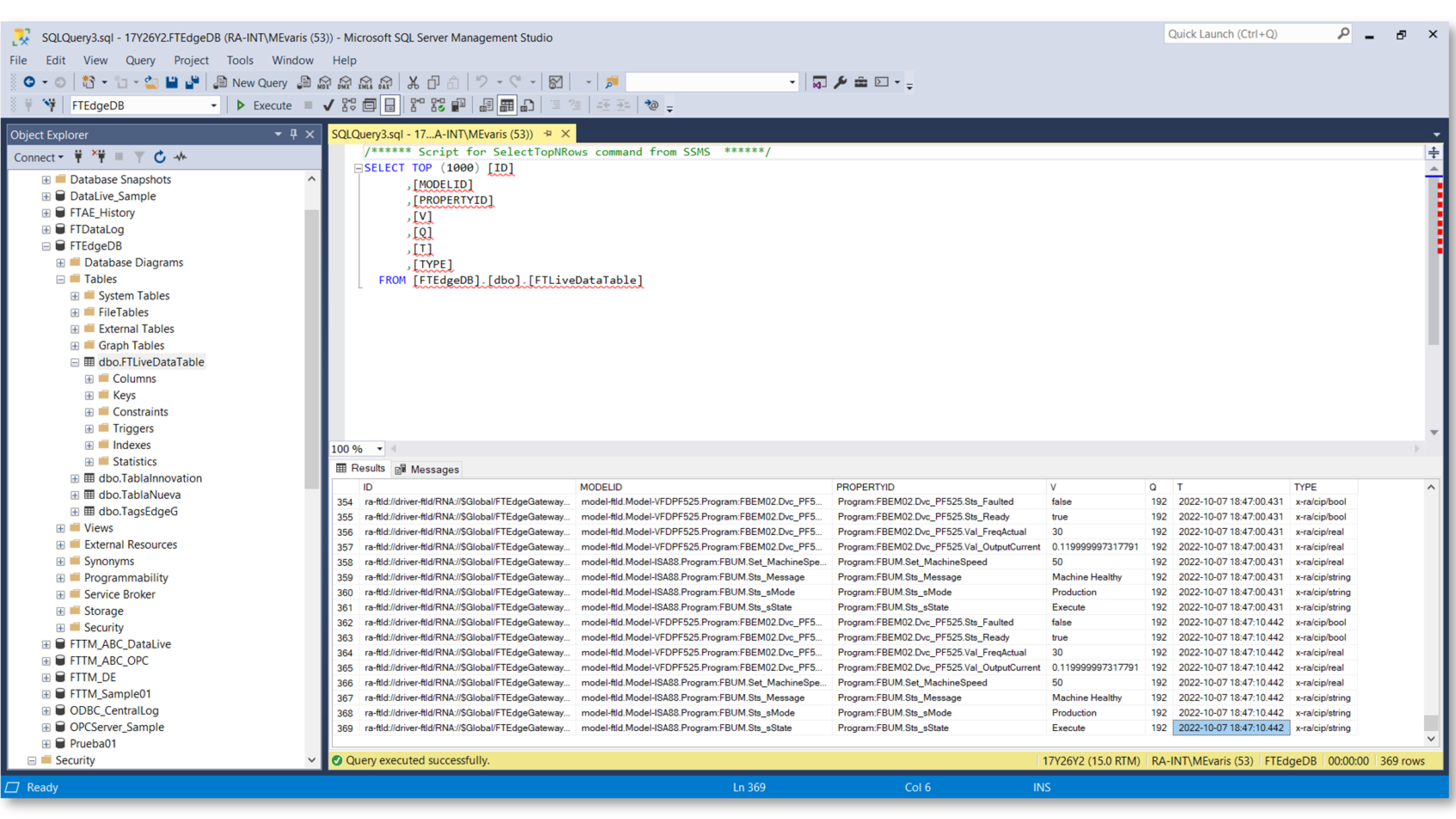
3. SQL Server. Provides a method to collect information from Rockwell Automation and third-party sources.
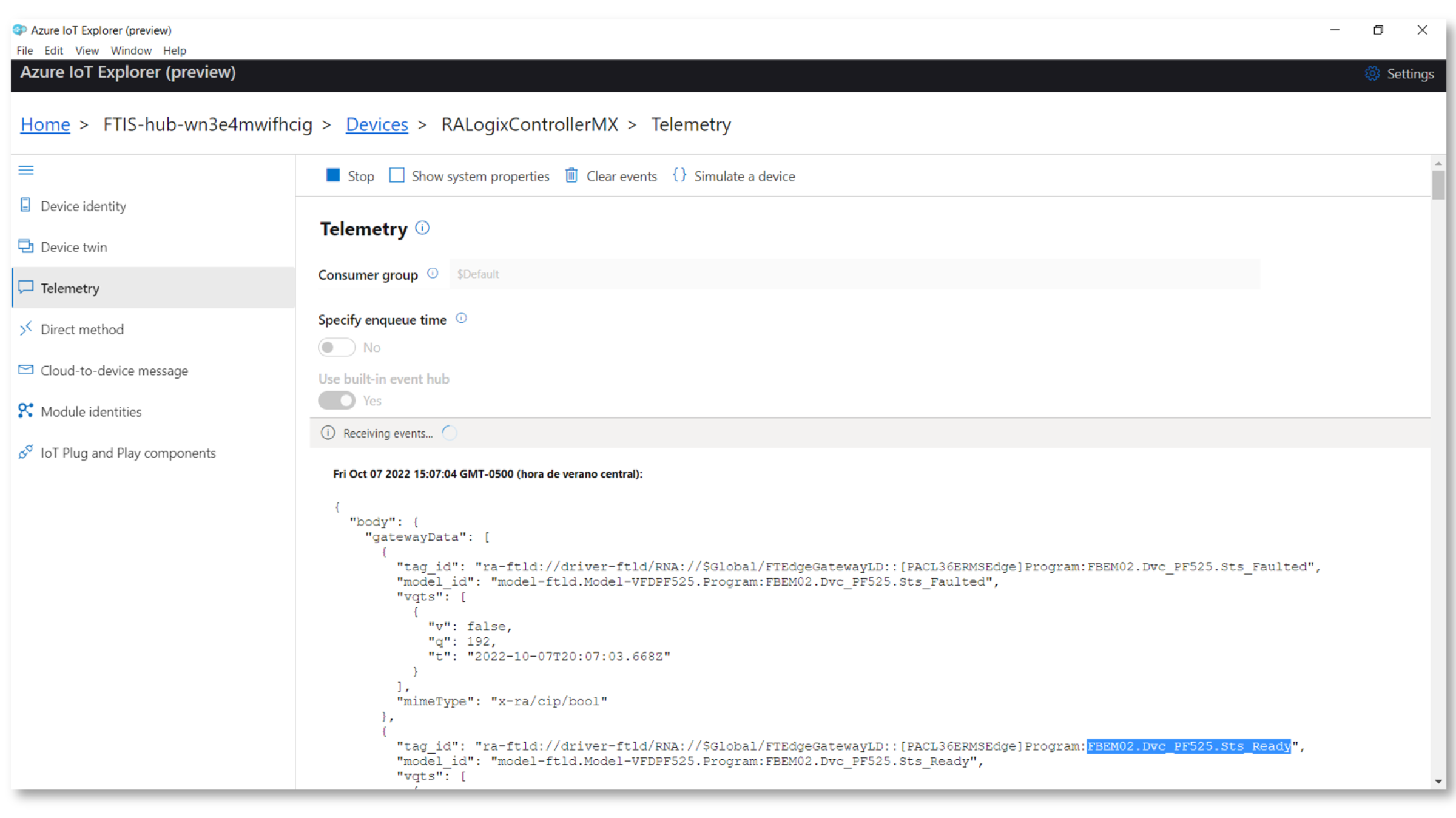
4. Azure IoT Hub.
Solutions for enabling IT/OT convergence
Version 2.0 - August 2026
