Rockwell Automation to Build New Greenfield Manufacturing Site in Southeastern Wisconsin
New site advances a $2 billion investment plan to strengthen U.S. manufacturing and digital capability
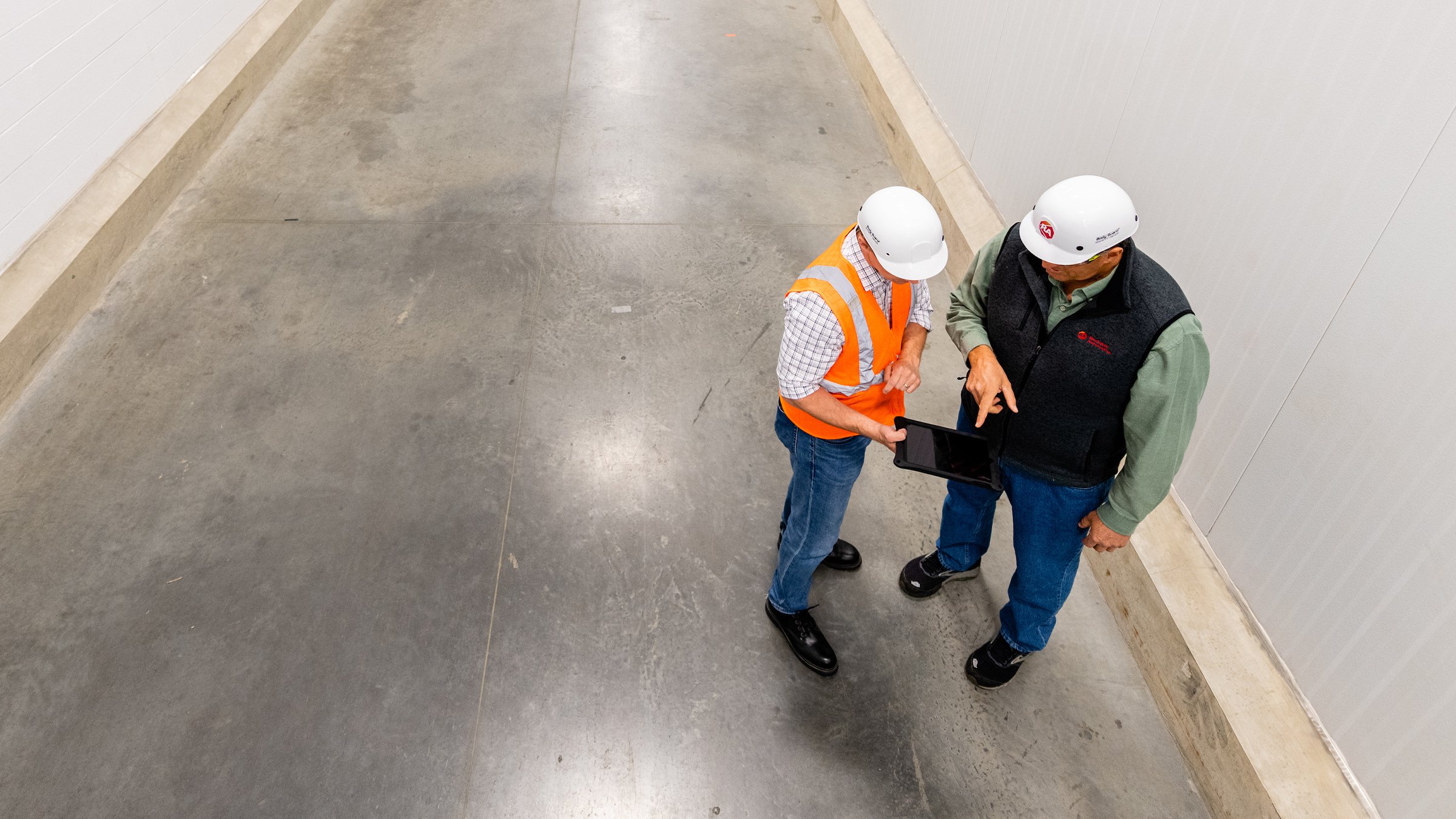
New site advances a $2 billion investment plan to strengthen U.S. manufacturing and digital capability
Rockwell Automation announced plans to build a new greenfield manufacturing site in Southeastern Wisconsin. The project marks the next step in the company’s previously announced $2 billion investment in plants, digital infrastructure, and talent to grow share, build resilience, and expand margins over the next five years. The facility has the potential to be Rockwell’s largest manufacturing campus globally, with a significant footprint and the flexibility to scale operations.
“Rockwell Automation has been leading the way with high-quality manufacturing and technology solutions for over a century. We’re incredibly proud of that tradition and how they've continued to exemplify the innovation and excellence that Wisconsin is known for, and we are excited to celebrate their continued growth and success in our state,” says Gov. Tony Evers. “I want to thank Rockwell Automation for their ongoing commitment to Wisconsin, our workforce, and our communities, and I look forward to seeing how this newest expansion will accelerate our statewide goals of building a 21st-century workforce and economy.”
“Designing a new facility presents the opportunity to create the future of industrial operations, with highly orchestrated production,” says Blake Moret, chairman and CEO at Rockwell Automation. “We are expanding our U.S. manufacturing footprint with advanced production capability that supports growth and performance with the latest Rockwell technologies and solutions.”
More results here.
Purpose-built AI model delivers instant insights and control for industrial teams, on the edge, offline and everywhere work happens
Rockwell Automation announced a breakthrough in bringing generative AI directly to the industrial edge. Rockwell is introducing its integration of NVIDIA Nemotron Nano, a purpose-built small language model (SLM) optimized for FactoryTalk® Design Studio™ and other Rockwell product workflows, marking a major step in real-time intelligence for industrial teams.
In collaboration with NVIDIA, Rockwell is leveraging the open-source Nemotron-Nano-9B-v2 model and NVIDIA NeMo to deliver an edge-based generative AI capability designed specifically for industrial environments. Nemotron Nano distillation techniques provide the foundation for an SLM that can run in edge environments with less space and power than a traditional data center. By fine-tuning the model with data used by FactoryTalk Design Studio Copilot, Rockwell is creating a solution that demonstrates new potential for industrial automation professionals.
Built for use across design, development, production and maintenance workflows, the model operates seamlessly on HMI panels, appliances, desktop IDEs and server or private cloud environments. It supports both edge and air-gapped deployments, offering improved reasoning, predictability and responsiveness compared to other SLMs.
More results here.
OT-designed platform and security services empower industrial organizations to reduce risk, maximize uptime and simplify compliance across the full cybersecurity lifecycle
Rockwell Automation announced the launch of SecureOT™ solution suite, a comprehensive industrial cybersecurity offering designed to help manufacturers and critical infrastructure protect critical operations and build secure environments.
As industrial operations become increasingly connected, organizations are facing a sharp rise in cyber threats targeting operations technology (OT) systems. Many legacy systems were never designed with cybersecurity in mind, and traditional IT tools often fail to protect complex, aging industrial environments. SecureOT was developed to close the gap, helping organizations secure their OT infrastructure with technology and expertise built for the realities of modern industrial operations.
SecureOT brings together Rockwell Automation’s purpose-built SecureOT Platform, professional services and managed security services into a unified solution that delivers end-to-end protection for complex, aging and highly regulated industrial systems.
Learn more here.
Rockwell Automation, Inc. and SLB announced that, following a strategic review, both companies have agreed to pursue an orderly dissolution of their Sensia joint venture. Created in 2019, Sensia combined Rockwell’s expertise in process automation and Internet of Things technologies with SLB’s knowledge in oil and gas measurement, instrumentation, and software.
In the agreement, Rockwell will assume 100% ownership of the Process Automation Business that the company contributed to the joint venture, and SLB will again fully own the parts they contributed, including Lift Control and Measurements. Rockwell and SLB will continue to partner to serve customers, now with a deeper relationship than the two companies had six years ago.
The transaction is anticipated to close by the end of March 2026, subject to customary closing conditions. The dissolution of the joint venture will have little to no impact on customers and the businesses will run as usual.
Milwaukee production marks a milestone as it makes Rockwell the largest industrial automation company building AMRs in the U.S.
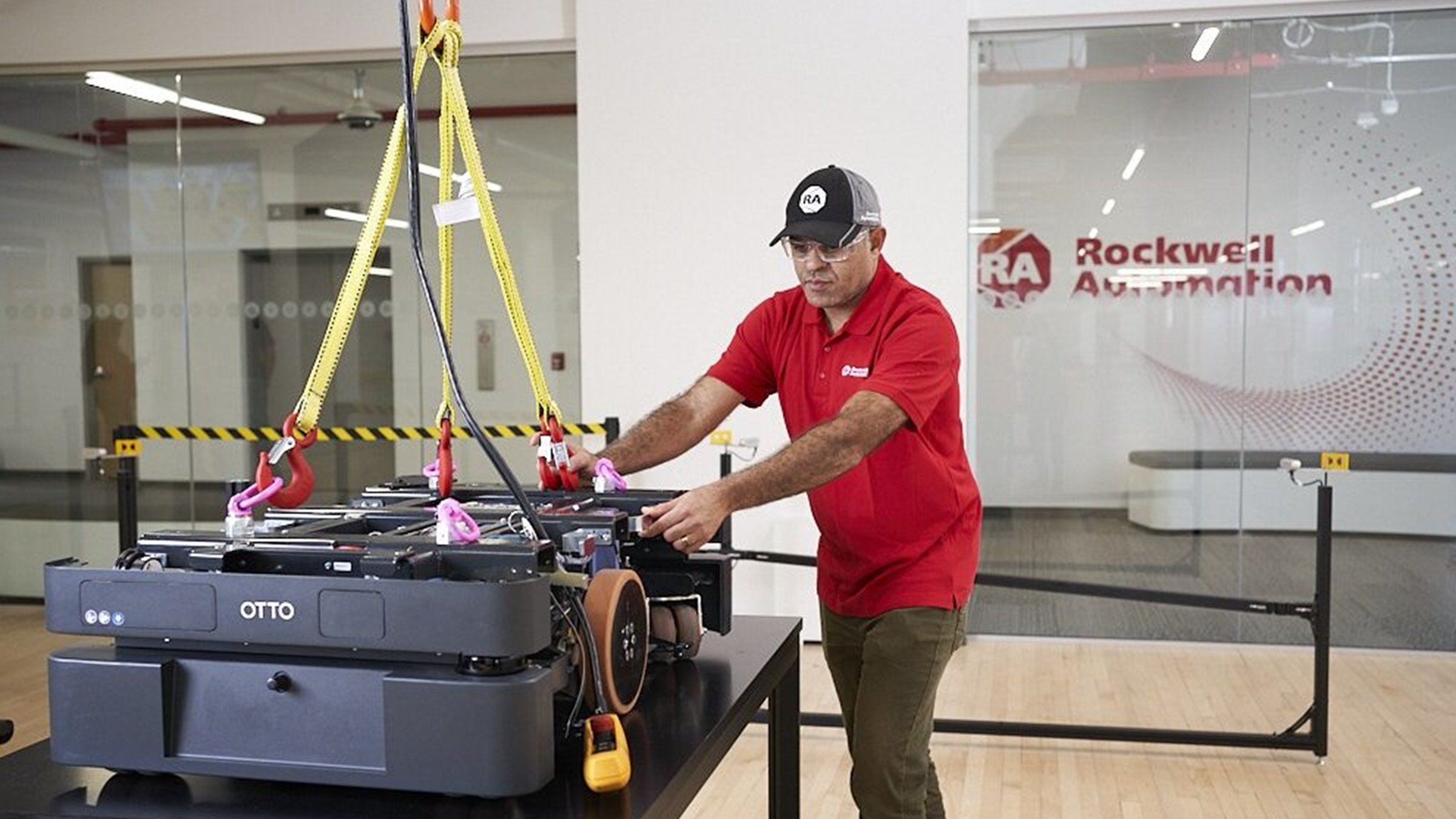
The first autonomous mobile robots (AMRs) have officially rolled off the production line at the Rockwell Automation global headquarters in Milwaukee.
The milestone marks a significant step for OTTO by Rockwell Automation, part of the company’s 2023 acquisition of Clearpath Robotics, and reinforces Rockwell’s commitment to advancing smart manufacturing through automation.
The new 25,000 square feet OTTO production space at the Milwaukee campus is now assembling the OTTO 600 and OTTO 1200 AMRs, robots designed to move heavy materials safely and efficiently across busy factory floors and in tight spaces. By reducing reliance on manual forklifts, the AMRs help manufacturers increase safety, improve transition times, minimize damage to goods, and create more resilient and sustainable operations.
Learn more here.
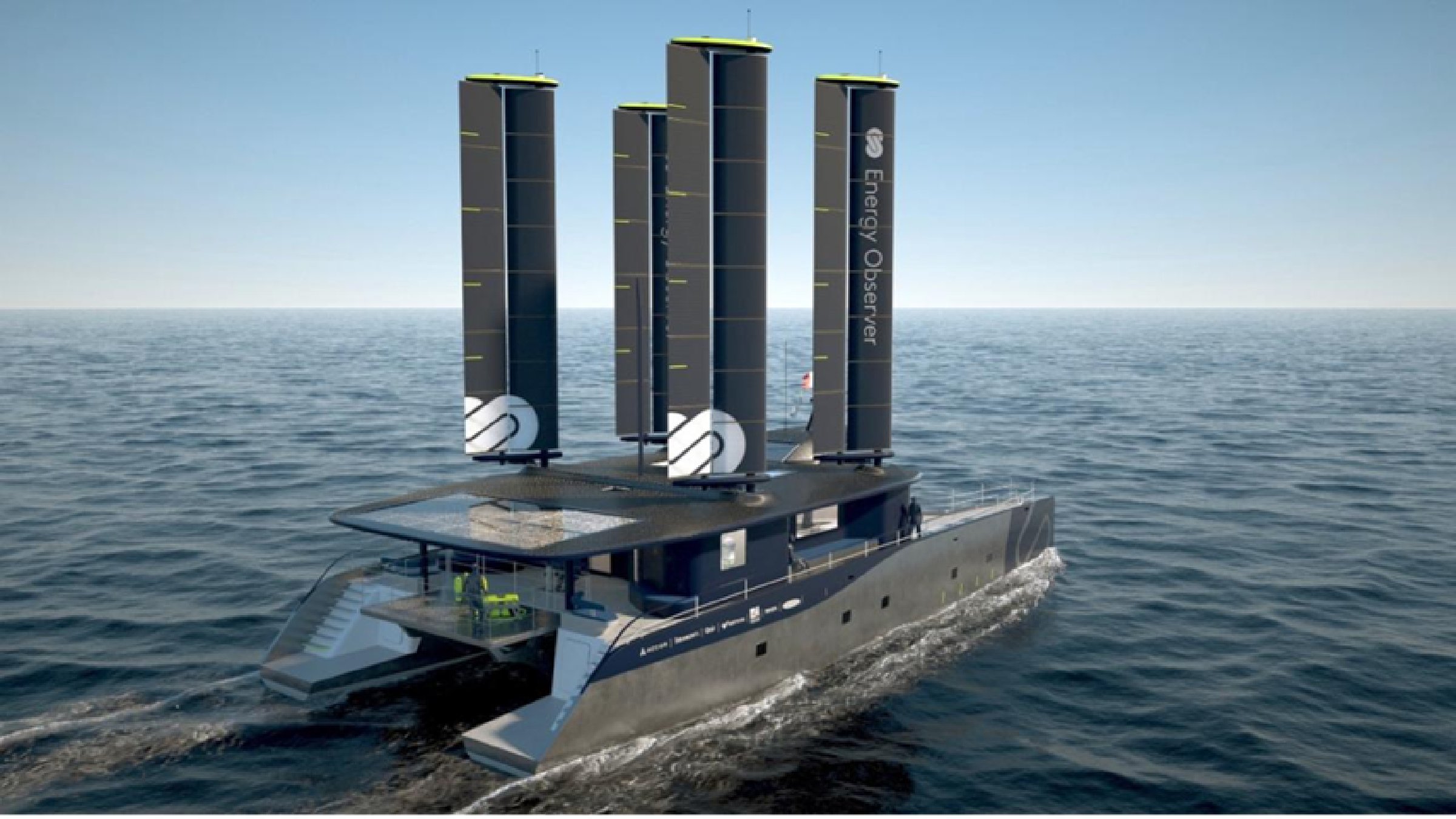
Image credit: Energy Observer
Rockwell Automation announced its continued collaboration with Energy Observer, supporting the development and launch of the Energy Observer 3 (EO3) watercraft. This next-generation laboratory vessel will test a variety of low-carbon solutions in real maritime conditions, setting new standards for decarbonization and innovation in maritime mobility.
Operating with no direct greenhouse gas emissions, the laboratory vessel pioneers a groundbreaking energy system that uses ammonia as a hydrogen carrier. EO3 integrates an ammonia cracker, dual fuel cells (proton exchange membrane and solid oxide fuel cell), a 100%-ammonia engine with NOx aftertreatment, batteries, automated wind propulsion wings, and a superstructure fully covered with high-efficiency solar cells.
Much more than a technology platform, EO3 will also serve as a space for experimentation, audiovisual production, educational outreach, and international events, bringing together engineers, researchers, artists, and decision-makers.
“Our partnership with Energy Observer is a testament to what can be achieved when innovation, expertise, and shared values come together,” said Emmanuel Guilhamon, global vice president of sustainability, Rockwell Automation, “For nearly a decade, Rockwell Automation has supported Energy Observer’s mission to pioneer sustainable energy solutions at sea. Energy Observer 3 represents the next chapter in our collaboration, combining advanced automation, data management, and human creativity to drive real progress in maritime decarbonization. Together, we are committed to building a more sustainable future — one voyage at a time.”
Learn more here.
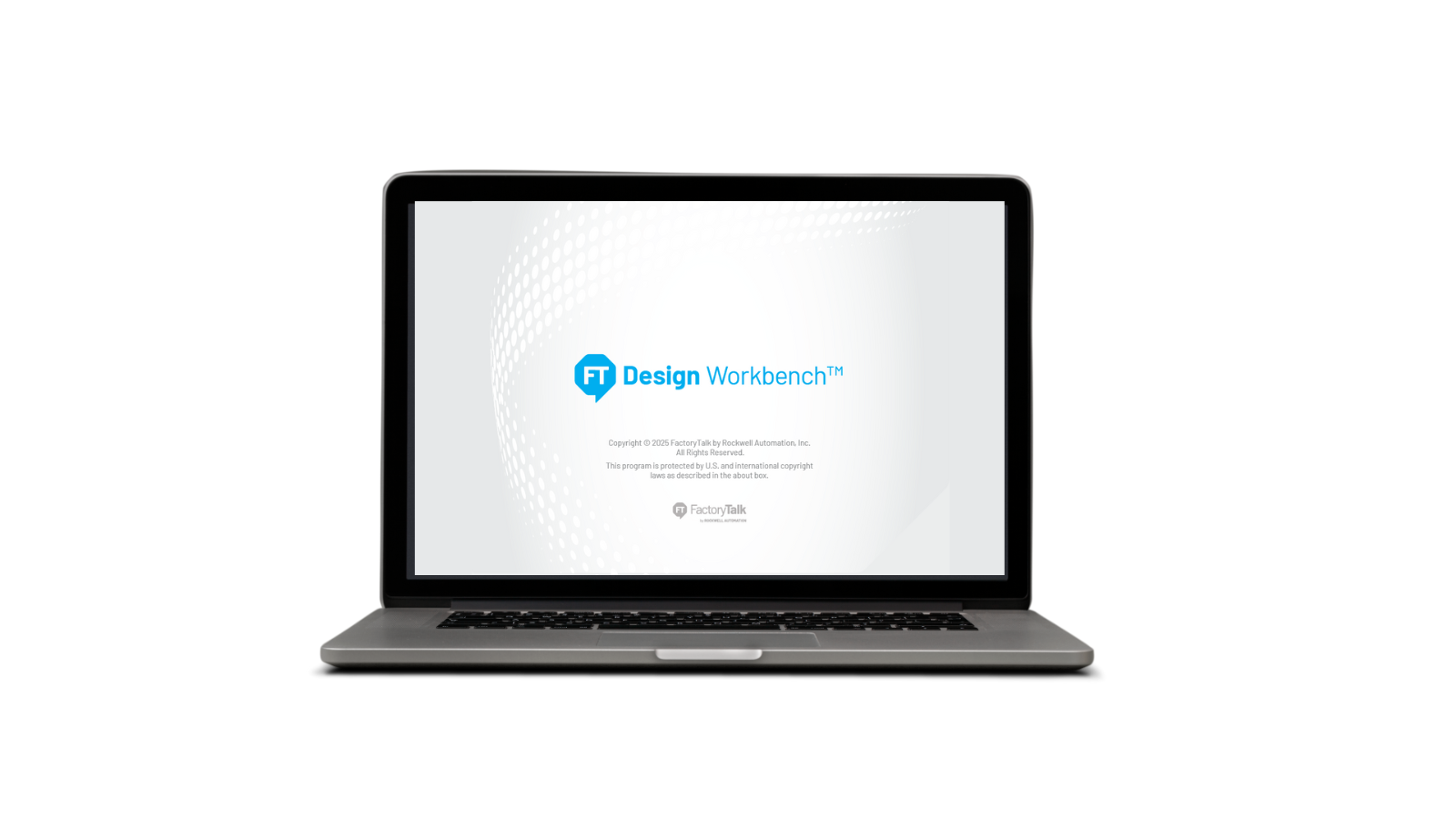
Rockwell Automation announced the launch of FactoryTalk® Design Workbench™, a free design software built specifically for micro control systems. Version 1 supports Micro800™ controllers and provides a unified workspace for programming, configuration and troubleshooting.
FactoryTalk Design Workbench software gives machine builders and manufacturers working on compact, standalone systems a consistent and efficient way to develop automation solutions. Companies in packaging, water and wastewater, agriculture and material handling often face long development cycles, fragmented tools and limited flexibility. The new software streamlines the process from programming to deployment while supporting multiple devices at once to simplify system management.
Key features in version 1 capabilities include:
Learn more here.
Latest Micro800™ controllers provide enhancements that cater to faster machine setup, improved connectivity and smarter system integration.
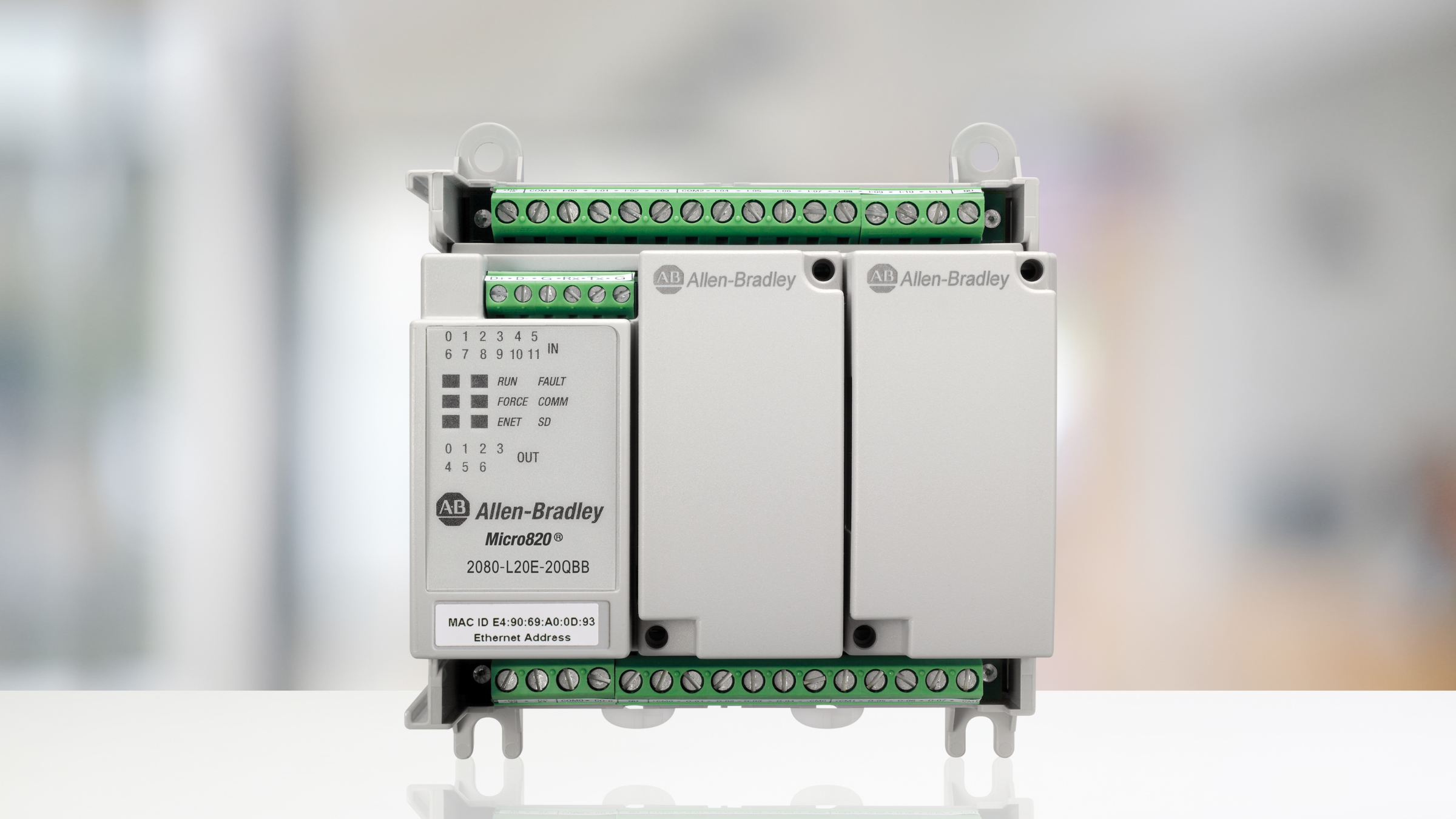
The new Allen‑Bradley® Micro820® L20E controllers provide more performance and connectivity in the same compact footprint. Designed to simplify integration and speed up commissioning, these controllers can help machine builders improve operational productivity and get to market quickly.
Built upon the existing LC20 controllers with additional capabilities, the new L20E controllers deliver enhanced performance on program execution, I/O responses and communication. With Class 1 implicit messaging support up to four nodes, these new controllers allow more efficient communication connections, enhancing real-time control and reliability across devices. Additionally, the modern USB Type C port streamlines initial machine setup and configuration, which helps save engineering time.
Learn more here.

Rockwell Automation released a commissioned report by GlobalData on key technologies in the oil and gas industry. According to the Oil and Gas Technology Outlook for 2030 and Beyond, oil and gas companies are undergoing a seismic shift, driven by rapid digitalization and the integration of advanced technologies. The report reveals that artificial intelligence (AI), the Internet of Things (IoT), and cybersecurity are at the forefront of this transformation, reshaping operations from exploration to refinement.
The report highlights critical findings around the importance of digitalization, key drivers fueling adoption including emerging technologies like AI, and crafting a clear strategic roadmap for digital success.
Read more here.
To help customers with their maintenance, repair and operations (MRO) needs, Rockwell Automation now offers Asset+ Managed Service, delivered by a dedicated, on-site asset management professional.
The managed service helps customers by: reducing their MRO costs; supporting their lifecycle management needs; recommending proper inventory levels for operation; and improving sustainability with actionable insights on CO2e emissions, energy and waste.
Asset+ Managed Service is ideal for those with an Allen‑Bradley® installed base who need help managing their repair and warranty processes, who want to make their industrial operations more sustainable, or who have inventory reduction and obsolescence risk management targets. An Installed Base Evaluation™ and access to the Rockwell Automation Sustainability Calculator for Repairs is included with the service.
Built for performance, safety and security, the integrated platform empowers manufacturers to streamline operations and scale smarter systems
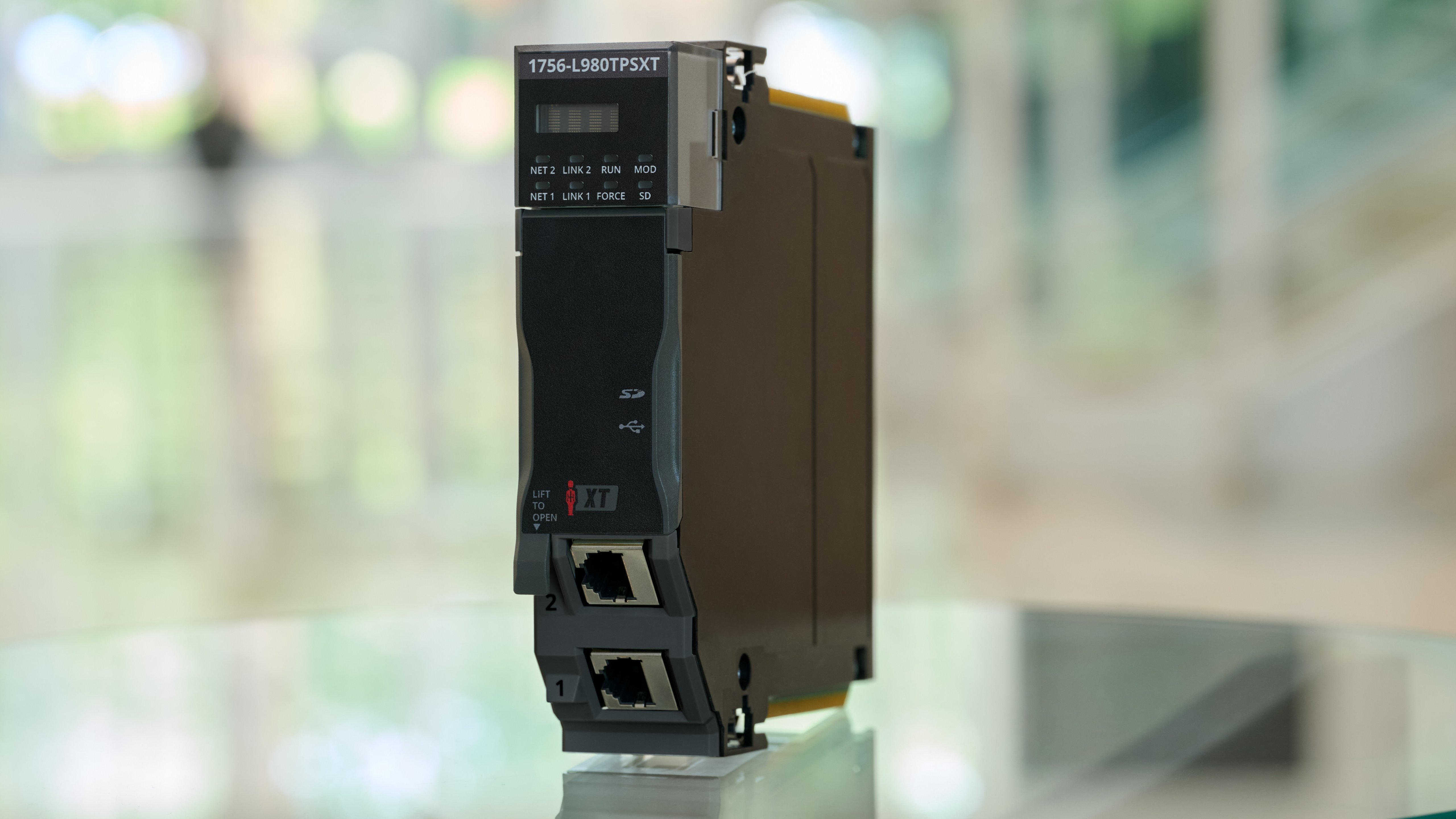
Rockwell Automation announced the highly anticipated launch of its newest controller, ControlLogix® 5590, the powerhouse at the core of the Logix platform. Designed to meet the evolving demands of modern manufacturing, this all-in-one controller delivers seamless software integration and multidiscipline control across the enterprise to streamline operations like never before.
Manufacturers are navigating a perfect storm of challenges, from rising global competition and workforce shortages to growing safety and security risks. Contributing to the complexity are disconnected control and data systems built on propriety technologies, which limit flexibility and keep costs high. The ControlLogix 5590 controller is a purpose-built solution to help manufacturers tackle these challenges with ease and take control of their operations.
“The ControlLogix 5590 controller isn’t just an upgrade, it’s a powerhouse engineered for the future of industrial automation,” said Dan DeYoung, global vice president and general manager, production design & control, Rockwell Automation. “We’re giving our customers the ability to build smarter and more secure systems right out of the box, with a platform designed to meet the demands of today and ready to scale for tomorrow.”
Learn more here.
Innovative solution streamlines operations, reduces labor and water usage, and sets new industry standards
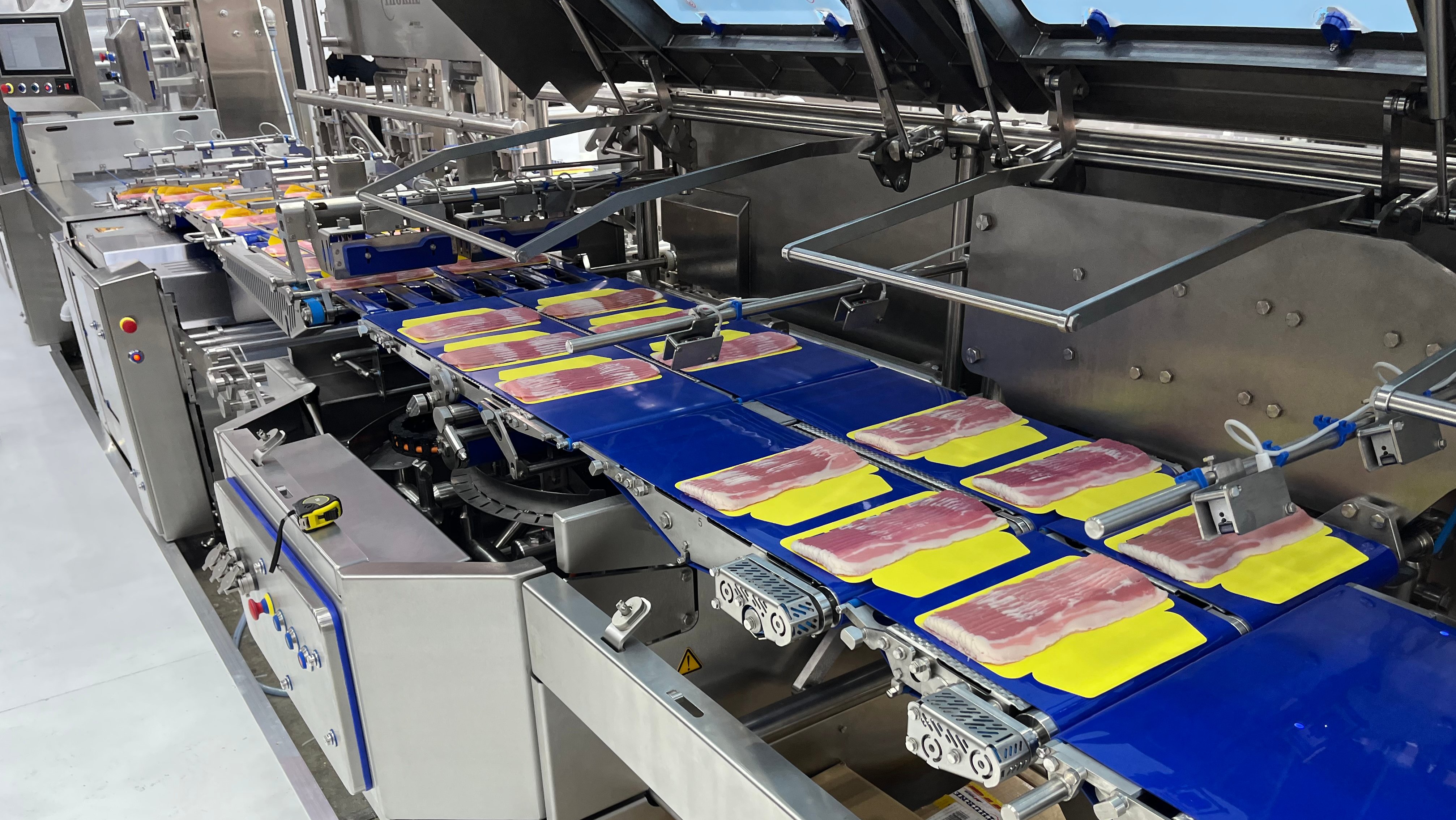
Rockwell Automation has been selected by Middleby Food Processing to help develop the food industry’s first fully automated bacon production line—which was unveiled at the IFFA tradeshow Frankfurt, Germany earlier this year. As demand grows for more efficient, flexible and sustainable food processing solutions, Middleby Food Processing turned to Rockwell to deliver a unified automation platform capable of transforming production.
Headquartered in Elgin, Illinois, Middleby Food Processing is a global leader in foodservice innovation. The company needed a scalable solution to support customers facing rising labor costs, space constraints and stricter sustainability goals. Rockwell stood out for its deep engineering expertise, seamless integration capabilities and proven ability to future-proof manufacturing systems.
Rockwell’s solution includes FactoryTalk® Optix™, which standardizes operator interfaces and application code libraries, such as Machine Builder Library and Device Objects, which create a consistent programming structure across equipment brands. This architecture makes it easier for service technicians to troubleshoot and support systems remotely while enabling real-time data strategies and production agility.
Kalypso, a Rockwell Automation business, announced its inclusion as a Representative Vendor in the 2024 Gartner® Market Guide for Life Science Regulatory Information Management (RIM) Solutions. Kalypso was recognized for its Digital Regulatory Information Management solution tailored for the medical device industry.
Gartner notes that “Regulatory information management vendors continue to innovate and consolidate solutions into integrated platforms for greater optimization and automation.” The report further highlights that Life science CIOs want to reduce the complexity of their regulatory IT systems and accompany traditional business processes to speed regulatory submissions and lower costs.
Kalypso’s RIM solution is designed to help life sciences companies bring compliant products to global markets faster, while meeting country-specific regulatory requirements. The platform enables organizations to manage and track product registrations, improve submission accuracy, manage global UDI data, and support efficient product distribution — all within a unified, integrated system.
Learn more here.
Rockwell Automation has been selected by Utility Global to provide the control and automation platform for its proprietary H2Gen® systems featuring Utility’s patented zero-electricity hydrogen production technology.
Utility is transforming industrial hydrogen production with systems designed for modular construction, customized performance, and seamless integration into existing assets and infrastructure. Featuring a breakthrough technology for hydrogen production from water without electricity that operates autonomously, H2Gen systems deliver clean, reliable hydrogen tailored to the steel, mobility, chemical, refining and oil and gas industries. These systems significantly reduce carbon emissions and lower operational and capital costs. This innovation makes the energy transition economically viable for industrial operators worldwide.
More details here.
Research shows CPG leaders are investing in AI and talent to stay competitive
The 10th annual State of Smart Manufacturing Report: Consumer Packaged Goods (CPG) Edition highlights how manufacturers are placing greater importance on innovation, workforce development, and long-term growth strategies.
The CPG industry is facing pressure on multiple fronts, from the growth of store brands to the demand for faster innovation and more sustainable products. At the same time, consumer loyalty is harder to earn, and expectations for customization and transparency are rising. In response to this, CPG companies are moving away from small-scale technology pilots and investing in solutions that deliver measurable results across the organization.
The combination of workforce training, better use of data, and more adaptable systems is helping these manufacturers stay competitive while managing complexity. And as private-label brands expand and consumer expectations evolve, CPG leaders are prioritizing investments that help them compete more effectively in a crowded and fast-changing market.
More results here.