Loading
Magazine | Packaging
Recent ActivityRecent Activity

How a Chocolate Maker Enhanced Packaging Throughput

Hawaiian Host worked with Cama Group to create a modular packaging system that improved production efficiency while addressed workforce concerns.

Share This:

LinkedInLinkedIn
XX
FacebookFacebook
PrintPrint
EmailEmail
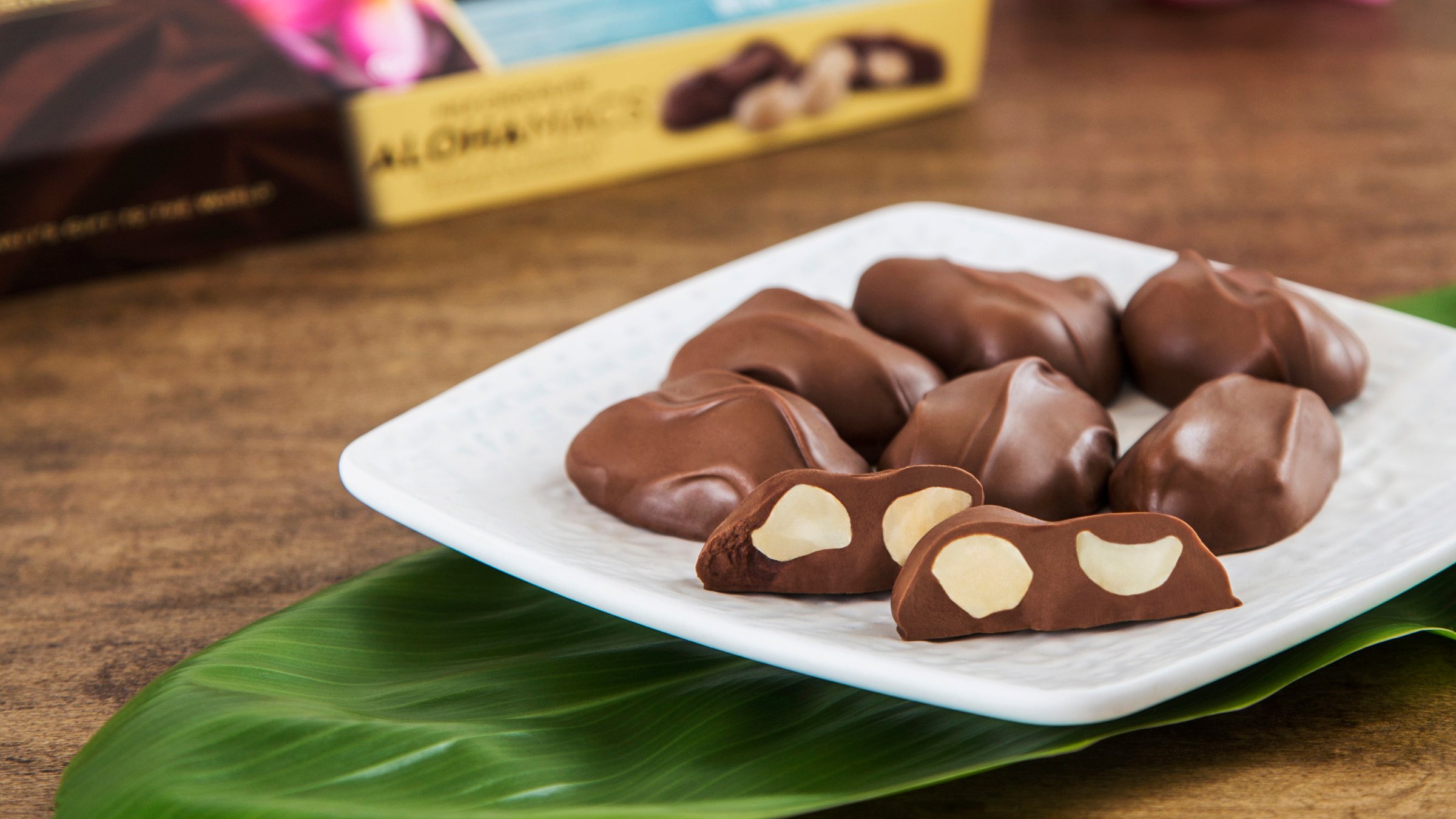
AlohaMacs macadamia nut milk chocolates on a white ceramic plate

Consumers have never had it so good. Every conceivable product and convenience in package sizes and formats for every occasion — singles, pairs, multiple flavors, snack size, family size, jumbo size… you name it, you can find it. Added to this variety is marketing and brand awareness, with seasonal ranges, gift packs, and volume-based promotions, to name a few.

From a production perspective, this variety dictates batch runs and throughput. However, the real challenges start in secondary and tertiary packaging, with product types, product volumes, and box/packet/promo styles all demanding a range of packaging recipes.

Adding to the challenge for packaging OEMS, many end users demand these multirole capabilities from a single machine.

Unique Request

A case in point is the challenge set by Honolulu-based Hawaiian Host Group — a North American confectionary company and global manufacturer of chocolate-covered macadamias.

Hawaiian Host Group tasked Italian company Cama Group, a gold-level OEM in the Rockwell Automation PartnerNetwork™, to develop an automation solution for the primary packaging of its macadamia-based products (see Figure 1).

Hawaiian Host was interested in automation, but in a phased approach that would help set its team up for success while managing the challenges unique to producing chocolate products in Hawaii. 

Keep up with food & beverage automation trends and technologies
workers in a cookie food manufacturing plant
Subscribe to The Journal
Keep up with food & beverage automation trends and technologies

Subscribe to The JOURNAL from Rockwell Automation and Our PartnerNetwork™, and receive the latest news and information directly to your inbox. Enter your email address and check the box for "The Journal." It's that easy to keep up with updates in the food and beverage industry!

Subscribe

Automation can enhance efficiency and boost production rates, but may need adaptations to accommodate future product innovation. The Cama team worked with the chocolate maker to design a solution that maximizes its operation while providing a modular approach for navigating future product changes.

Tailored Approach

The line Cama Group created was tailored specifically to this unique array of packaging challenges (see Figure 2). The system’s core consists of a digitalized control architecture from Rockwell Automation. It includes a ControlLogix® 5580 PAC with integrated safety, POINT I/O™, Kinetix® 5700 and 5300 servo drives, Stratix™ 5700 switches, PanelView™ Plus 7 HMIs, and PowerFlex® 525 variable-speed drives.

This automation architecture helps make multiple packaging recipes fulfillable on a single machine with minimal downtime between batches. The system is also scalable for growth and further digital transformation.

In operation, an advanced laser scanner feeds quality, shape and positional information to delta robots. The robots’ specially designed grippers pick the chocolates from the in-feed conveyor and gently place them into polyethylene terephthalate (PET) trays that arrive in parallel from a de-nester.

Once filled, single trays — or pairs of trays with a cushion sheet between them — are loaded into carton trays before lids are formed and tucked in. This results in completed boxes containing anywhere from four to 32 chocolates.

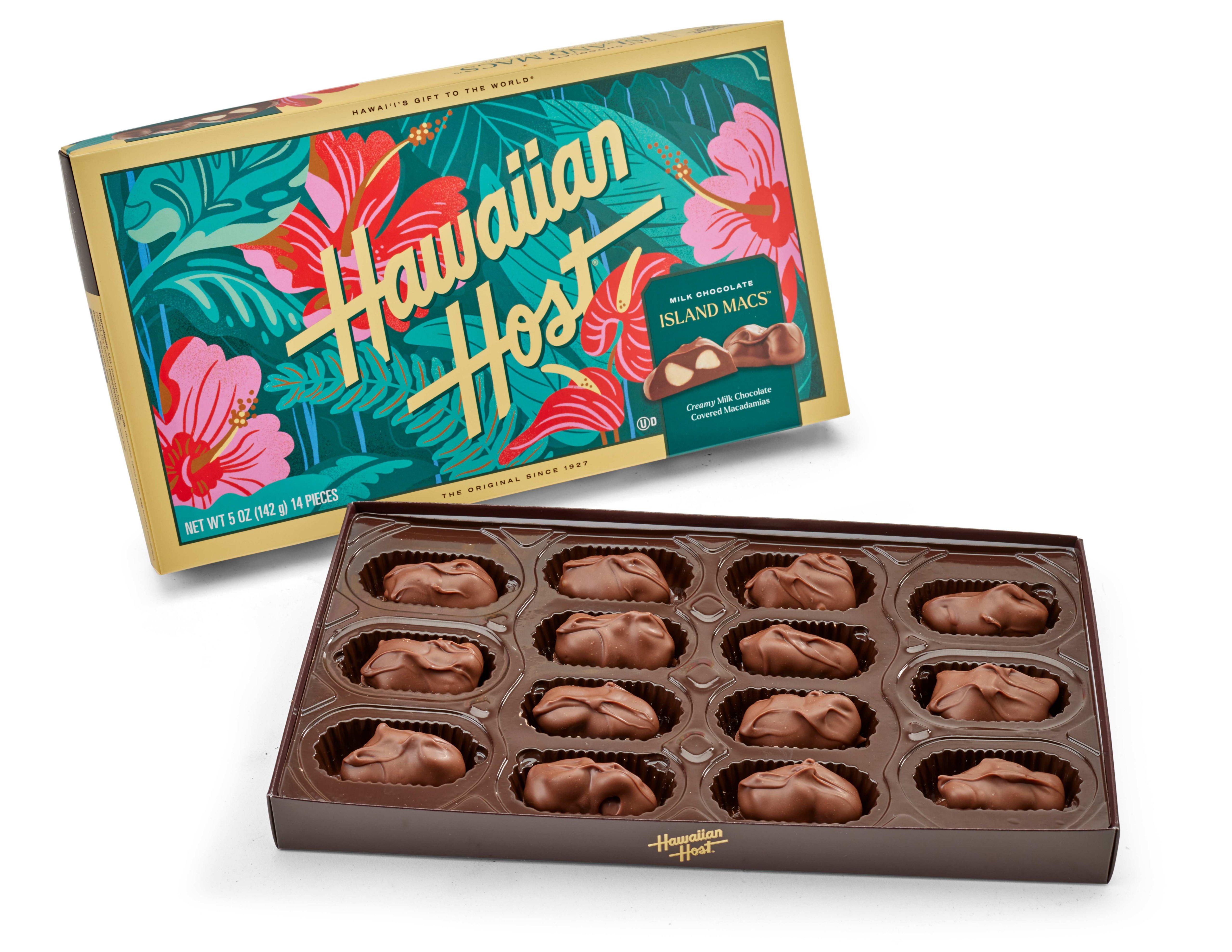
Open Box displaying tray of Island Macs Hibiscus Chocolates from company Hawaiian Host

Figure 1. Hawaiian Host recognized the need to automate and digitalize its packaging line to handle an array of tray configurations for chocolate products.

The line also is capable of undertaking bulk packaging, where the robots load chocolates directly into cartons. In addition, the bulk packaging recipe serves as a fallback in case of any line issues to prevent significant downtime. Completing the process, the boxes are x-rayed and conveyed to a case packer at the end of the line.

Addressing Staff Concerns

Hawaiian Host Group isn’t unique in its desire to automate, but approaches the process with a healthy dose of caution.

“We had a number of reasons to take this journey,” explained Chris Rabago, director of manufacturing at Hawaiian Host Group, in a ROKStudios session. “Our isolated island location carries unique challenges. As we considered our transition into automation, those challenges were important to address to ensure we set ourselves up for success.

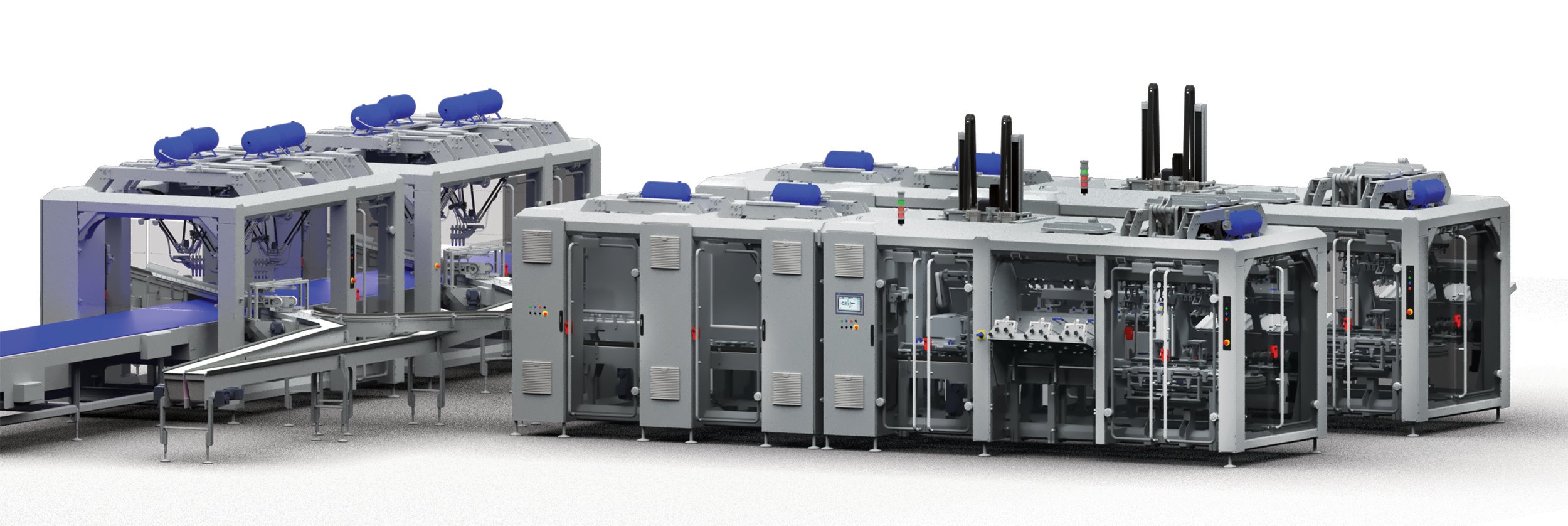
A rendering of the packaging line from Cama Group

Figure 2. Cama Group designed a packaging line with a digitalized control architecture to fulfill multiple packaging recipes on a single machine with minimal downtime between batches.

“Some of our staff were naturally cautious,” he continued, “with the understandable but stereotypical belief that automation was here to replace them. But that was not our focus at all. We wanted to optimize our operations by investing in technology that would complement and empower them.

“We put a big focus on how our employees would interact with robots,” Rabago said. “We wanted to leverage an intuitive user interface that’s approachable and aligns with a growing workforce that prefers a more digitalized working environment.”

Billy Goodman, managing director at Cama North America, explained the process: “We always adopt a consultative team-based approach. In fact, Cama’s work on this project was recognized by the 2023 World Confectionery Conference, where we won the Team of the Year award.”

Goodman shared that analyzing and auditing the customers’ precise needs is the first step. “Then, using our ‘sandbox’ of machines and modules, which include top- and side-load technologies, in conjunction with third-party solutions — vision, grippers, and, of course, automation in this case — we create customized solutions that match the precise needs of the application.

“Every project really is unique, even if the machines’ operating principles are relatively standard. In this instance, we had to balance multiple considerations, including personnel, factory space, real estate and operational demands,” he noted.

“In these sorts of projects, partnerships are key, not only to develop the initial concepts, but to then carry the package all the way through to fruition; and not just to day one, but to day 365 and far beyond,” he added.

“Some of our Industry 4.0 tools certainly suit the younger generation, who grew up working on phones and tablets. We have augmented reality (AR) for training, changeovers and maintenance, which not only excites and engages people, but also makes machines operate more efficiently.”


Like this article? Sign up for the digital magazine (4X/year) and e-newsletter from The Journal From Rockwell Automation and Our PartnerNetwork.


The Journal From Rockwell Automation and Our PartnerNetwork™ is published by Endeavor Business Media.

Topics: The Journal Food & Beverage Food Packaging

You may also be interested in

Loading
Loading
Loading
Loading
  1. Chevron LeftChevron Left Rockwell Automation Home
  2. Chevron LeftChevron Left Com...
  3. Chevron LeftChevron Left News
  4. Chevron LeftChevron Left The Journal
  5. Chevron LeftChevron Left How a Chocolate Maker Enhanced Packaging Throughput
Please update your cookie preferences to continue.
This feature requires cookies to enhance your experience. Please update your preferences to allow for these cookies:
  • Social Media Cookies
  • Functional Cookies
  • Performance Cookies
  • Marketing Cookies
  • All Cookies
You can update your preferences at any time. For more information please see our {0} Privacy Policy
CloseClose