Loading
Blog
Recent ActivityRecent Activity

Addressing the Complexity of Agricultural Processing with Integrated Architecture

Share This:

LinkedInLinkedIn
XX
FacebookFacebook
PrintPrint
EmailEmail
Storage grain bin silos in a field of matured corn crop in harvest time.

Agricultural processing plants operate under a growing mix of volatility and operational pressure. Raw material variability, labor shortages, rising energy costs, expanding sustainability expectations, and changes in consumer preferences all make it difficult to achieve consistent performance. Whether overcoming seasonal variability in grain processing or reducing energy consumption in oilseed crushing, agricultural processors must navigate complex industry parameters to maintain quality and scale for growth.

Many facilities have tried to keep pace by bolting on new tools or relying on manual workarounds, but these approaches no longer match the complexity or speed of today’s environment. The demands on modern processing operations require a move away from fragmented tools and toward unified control and information architecture. This integrated approach replaces disparate systems with a cohesive, plant-wide framework that simplifies workflows, strengthens decision‑making, and provides a more dependable foundation for ongoing modernization.

In this blog, we’ll break down some core challenges facing the industry, show how an integrated system can help address them, and outline how plants can start building a more resilient, efficient, and scalable foundation for the future.

The Realities Driving the Need for Change

Agricultural processors operate in an environment where small changes can have outsized consequences. Variability in crops or raw material supply require constant adjustments to keep production stable and quality on target. Seasonal swings shift input and output volumes faster than labor and equipment capacity can adapt, stretching teams during peaks and creating inefficiencies during slower periods. At the same time, rising energy costs turn routine operating decisions into financial trade-offs, while sustainability and traceability requirements, along with growing consumer expectations for healthier and more transparent food processing methods, add new layers of complexity. Maintaining consistent performance has become a daily balancing act that challenges even the most experienced operations teams.

These challenges are exacerbated with many plants still relying on fragmented systems, spreadsheet-based workflows, and inconsistent standards across tools, processes, and data. These limitations slow the flow of information, weaken data reliability, increase operator burden, and introduce long-term lifecycle and interoperability risks.

Leadership teams across the industry are focusing on a common set of goals:

  • More stable and predictable production
  • Faster and clearer operational visibility
  • Stronger compliance and traceability
  • Lower energy use and waste
  • More intuitive tools for the workforce
  • Reduced cyber and operational risk

Given the challenges and constraints across the industry, achieving these goals may seem daunting, however they point directly toward the type of cohesive, plant-wide approach that an Integrated Architecture® solution is purpose-built to deliver.

A Single Operational Ecosystem

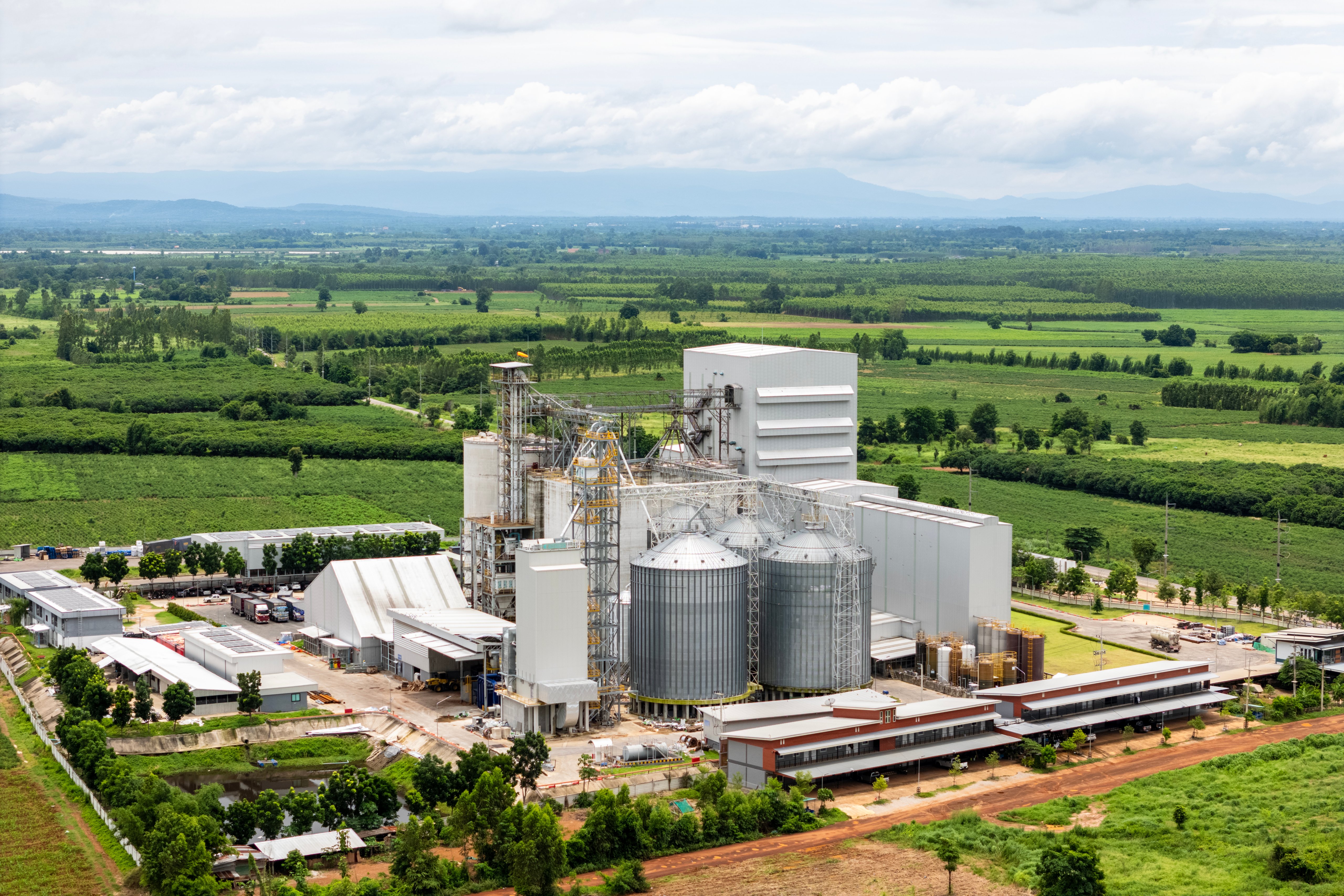
A large grain processing factory surrounded by green fields.

An integrated approach gives processors what fragmented systems can’t: a consistent way to run the plant, manage variability, and make decisions with confidence. By bringing control, power, safety, visualization, and plant data together into one cohesive system, this approach strengthens not only how individual assets perform, but how the entire plant operates, adapts, and responds to variability.

In contrast to a patchwork of separate tools, vendors, and methodologies, a connected, plant-wide architecture helps establish consistent control standards, shared logic, and common interfaces across lines and facilities. By bringing systems into a common framework, processors reduce variability, simplify operator workflows, and create a more predictable operating environment.

Standardized systems make it easier to onboard new operators and apply improvements across lines without time-consuming reconfiguration. Familiar interfaces and consistent workflows reduce the learning curve, limit operator-to-operator variation, and make daily tasks more repeatable. At the same time, synchronized, contextualized data from the control layer gives everyone, from the control room to the maintenance floor, a common operational reference point, helping teams coordinate actions more smoothly during shift changes, product transitions, and routine adjustments.

Including embedded intelligence, such as predictive diagnostics, advanced alarming, and integrated analytics, helps plants act before small issues escalate into downtime and maintain stable operation — even under variable conditions. For example, capabilities like unified alarming give operators clearer prioritization, while analytics and diagnostics highlight trends before they become issues. Together, these capabilities transition plants from reactive problem‑solving to intelligence‑driven performance, creating a more reliable and resilient operating environment.

Integrated Architecture capabilities are particularly effective in energy-intensive agricultural processing activities, like grain handling and ingredient processing, where solutions like variable frequency drives can be easily integrated to help optimize energy use and improve overall asset longevity. Similarly, implementing a single, unified system to manage a multi-step operation like corn processing helps coordinate and standardize production stages — from cleaning and dry milling to starch separation. This standardization drives lasting, meaningful outcomes in throughput, yield, and energy consumption.

The benefits aren’t only theoretical…

In one instance, DuPont moved toward an Integrated Architecture approach by replacing their end-of-life legacy DCS and PLC systems with the Rockwell Automation PlantPAx® DCS. This led to higher operational availability, more agile maintenance, better cost control, and a flexible platform for future needs. Similarly, Intelligent Refining unified and modernized its boiler operations with the PlantPAx® Process Automation System, improving boiler performance and monitoring, enabling automatic power matching, increasing reliability, and achieving fully integrated, plant-wide control for centralized production oversight.

Bottles of olive oil on a conveyor belt on a production line.

A Modernization Mindset

Long‑term competitiveness goes beyond implementing Integrated Architecture solutions. Organizations who see meaningful results adopt a broader modernization mindset: one that ties every decision to KPIs and helps ensure that the plant, processes, and workforce evolve together.

Organizations that have the most success will:

  • Connect every improvement to measurable business outcomes in energy performance, product quality, sustainability, throughput, and workforce efficiency.
  • View modernization as a strategic path to achieving their greater business goals, enabling more timely data, faster issue resolution, and more consistent, resource-efficient operating performance.
  • Design for flexibility, enabling faster changeovers, smoother production adjustments, and quicker response to market shifts, customer demands, and new regulations.
  • Plan proactively for lifecycle needs across automation, power, and digital infrastructure, lowering long-term maintenance costs and reducing risk from aging assets.
  • Drive consistency and traceability across all production stages, leading to fewer errors, faster root-cause analysis, and more reliable output.
  • Make decisions from clear, actionable data, improving response time and confidence through stable, interoperable systems.

Adopting this mindset creates alignment across engineering, operations, maintenance, and leadership, turning investments into measurable performance gains as part of a broader operational transformation.

Getting Started

This doesn’t have to happen all at once. Many businesses start with focused, high impact steps. 

  1. Assess Your Current State: Analyze your installed base, system health, and where fragmentation is introducing risk or inefficiency. 
  2. Select a Focused Pilot Area: Choose a scope where Integrated Architecture will deliver immediate value — such as drives modernization, MCC integration, line level control upgrades, or data consolidation. 
  3. Link Integrated Architecture Investments to Business Outcomes: Whether your goals center on throughput, stability, sustainability, or workforce efficiency, ensure each upgrade directly supports measurable improvement. 

By following these steps, you can build momentum and steadily reach your business goals with an Integrated Architecture system.

If you’re looking to simplify operations, reduce variability, or modernize at a pace that fits your facility, our team and global network of skilled system integrators are here to help. Connect with an agricultural processing expert to start a practical conversation about your plant and your priorities or learn more here.

Published April 13, 2026

Topics: Accelerate Digital Transformation Build Resilience Optimize Production Networks & Infrastructure Digital Transformation Food & Beverage PlantPAx

Lee Coffey
Lee Coffey
Strategic Marketing Manager – Consumer Packaged Goods
Lee Coffey is a strategic marketing leader at Rockwell Automation with over a decade of experience in automation and food processing. He is responsible for developing and implementing the global strategy, execution, and marketing programs for the Consumer Packaged Goods industry.
Subscribe to Rockwell Automation

Receive the latest news, thought leadership and information directly to your inbox.

Subscribe now

You may also be interested in

Loading
Loading
Loading
Loading
  1. Chevron LeftChevron Left Rockwell Automation Home
  2. Chevron LeftChevron Left Com...
  3. Chevron LeftChevron Left News
  4. Chevron LeftChevron Left Blogs
  5. Chevron LeftChevron Left Integrated Architecture in Agricultural Processing
Please update your cookie preferences to continue.
This feature requires cookies to enhance your experience. Please update your preferences to allow for these cookies:
  • Social Media Cookies
  • Functional Cookies
  • Performance Cookies
  • Marketing Cookies
  • All Cookies
You can update your preferences at any time. For more information please see our {0} Privacy Policy
CloseClose