

Loading
Innovation Center LOGO
Recent ActivityRecent Activity

PID Simulacion utilizando LeadLag y Filtro 1er Orden

Esta aplicación usa un modelo para generar un valor aleatorio de una variable de proceso el cual puede ser usado para visualizacion como para la simulacion de un PID - [Tiempo de Implementación: 60 minutos]
Innovation Center Home Page
Input in control systems refers to reference signals or commands that guide system responses, ensuring performance aligns with desired outcomes.
Innovation Center LOGO
  • Visión General
  • Guía de Implementación
  • Descarga
  • Contáctanos
  • Suscríbase
Innovation Center Home Page

¿Qué hace esta aplicación?

Esta es una aplicación simplificada para la simulación de el comportamiento de una variable de proceso para ser conectado a un controlador PID. Esta aplicacion cuenta con archivos ajecutables para realizar dicha simulacion en Studio5000 para ser usada en procesadores Logix.


 

¿Esta aplicación es relevante para mí?

Esta aplicación puede ser utilizada tanto en Studio 5000 para procesadores Logix. Permite comprender el efecto de las ganancias y diferentes parámetros de configuración de un PID, así como la simulación de procesos simples ya sea para fines demostrativos o de comisionamiento virtual.

 
AHIC Download ICON VF.png

Descarga

Tenga en cuenta: deberá aceptar los Términos y Condiciones para cada descarga.

Archivo descargable ›
Legal Disclaimer Acceptance. ROCKWELL AUTOMATION WILL PROVIDE ACCESS TO ROCKWELL PRODUCTS (BEST PRACTICES, APPLICATIONS AND KNOWLEDGE) ON THE CONDITION THAT YOU ACCEPT AND COMPLY WITH THE FOLLOWING TERMS AND CONDITIONS. YOU ACCEPT AND AGREE TO BE BOUND BY THE TERMS OF THIS AGREEMENT BY DOWNLOADING, INSTALLING, COPYING, OR OTHERWISE USING PRODUCTS. IF YOU ARE ACCEPTING THESE TERMS ON BEHALF OF ANOTHER PERSON, COMPANY, OR OTHER LEGAL ENTITY, YOU REPRESENT AND WARRANT THAT YOU HAVE FULL AUTHORITY TO BIND THAT PERSON, COMPANY, OR LEGAL ENTITY TO THESE TERMS. IF YOU DO NOT AGREE TO THESE TERMS, DO NOT DOWNLOAD, INSTALL, COPY, ACCESS, OR USE THE PRODUCTS, SOFTWARE AND/OR CLOUD SERVICES. 1. Rockwell Automation retains full ownership and title to all Products and related documentation. No rights or licenses are granted other than those set forth in this Agreement. Company grants to Rockwell Automation a non-exclusive, worldwide, royalty-free, perpetual, non-revocable license to use any feedback Company provides regarding the Products, even if Company has designated the feedback as confidential. Rockwell Automation will be entitled to use the feedback without restriction or compensation to Company. 2. Company may not lease sub-lease, assign, license, sub-license or otherwise transfer any of the Products without the prior written consent of Rockwell Automation. Company may not assign or otherwise transfer access rights to the Products without the prior written consent of Rockwell Automation. Any reverse assembly, reverse engineering, decompilation, and creation of derivative works based on the Products by Company is prohibited. 3. Company acknowledges that Products provided under this Agreement are Rockwell Automation’s Confidential Information and are covered by effective or pending copyrights, patents, trademarks and/or trade secrets of Rockwell Automation, and Company agrees to maintain confidentiality by not disclosing Products or documentation to any third party without the prior written consent of Rockwell Automation and to protect the confidentiality of the Products as it would Company’s own confidential information. Company agrees that its obligation of confidentiality under this paragraph shall survive expiration or termination of this Agreement. 4. Company agrees that Products provided under this Agreement are prototypes and examples and its application and results may vary depending on each customer and project conditions. Rockwell Automation do not warranty the same results. This Agreement shall in no way be construed as a commitment by Rockwell Automation at any time to manufacture and/or offer Products for sale. There is no explicit or implicit service level agreement associated with using the Products. Rockwell Automation does not warrant that the functions contained in the Products will meet Company’s requirements. Company agrees to use all Products only in accordance with the instructions and only for the intended usages identified in the documentation. 5. EXCLUSION OF WARRANTIES AND LIMITATION OF LIABILITY. THE PRODUCTS ARE PROVIDED "AS IS". ROCKWELL AUTOMATION DISCLAIMS ANY AND ALL WARRANTIES, EXPRESS, IMPLIED OR STATUTORY, INCLUDING WITHOUT LIMITATION ANY WARRANTIES OF MERCHANTABILITY OR FITNESS FOR A PARTICULAR PURPOSE. ROCKWELL AUTOMATION EXPLICITLY DISCLAIMS ALL WARRANTIES OF NON- INFRINGEMENT AND EXPRESSLY DOES NOT WARRANT THAT THE PRODUCTS, IN WHOLE OR IN PART, WILL BE ERROR FREE OR FREE FROM SECURITY VULNERABILITIES. IN NO EVENT SHALL ROCKWELL AUTOMATION BE LIABLE FOR (i) LOST PROFITS, LOST SAVINGS, DOWNTIME, SPECIAL, INDIRECT OR CONSEQUENTIAL DAMAGES OF ANY KIND, OR (ii) ANY PERSONAL INJURY, PROPERTY DAMAGE OR ENVIRONMENTAL DAMAGE ARISING OUT OF OR IN CONNECTION WITH THIS AGREEMENT, WHETHER IN AN ACTION IN CONTRACT, STRICT LIABILITY OR IN TORT INCLUDING NEGLIGENCE. 6. COMPANY AGREES TO INDEMNIFY AND HOLD ROCKWELL AUTOMATION HARMLESS FROM ALL COSTS, AWARDS, DAMAGES, EXPENSES AND FEES (INCLUDING ATTORNEYS FEES) RESULTING FROM OR RELATED TO ANY THIRD-PARTY CLAIMS (INCLUDING EMPLOYEES AND AGENTS OF COMPANY) AGAINST ROCKWELL AUTOMATION, ITS DISTRIBUTORS, AGENTS, OFFICERS, DIRECTORS OR EMPLOYEES FOR PERSONAL INJURY (INCLUDING DEATH), PROPERTY DAMAGE OR ENVIRONMENTAL DAMAGE RELATED TO OR RESULTING FROM THE USE OF THE PRODUCTS. 7. In the event a Product is exported, Company agrees to comply with all applicable United States Export Control Law and Regulations, and the applicable export control laws of other countries. This Agreement shall be governed by the laws of the state of Wisconsin. This Agreement is the complete and exclusive Agreement between Rockwell Automation and the Company, and supersedes all prior agreements, whether written or oral, relating to the Products.
AHIC NEED HELP ICON VF.png

¿Necesita ayuda?

Si necesita ayuda con alguna aplicación o tiene comentarios acerca del Innovation Center, por favor contáctenos.


Características Generales

 
  • Para el caso de Studio 5000, esta aplicación utiliza un bloque de proceso Lead-Lag.

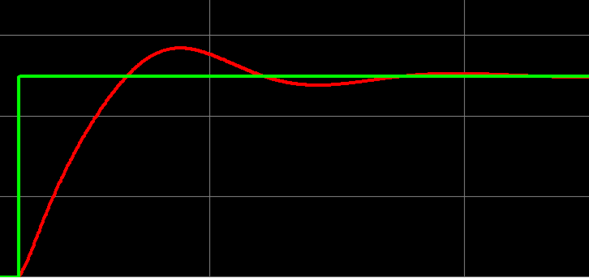
    Con esto lograremos simular el comportamiento de un sistema de control de temperatura

     
    pid-simulation-with-lead-lag-and-1st-order-filter_Fig 1.png

    pid-simulation-with-lead-lag-and-1st-order-filter_Fig 1

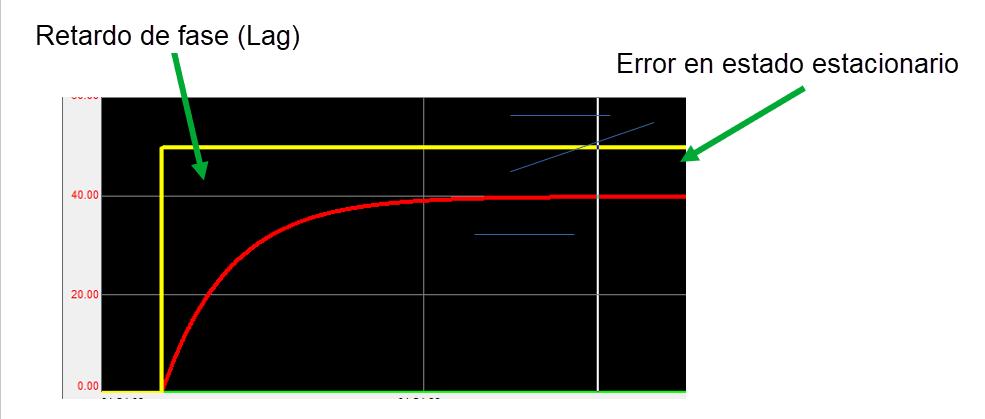
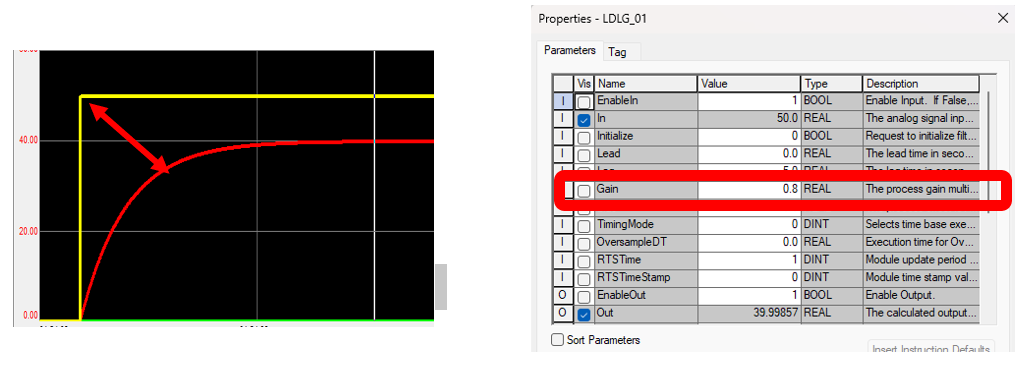
  • El error en estado estacionario se ajusta mediante el parámetro Gain dentro de la instrucción LDLG.

    pid-simulation-with-lead-lag-and-1st-order-filter_Fig 2_ES.png

    pid-simulation-with-lead-lag-and-1st-order-filter_Fig 2

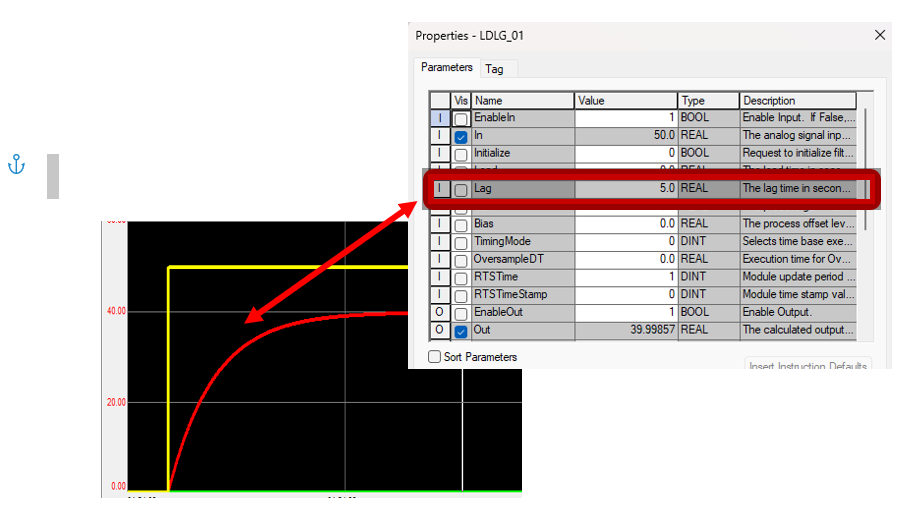
  • El retraso de fase se ajusta mediante el parámetro Lag dentro de la instrucción LDLG.


    pid-simulation-with-lead-lag-and-1st-order-filter_Fig 3.png

    pid-simulation-with-lead-lag-and-1st-order-filter_Fig 3

  • pid-simulation-with-lead-lag-and-1st-order-filter_Fig 4.png

    pid-simulation-with-lead-lag-and-1st-order-filter_Fig 4


Ventajas

  • Código simplificado
  • Facilidad en la implementación
  • Impacto en el tiempo de desarrollo
  • Reducción de costos
  • Eficiencia operativa
  • Permite la simulación y estudio en un entorno seguro


¿Cómo puedo hacerlo funcionar?

Requisitos: productos, herramientas, conocimientos previos.

Software

  • Studio 5000 – Logix Designer (V36.0→)

Conocimiento previos

  • Conocimientos básicos en Studio 5000
  • Conocimientos en Sistemas de Control de Lazo Cerrado PID

Enlaces de interés (internos o externos)

  • https://www.rockwellautomation.com/es-mx/products/software/factorytalk/designsuite/studio-5000.html
  • https://www.rockwellautomation.com/es-mx/capabilities/industrial-automation-control/design-and-configuration-software.html
AHIC STEP ICON.png

Guía de Implementación

 
  1. Paso 1
  2. Paso 2
  3. Paso 3
  4. Paso 4
  5. Paso 5
  6. Conclusión
Open All Close All
Paso 1


Guía de implementación para Studio 5000.

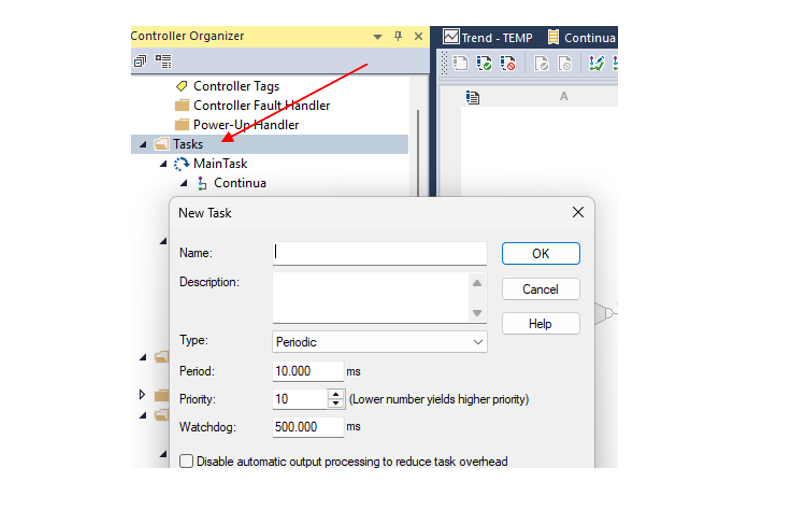
Crear una Tarea Periodica.

Para este ejercicio se utiliza un Trigger de 10ms pero este tiempo puede ser ajustable de acuerdo al tipo de proceso que se quiera simulara.


pid-simulation-with-lead-lag-and-1st-order-filter_Fig 5.png

pid-simulation-with-lead-lag-and-1st-order-filter_Fig 5

Paso 2


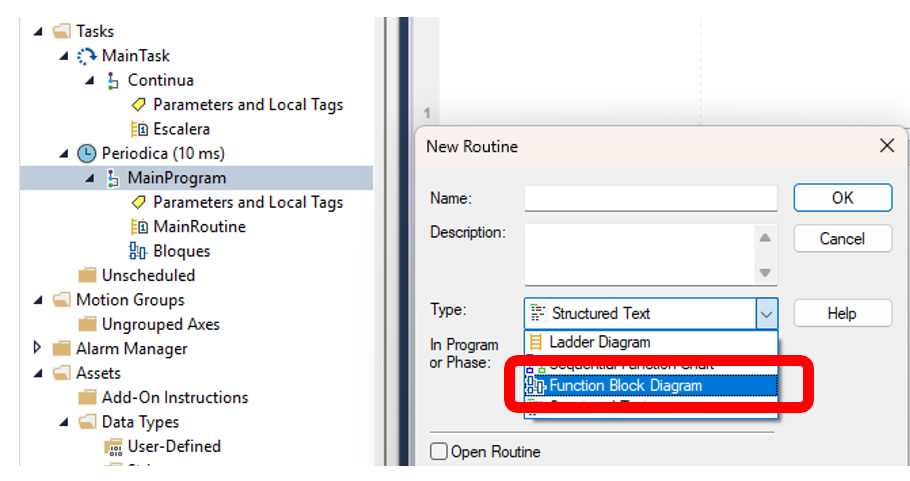
Crear una rutina del tipo Function Block Diagram.


pid-simulation-with-lead-lag-and-1st-order-filter_Fig 6.png

pid-simulation-with-lead-lag-and-1st-order-filter_Fig 6

Paso 3


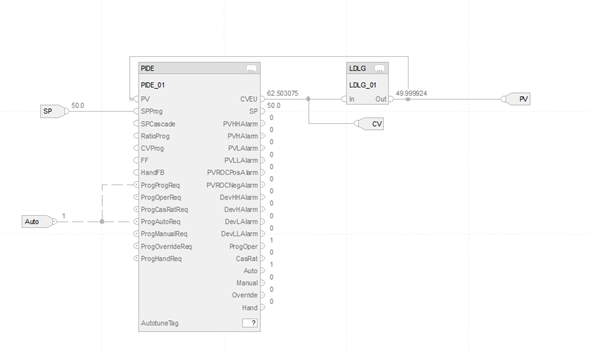
Insertar las instrucciones de PID y LDLG como se muestra a continuación.


pid-simulation-with-lead-lag-and-1st-order-filter_ Fig 7.png

pid-simulation-with-lead-lag-and-1st-order-filter_Fig 7

Paso 4


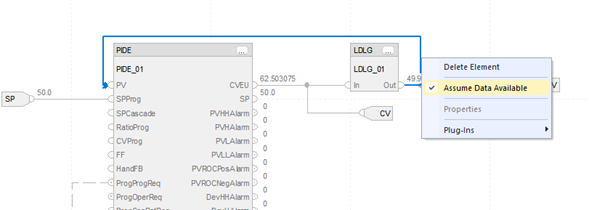
Sobre la linea que conecta la salida del bloque LDLG hacia el PV del PID, dar click derecho y seleccionar “Assume Data Available”.

Este es un paso importante ya que de otra forma el controlador marcará un Error debido a que no puede resolver el bucle formado entre estos dos bloques.


pid-simulation-with-lead-lag-and-1st-order-filter_Fig 8.png

pid-simulation-with-lead-lag-and-1st-order-filter_Fig 8

Paso 5


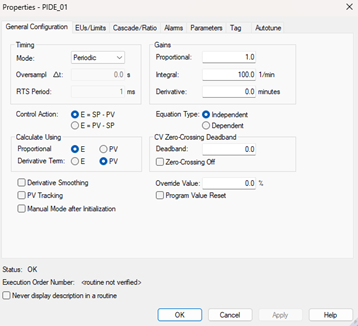
Ajustar los parámetros y ganancias del PID acorde al proceso que se desea simular.


pid-simulation-with-lead-lag-and-1st-order-filter_Fig 9.png

pid-simulation-with-lead-lag-and-1st-order-filter_Fig 9

Conclusión


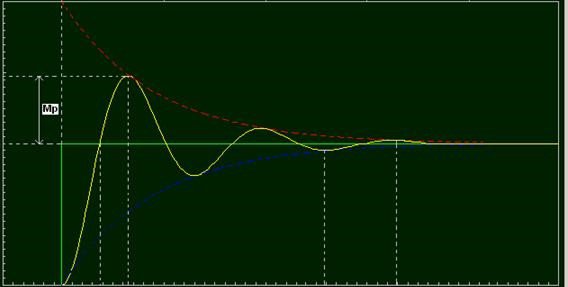
Con esta parametrización se logra un comportamiento de un sistema Sub-Amortiguado  con  sobre impulso de aproximadamente el 20% y alcanzando una estabilidad en tres semiciclos.

Pero se puede ajustar para obtener cualquier comportamiento deseado de acuerdo al proceso que se desea simular.


0 < ζ < 1  Sistema Subamortiguado
ζ = 1  Sistema Criticamente Amortiguado
ζ > 1  Sistema Sobreamortiguado


pid-simulation-with-lead-lag-and-1st-order-filter_Fig 10.jpg

pid-simulation-with-lead-lag-and-1st-order-filter_Fig 10

pid-simulation-with-lead-lag-and-1st-order-filter_Fig 5.png

pid-simulation-with-lead-lag-and-1st-order-filter_Fig 5

pid-simulation-with-lead-lag-and-1st-order-filter_Fig 6.png

pid-simulation-with-lead-lag-and-1st-order-filter_Fig 6

pid-simulation-with-lead-lag-and-1st-order-filter_ Fig 7.png

pid-simulation-with-lead-lag-and-1st-order-filter_Fig 7

pid-simulation-with-lead-lag-and-1st-order-filter_Fig 8.png

pid-simulation-with-lead-lag-and-1st-order-filter_Fig 8

pid-simulation-with-lead-lag-and-1st-order-filter_Fig 9.png

pid-simulation-with-lead-lag-and-1st-order-filter_Fig 9

pid-simulation-with-lead-lag-and-1st-order-filter_Fig 10.jpg

pid-simulation-with-lead-lag-and-1st-order-filter_Fig 10


PID Simulacion utilizando LeadLag y Filtro 1er Orden

Versión 1.2 - Julio de 2026

 
AHIC White Logo

Reciba nuevas aplicaciones y novedades del Centro de Innovación directamente en su correo electrónico.

¡Suscríbase!
  1. Chevron LeftChevron Left Página principal de Rockwell Automation
  2. Chevron LeftChevron Left Asi...
  3. Chevron LeftChevron Left Sop...
  4. Chevron LeftChevron Left Descargas
  5. Chevron LeftChevron Left Application Hub - Innovation Center
  6. Chevron LeftChevron Left Simulación PID con Lead/Lag y Filtro de Primer Orden
El contenido de este sitio ha sido traducido mediante inteligencia artificial (IA) sin revisión humana o ediciones. El contenido podría contener errores o inexactitudes, y se proporciona “tal cual” sin ninguna garantía. El texto oficial es la versión en inglés del contenido.
Actualice sus preferencias de cookies para continuar.
Esta función requiere cookies para mejorar su experiencia. Actualice sus preferencias para permitir estas cookies.:
  • Cookies de Redes Sociales
  • Cookies Funcionales
  • Cookies de Performance
  • Cookies de Marketing
  • Todas las cookies
Puede actualizar sus preferencias en cualquier momento. Para más información, vea nuestro {0} Política de Privacidad
CloseClose