Loading
Magazine | Motion Control
Recent ActivityRecent Activity

Lumber Mill Gains Efficiency from Motion Upgrade

See how a lumber mill improved log stacking stability and efficiency by updating obsolete motion controllers that would still work with their current PLC.

Share This:

LinkedInLinkedIn
XX
FacebookFacebook
PrintPrint
EmailEmail
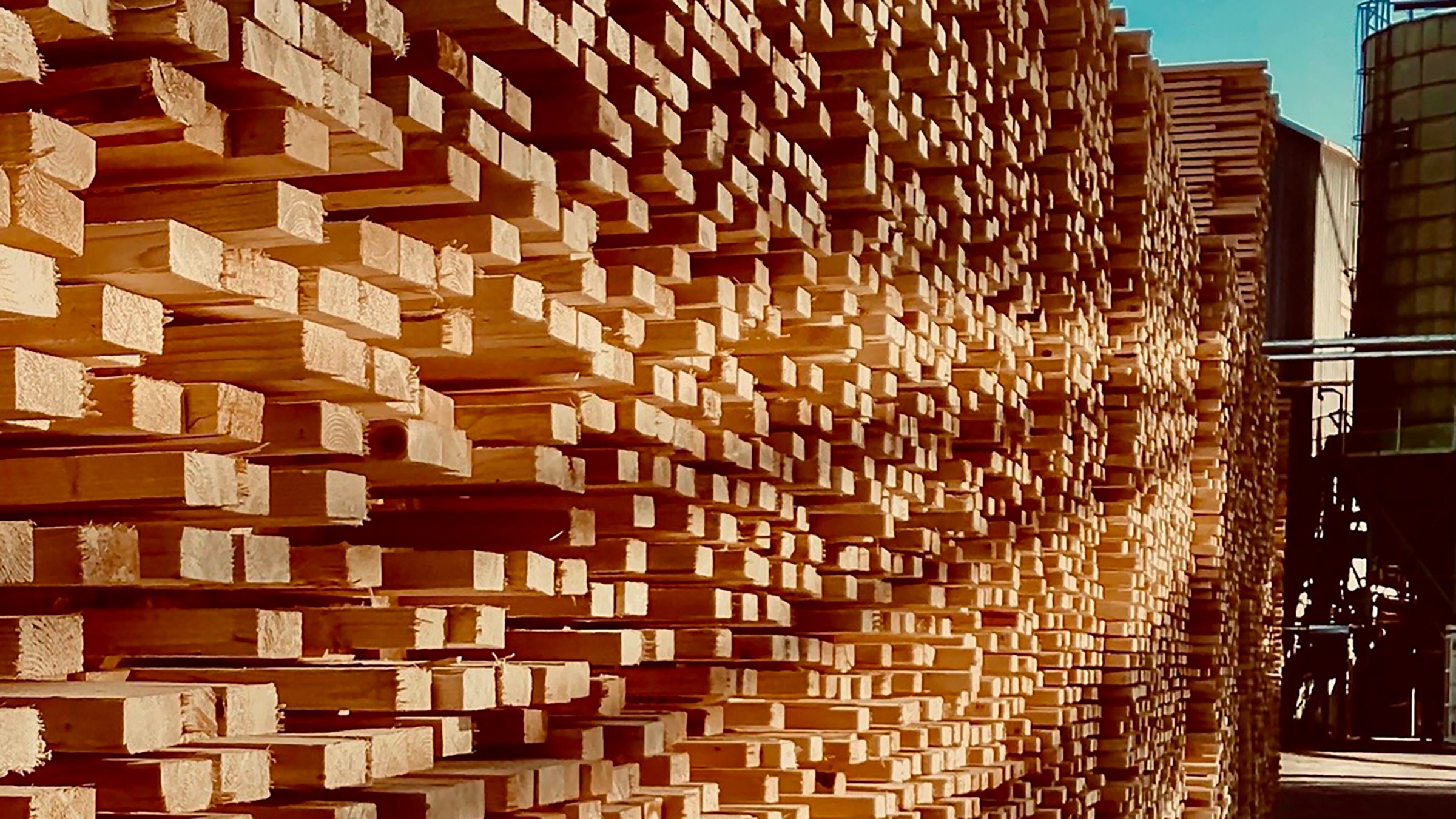
Stack of lumber at Vaagen Brothers Lumber, Inc. in Colville, Washington.

Vaagen Brothers Lumber, Inc., in Colville, Washington, has a history stretching back more than 70 years. Their motto, “Small Logs. Better Lumber,” hearkens to their core principles of value and sustainability. Their facilities in Coleville and Usk, Washington, make extensive use of industrial hydraulic motion control to position saws, logs and lumber.

The company built its control systems around the Rockwell Automation Allen-Bradley® ControlLogix® programmable logic controller (PLC). For motion control of hydraulic axes, they used the 1756-M02AS and 1756-HYD02 plug-in motion modules, which served them reliably for more than 20 years.

Ryan Tietsort, an electrician at Vaagen Brothers, researched options when Rockwell Automation announced the discontinuation of the 1756-M02AE, 1756-M02AS and 1756-HYD02 analog motion modules. Among other applications, these modules had been integral to the mill’s lumber stacker system, controlling servo-hydraulic motion via the ControlLogix PLC.

With no direct replacement available from Rockwell Automation, Tietsort’s team needed an alternative that would integrate seamlessly with their existing PLC while minimizing downtime.

In addition to replacing the obsolete modules, Tietsort saw an opportunity to address a recurring issue: unstable lumber stacks. Operators frequently had to intervene manually due to inconsistencies in hydraulic motion tuning, slowing production and increasing labor costs.

The culprit wasn't mechanical failure or operator error. Rather, the issue involved less-than-ideal motion tuning with the existing system.

The Solution: Transitioning to Delta RMC Motion Controllers

After evaluating available options, the team chose Delta Motion’s RMC motion controllers as a replacement. Rockwell Automation recommends these as a replacement option because they’re compatible with Allen-Bradley PLCs and interface with the same I/O devices as the discontinued modules.

Steve Nylund, CEO, Delta Motion.
From the Author: The Journal’s Final Issue

“For decades, Rockwell Automation and Delta Motion have partnered to deliver powerful hydraulic motion control solutions to our shared customers. Over that time, we’ve witnessed a remarkable evolution in the machine control industry. The Journal has played an impactful role in that journey, showcasing real-world applications and connecting leaders across the industry. We’re honored to contribute to this final issue, and we look forward to continuing to work alongside Rockwell Automation to shape the future of industrial automation.”

— Steve Nylund, CEO, Delta Motion 

The ability to communicate over EtherNet/IP™ and use Add-On Instructions (AOIs) to replicate familiar ControlLogix commands made the transition smoother. And Delta Motion’s RMCTools software’s L5K import/export functionality enables seamless integration with Studio 5000®, eliminating redundant data entry and reducing setup time.

Programming flexibility lets control engineers choose between doing most of the control in the PLC and sending direct commands to the motion controller or taking advantage of the motion controller’s user programs to offload motion-critical tasks to the RMC, where they execute at motion-loop speeds.

The Implementation: Streamlined Integration and Performance Optimization

Vaagen Brothers chose to use direct commands from the PLC to the motion controller. For upgrades, this approach enables maximum use of existing PLC code. The goal was to minimize downtime while ensuring a smooth integration with their existing PLC infrastructure.

One of the key upgrade challenges was optimizing hydraulic motion for stable lumber stacking. Tuning hydraulic motion can be challenging, and inconsistencies in motion control had previously led to stack instability. With some engineering effort, the team improved operation and positioning tolerances required for stable stacks.

Worker with lumber stacker at Vaagen Brothers Lumber, Inc. in Colville, Washington.

One of the upgrade goals was to optimize hydraulic motion for stable lumber stacking to eliminate inconsistencies that had previously caused stack instability. With the new motion controller software’s tuning tools, Vaagen Brothers Lumber achieved greater precision and positioning required for stable stacks.

The installation process was completed quickly and efficiently and with minimal disruption. Operators noticed immediate improvements in lumber stacking consistency. The lumber mill realized improvements in overall system reliability and reduced the need for manual adjustments.

The transition replaced obsolete hardware and provided an opportunity to enhance motion performance, reducing the need for manual adjustments and improving overall system reliability.

The Results: Improved Stability, Reduced Downtime

The transition to the new motion controllers provided measurable benefits that include:

  • Enhanced Motion Control. More precise tuning eliminated stack instability, reducing production interruptions.
  • Reduced Manual Adjustments. Operator intervention decreased, leading to higher efficiency and lower labor costs and improving safety.
  • Minimal Downtime. The sawmill successfully implemented the new system much more quickly than is typical, resulting in minimal disruption to operations.
  • Future-Proofing. The mill now has a long-term solution for motion control.
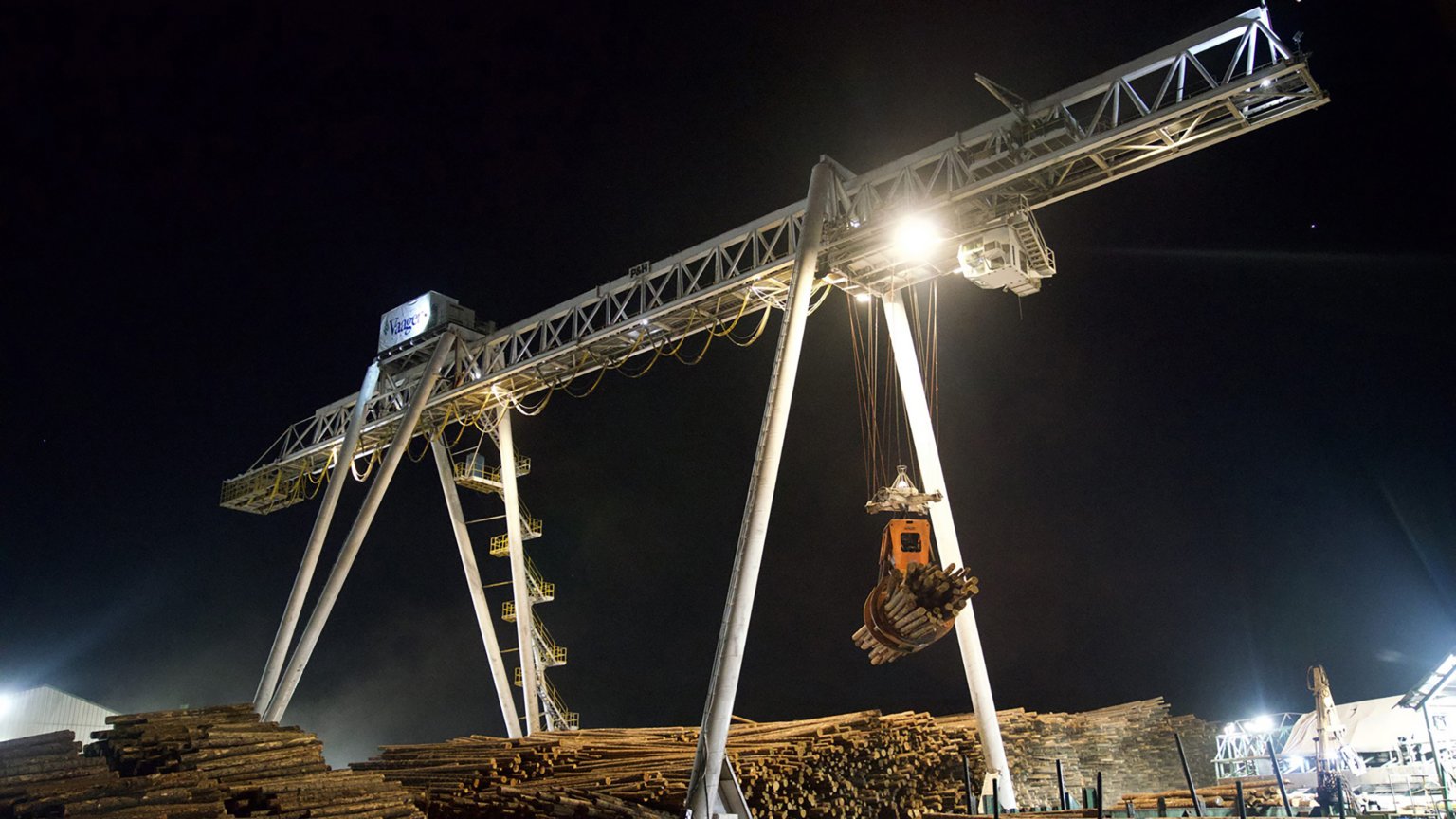
Photo of Vaagen Brothers Lumber, Inc. in Colville, Washington, mill at night.

Vaagen Brothers Lumber, Inc.’s facilities in Washington state use hydraulic motion control to position saws, logs and lumber. When Rockwell Automation discontinued the 1756-M02AE, 1756-M02AS and 1756-HYD02 motion modules, the mill needed replacement motion modules for the lumber stacker system, controlling servo-hydraulic motion via the ControlLogix PLC.

Tietsort and his team resolved their concerns over component obsolescence. By transitioning to the new motion controllers, they future-proofed their motion control systems while enhancing sawmill performance.

Delta Motion, based in Battle Ground, Washington, is a Rockwell Automation Technology Partner. The company manufactures motion controllers and supporting software for industrial hydraulic and electric applications. Its RMC motion controllers range from the 1-or 2-axis RMC75 to the RMC200 that can tightly synchronize up to 50 axes of motion. They’re used worldwide in applications ranging from wood processing machinery, presses, testing and general manufacturing.


The Journal From Rockwell Automation and Our PartnerNetwork™ is published by Endeavor Business Media.

Topics: The Journal Advanced Motion & Robotics Pulp & Paper

You may also be interested in

Loading
Loading
Loading
Loading
  1. Chevron LeftChevron Left Rockwell Automation Home
  2. Chevron LeftChevron Left Com...
  3. Chevron LeftChevron Left News
  4. Chevron LeftChevron Left The Journal
  5. Chevron LeftChevron Left Lumber Mill Gains Efficiency from Motion Upgrade
Please update your cookie preferences to continue.
This feature requires cookies to enhance your experience. Please update your preferences to allow for these cookies:
  • Social Media Cookies
  • Functional Cookies
  • Performance Cookies
  • Marketing Cookies
  • All Cookies
You can update your preferences at any time. For more information please see our {0} Privacy Policy
CloseClose