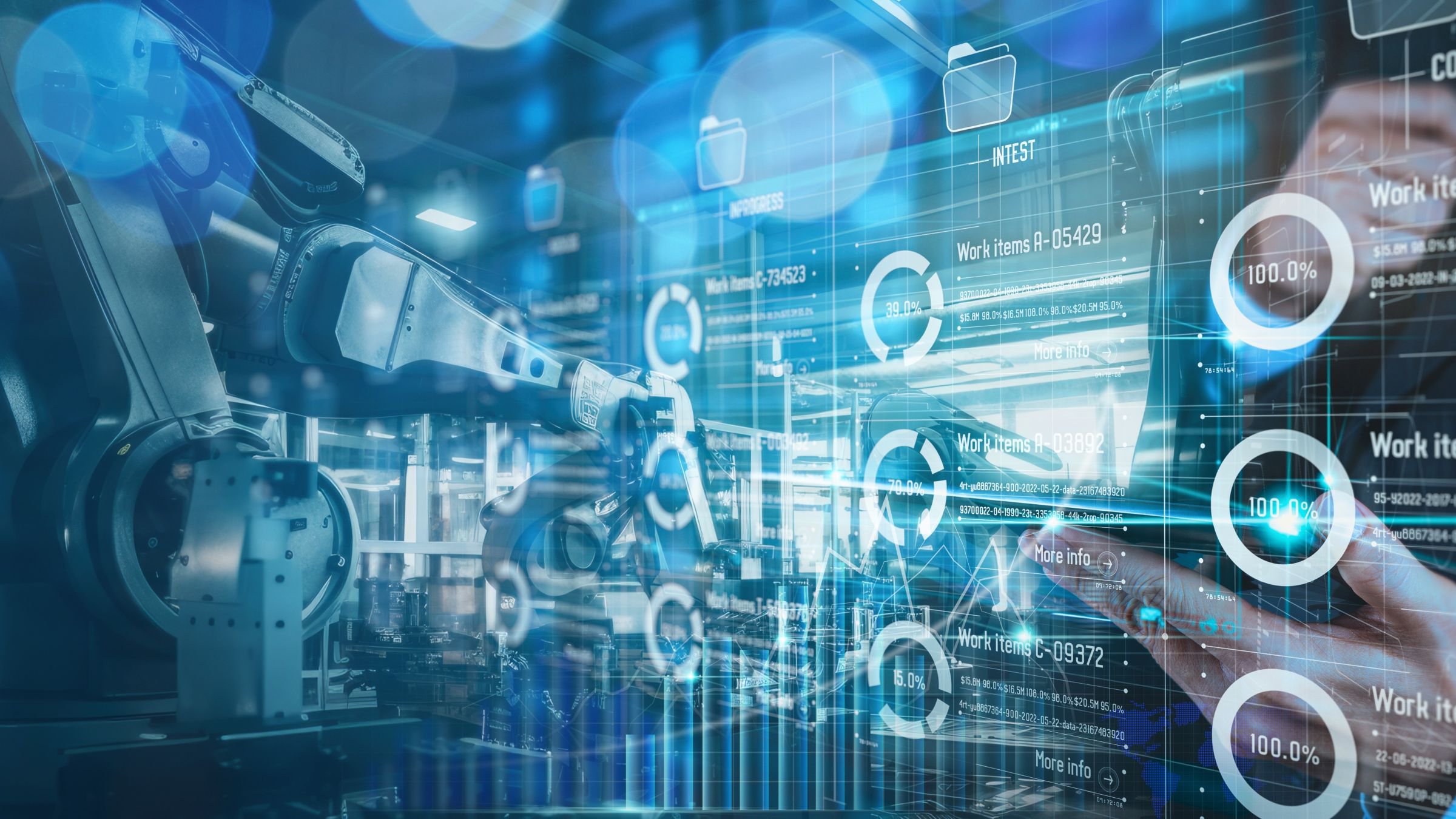
Introduction: Why Advanced Motion & Robotics are re-shaping Industrial Operations
Industrial operations are undergoing a historic transformation. What used to be linear, fixed, and mechanical is becoming adaptive, autonomous and data‑driven. Motion and robotics systems now sit at the heart of this change — not simply automating tasks, but enabling intelligent, connected ecosystems that continually optimize themselves.
So, what’s next? Here are five key trends shaping the future of motion and robotics—and why they matter for manufacturers looking to stay competitive.
Trend 1: Unified Motion & Robotics control architectures
Historically, robots and motion systems operated on separate controllers, creating complexity and synchronization challenges. Today, manufacturers are moving toward Unified robot control architectures that consolidate motion, robotics, and safety into a single platform.
Why it matters:
- Simpler engineering: One environment, one code base.
- Faster synchronization: Coordinated movement improves precision and throughput.
- Lower costs: Fewer hardware components, less integration overhead.
- Accelerated deployment: OEMs and end users reduce commissioning time dramatically.
Unified control is a foundational step toward autonomous operations and scalable system design. Shape
Trend 2: Intelligent conveyance and flexible material movement
Manufacturers are moving away from rigid, mechanical conveyors toward intelligent, software‑defined conveyance. Technologies like Independent Cart Technology (ICT) enable linear, non-contact, magnetically driven motion that can adapt to product variability instantly.
What’s changing:
- High-speed movement without mechanical wear
- Rapid recipe and SKU changeovers
- Configurable layouts instead of fixed mechanical paths
- Support for high‑mix, low‑volume production
This shift is especially powerful for food & beverage, life sciences and consumer goods, where agility and traceability are paramount.Shape
Trend 3: Autonomous Mobile Robots (AMRs) for smart logistics
Material handling is being transformed by OTTO AMRs, which automate transport between workstations and storage areas. These robots use AI-driven navigation and real-time coordination to optimize workflows.
Why manufacturers are accelerating AMR adoption:
- Labor optimization: Reduce manual transport and redeploy workers to higher-value tasks.
- Scalable automation: Add AMRs as needed without reworking infrastructure.
- Improved safety: Fewer forklift interactions and manual lifts.
- Real-time adaptability: AMRs reroute automatically to avoid congestion or obstacles.
AMRs are quickly becoming the backbone of smart logistics in modern plants and distribution centers.Shape
Trend 4: Digital Twins and Virtual Commissioning
Simulation tools like Emulate3D™ are enabling manufacturers to create digital twins of their systems before physical deployment. This allows teams to validate designs, test control logic, and optimize layouts virtually.
Key advantages:
- Shorter project cycles: Engineering, testing, and commissioning start earlier.
- Lower risk: Validate control logic in a safe virtual environment.
- Better decision-making: Compare concepts quickly and collaboratively.
- Reduced rework: Problems are identified long before physical build.
Digital twins are enabling engineers to validate and optimize systems virtually before anything is built.Shape
Trend 5: Smarter Motion through data & predictive analytics
Motion systems are becoming smarter, leveraging real-time data and predictive analytics to optimize performance and prevent downtime. Embedded sensors and edge computing enable proactive maintenance and adaptive control.
Benefits of data‑driven motion:
- Predictive maintenance: Identify failures before they occur.
- Higher OEE: Reduce downtime and optimize cycle times.
- Adaptive performance: Systems adjust in real time based on load, conditions, or product variation.
- Lifecycle visibility: A single source of truth for health, usage, and performance.
This is a major step in moving from reactive to proactive — and eventually autonomous — manufacturing.
What these trends mean for manufacturers
Across all five trends, the common theme is clear: the industry is moving from automation to autonomy. Manufacturers that embrace these innovations will gain:
- Greater agility for high‑mix, rapidly changing product portfolios
- Improved efficiency through synchronized, optimized operations
- Enhanced safety with integrated safety and reduced manual handling
- Scalability with modular, software-defined systems
- Data-driven decision-making powered by real-time machine insights
Conclusion: The Future Is Now
Motion and robotics aren’t simply supporting industrial transformation — they’re powering it. Organizations that invest now in unified control, intelligent conveyance, AMRs, digital twins, and predictive motion systems will be positioned to thrive in the next era of manufacturing. By embracing these five trends, you can transform material movement from a challenge into a strategic advantage.
Ready to learn more?