Loading
CASE STUDY | FOOD & BEVERAGE
Recent ActivityRecent Activity

Danish oil and feedstock supplier DLG Group aims to cut downtime by 10% with Fiix® CMMS software

Leading EU agri-manufacturer deploys automated, intelligent solution to streamline maintenance, optimize inventory, and build best practices

Share This:

LinkedInLinkedIn
XX
FacebookFacebook
PrintPrint
EmailEmail
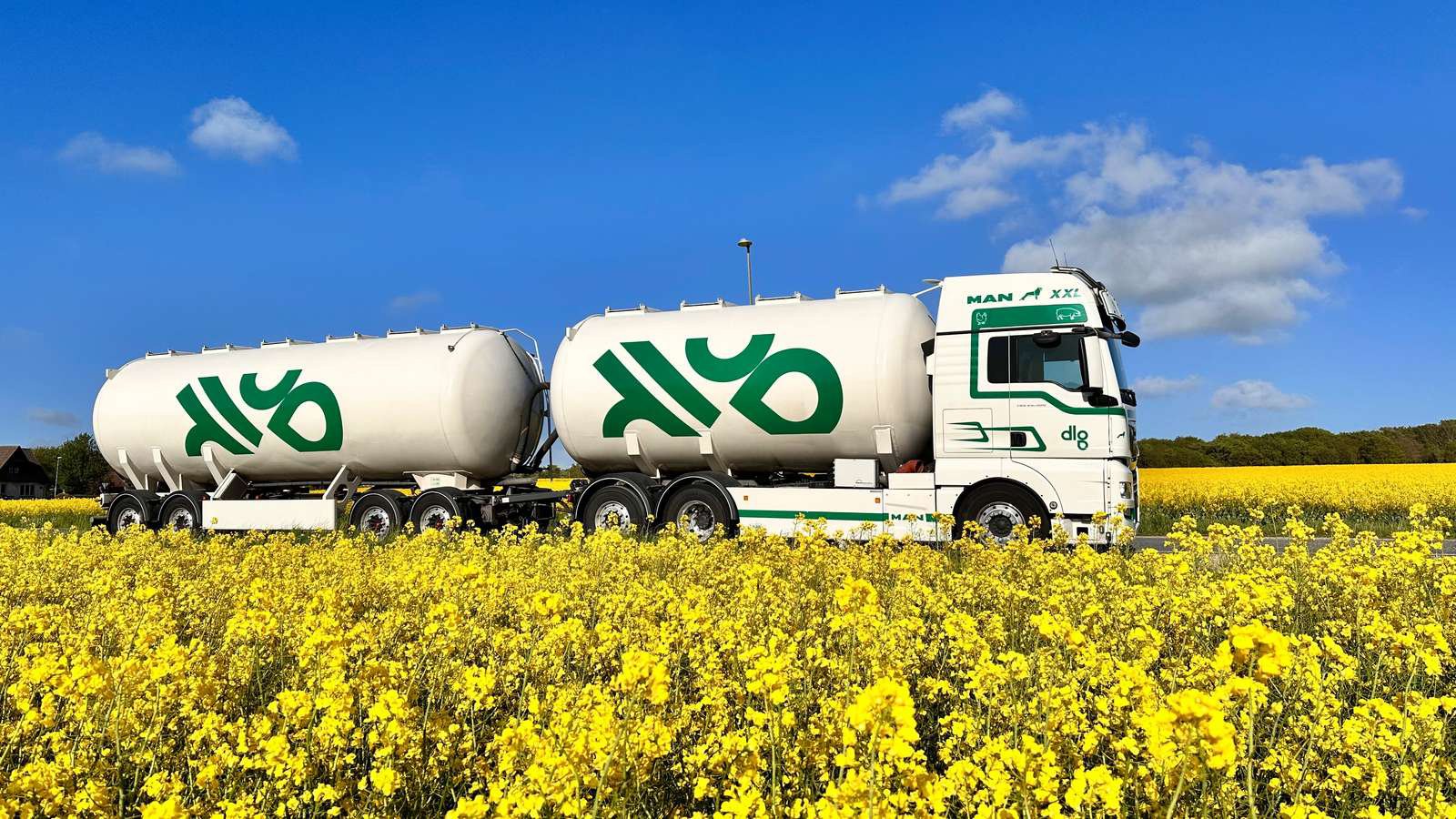
Tanker truck with DLG Group logo
DLG Group logo

DLG Group is Denmark’s largest producer of agricultural feedstock and a significant producer of natural vegetable oil. The company originated in 1984 as a farmer-owned cooperative. Established to improve feed production and crop exports. This specialism reflects its continuing connection to agriculture and its role in supplying essential feed products to the sector.

Challenge
  • No unified process for tracking maintenance or inventory
  • With no central inventory for spare parts, costs and downtime were inflated
  • With no shared knowledgebase, technicians had to re-solve reoccurring problems
Solution
  • Consolidated maintenance tracking in Fiix® Computerized Maintenance Management System (CMMS) software
  • Inventory management for all spare parts also consolidated in the CMMS
  • Performance and uptime data now continually tracked using the CMMS
  • Deployment customized for precision tracking of maintenance efficiency
Result
  • Within a month, the company saw a marked improvement in meantime-between-failure (MTBF) rates
  • Acceptance rates among employees across different roles have been high
  • DLG is standardizing maintenance and developing whole-organization best practices
  • Within a year, DLG expects 10% improvement in uptime and maintenance efficiency

Challenge

DLG Group is Denmark’s largest producer of livestock feed and one of the main suppliers of feed in northern Europe. It’s also a significant producer of natural vegetable oil, made from rapeseed. For both products, the company operates many different production sites across Denmark.

Although the production processes in each site are nearly identical, the machines that run these processes are different in make, model and age from one production line to the next. This has caused considerable complications for maintenance engineers in the past.

Because the production environment was so heterogenous, there was often no single standard and documented resolution for any given problem. Problems often presented differently on different production lines and machines. Each time maintenance technicians were faced with this situation, they had to find the resolution for the problem from first principles.

Not only did this increase the time taken to find a resolution, it also complicated the job of finding the root causes of common or recurring faults. Technicians found themselves treating symptoms, which varied from one production line to the next, rather than tackling the common causes of the issue.

The lack of a common inventory and tracking scheme for spare parts also caused problems. Often it would be possible to use the same spare part on a range of different makes and models of machinery. But technicians might not know this was the case. And even if they did, they had no way of knowing if another site in the group had one of the compatible spare parts for their machine in stock. This led both to increased downtime and to unnecessary inventory duplication.

Solution

Working closely with Rockwell Automation, the company deployed Fiix® Computerized Maintenance Management System (CMMS) software across nine of its many locations: two manufacturing rape-seed oil and seven manufacturing animal feedstock. DLG customized the platform’s interface to give its factory managers and engineers a priority view of their maintenance queues and related variables. And it worked with Rockwell Automation to develop bespoke interface set-ups for different roles within the business.

“One of the reasons we chose Fiix® CMMS software was its flexibility,” said DLG Continuous Improvement (CI) engineer Alex Rasksen “We did consider the plant-management module of our ERP. But we needed any system to be configurable for different tasks and roles and for different levels of technical expertise. The Fiix® CMMS was the system that most successfully offered this.”

Using the new CMMS platform, factory managers can continuously track their maintenance queue in real time. They can see which spare parts they have in stock, which other parts are compatible with their systems, and where within the DLG Group those compatible parts are located.

With a centralized single source of truth for all participating sites, engineers can quickly check any problem against other known issues and fixes. They can also correlate symptoms and causes across different systems and processes.

As well as factory managers and maintenance engineers, the new system has now been rolled out to cleaning crews and to selected third-party vendors. Everyone who needs access to the maintenance platform now has a secure, highly detailed, real-time view of the data relevant to their job.

Result

Within a month of the first deployment, the plants involved in the initial rollout had already seen an improvement in meantime between failure (MTBF). With a single source of truth for all maintenance issues across different sites, engineers can resolve issues faster. They can also share what they have learned with colleagues across different sites.

In this way, the engineers across plants are working to develop a knowledgebase of best practices. These are defined by process and sub-process, rather than by a specific machine. This makes it possible to take insights gained on one production process then use and refine them to optimize similar processes on different production lines for the same product. It’s also made possible more efficient spare-parts management, helping to reduce costs and improve availability.

In this first phase, DLG Group is building not only a knowledgebase of best practices but also a cadre of engineers trained in the new, data-driven maintenance practices. These practitioners will help the company deploy the new CMMS to further sites, after the initial phase of consolidation and optimization.

“Our factory managers are already seeing a clear benefit in being able to manage and optimize their maintenance queues in real time.”

“It improves their time-to-resolution but also their co-operation with other functions, such as the production planners. This has had an immediate benefit. And in the long term, we plan to build on that expertise to move to a fully data-driven, predictive maintenance setup,” said Alex Rasksen.

“DLG Group’s deployment strategy has been a model of best practice and innovation,” said Katarina Hart, country sales director, Nordics, Rockwell Automation. “They have targeted a 10% increase in maintenance efficiency within the first year, which will more than pay for the investment in the new system. We absolutely expect them to at least meet this target. The effectiveness of the deployment is a testament to the power of computerized maintenance management.”

Published March 26, 2026

Topics: Process Solutions Food & Beverage Fiix CMMS
Subscribe to Rockwell Automation

Receive the latest news, thought leadership and information directly to your inbox.

Subscribe now

You may also be interested in

Loading
Loading
Loading
Loading
  1. Chevron LeftChevron Left Rockwell Automation Home
  2. Chevron LeftChevron Left Com...
  3. Chevron LeftChevron Left News
  4. Chevron LeftChevron Left Case Studies
  5. Chevron LeftChevron Left Agri-manufacturer to cut downtime by 10% with CMMS
Please update your cookie preferences to continue.
This feature requires cookies to enhance your experience. Please update your preferences to allow for these cookies:
  • Social Media Cookies
  • Functional Cookies
  • Performance Cookies
  • Marketing Cookies
  • All Cookies
You can update your preferences at any time. For more information please see our {0} Privacy Policy
CloseClose