
Optix Runtime with Base Token Package (L)
The following example shows a system architecture that uses an HMI and five clients.
System Architecture - Base Package L
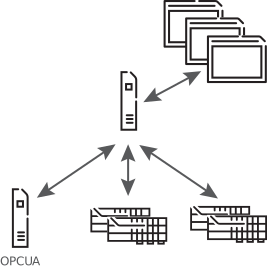
The example architecture has the following components.
- Single HMI station with typical HMI functionality and five clients
- Communicates with multipleRockwell Automation®controllers and multiple third-party controllers
- Acts as a client to other OPC UA servers
- Logs data to an internal database
- Requires event logging, alarming, recipe, and basic PDF reporting
The following table shows example runtime sizing for a package that includes the application
components.
Selection | Base Token Value | Extended Token Value | |
|---|---|---|---|
Clients | |||
Native HMI client | 1 | - | |
Web HMI Client - 4 connections | 3 | - | |
Features | |||
Alarms | 1 | - | |
Recipe | 1 | - | |
Active Directory authentication | 1 | - | |
Basic reporting | 1 | - | |
Runtime retentivity | 1 | - | |
Data logger | 1 | - | |
Embedded database | 0 | - | |
Controller Connections | |||
Rockwell Automation®
EtherNet/IP™ - 4 connections | 2 | - | |
Third-party drivers - 2 connections | 2 | - | |
Interoperability | |||
OPC UA Client - 1 connection | 1 | - | |
Total: | 15 | 0 | |
Base token package (L), which includes 15 base tokens, is recommended for this example. There
is no need for an extended package. Use the Device Sizing tool to select the best deployment
option for your application.
For this configuration, you can select the following deployment option.
- Optix Runtime base token package (L) + consider bundling with ASEM 6300 Industrial Computers
Provide Feedback