Loading
Blog | Water/Wastewater
Recent ActivityRecent Activity

Water Supply Security and Aging Infrastructure

Migrating legacy equipment can open your business to new cyber risks. Take a proactive approach to network security to protect your plant from cyberattacks.

Share This:

LinkedInLinkedIn
XX
FacebookFacebook
PrintPrint
EmailEmail
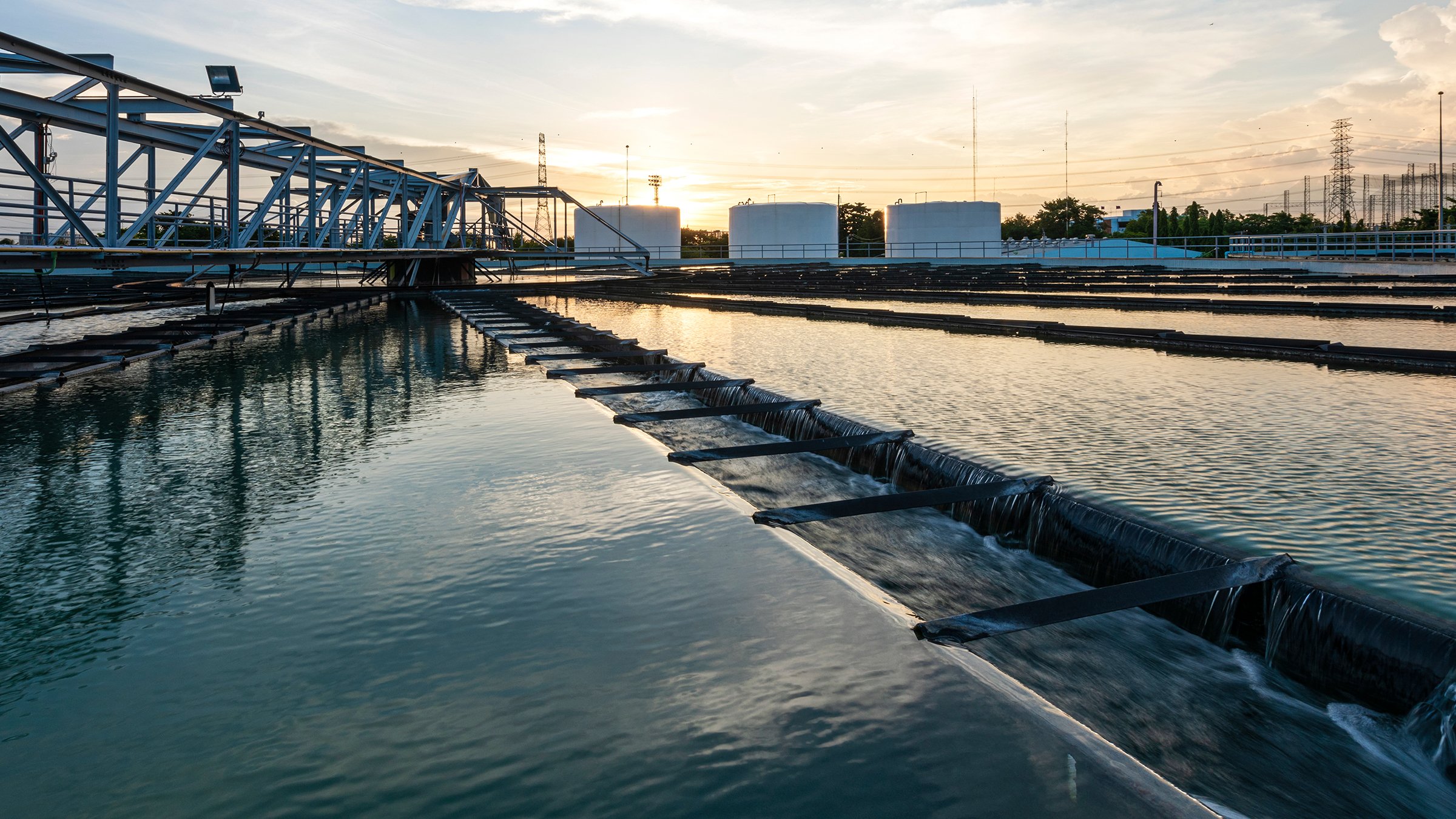
 water production and distribution concept in Water wastewater  treatment plant.

Until recent times, water supply security was based largely on the principle of isolation. Process control systems were a series of disconnected systems and applications over decades, air-gapped by virtue of not being connected to other computers or to the internet and making infiltration by external cybercriminals unlikely.

In the last 20+ years, Critical Infrastructure providers - including water and wastewater facilities - have modernized their plants and distribution networks, integrating IT assets with operational technology (OT) and industrial control systems (ICS). The converged domains have unified information and control networks, delivering advantages such as centralized management and visibility into OT production and performance.

On the downside, cybercriminals discovered they could access OT and ICS networks by gaining a foothold on internet-facing IT systems and moving laterally into adjacent connected OT assets. During this time, a new era of cyber threats was born.

In the water and wastewater industries, threat actors have infiltrated IT assets to disrupt business systems. More alarmingly, attackers have damaged equipment, discharged wastewater into environmentally sensitive areas, and implanted ransomware that disrupted operations.

When the pandemic forced nonessential businesses to close and employees began working from home, organizations had to quickly, and often haphazardly, deploy remote access environments. The new remote access setups often lacked basic protections such as multi-factor authentication or identity and access management (IAM). Cybercriminals quickly flooded unsuspecting remote workers with phishing and ransomware attacks.

Where do you believe your organization is most vulnerable to a cyber incident today?

Manufacturers weigh in and say integration points between IT and OT are the most vulnerable to cyber incidents, just behind IT system and enterprise networks.

Source: 11th Annual State of Smart Manufacturing Report, Rockwell Automation

Current Cyber Threats Put Water Utility Operations at Risk

Today, threat actors have shifted their focus to the OT systems of Critical Infrastructure providers. Legacy infrastructure, high impacts of downtime and service interruption make potential ransomware payouts a greater concern and likelihood.

According to Rockwell Automation’s State of Smart Manufacturing Report, “46% of survey respondents report experiencing a cyber incident in the past year, reinforcing that security is no longer episodic, it is an operational requirement as systems become more digitized, autonomous and AI-supported.”

As in other critical infrastructure sectors, ransomware remains one of the most significant cyber threats facing water and wastewater utilities. This technique enables threat actors to infiltrate IT systems and networks, often using stolen credentials, and implant malicious software that allows them to worm into connected OT systems and encrypt data. The results can be disastrous.

Real-world cyberattacks on water and critical infrastructure

Consider the Gunra ransomware operation: Attackers used a double-extortion model that not only encrypts an organization’s data but also threatens to publicly release stolen information. This tactic demonstrates how ransomware can create both operational disruption and significant business and reputational risk.

Recent cyberattacks underscore heightened risks to U.S. water infrastructure. CISA has reported cyberattacks targeting more than 100 internet-exposed systems across the U.S. water and wastewater sector, with incidents affecting providers in Michigan, Minnesota and at least five other states. The activity highlights the expanding cyber threat facing critical infrastructure and the importance of reducing exposure and strengthening operational resilience.

As cyber threats grow more sophisticated, water utilities need visibility and processes to respond with greater speed and confidence. A strong cybersecurity strategy provides greater insight across connected equipment, reduces time-consuming manual tasks and establishes a clear plan for identifying, prioritizing and mitigating threats, helping utilities strengthen resilience and keep critical services running.

Read about how one U.S. water and power utility solved multiple cybersecurity and operational challenges in this new Rockwell Automation case study.

Need help today? Contact us to speak to an expert.

 
Contact Us


This article was originally published in Water Conditioning & Purification International.


Published October 20, 2026

Originally published  September 8, 2022

Rockwell Automation receives company of the year for water utility cybersecurity
Report
Report
Rockwell Automation receives company of the year for water utility cybersecurity
Frost & Sullivan awards Rockwell Automation with 2026 Company of the Year for Water Utility Cybersecurity.
Download Now
Topics: Build Resilience Water Wastewater
Subscribe

Subscribe to Rockwell Automation and receive the latest news, thought leadership and information directly to your inbox.

Subscribe
Recommended for You
Loading
  1. Chevron LeftChevron Left Rockwell Automation Home
  2. Chevron LeftChevron Left Com...
  3. Chevron LeftChevron Left News
  4. Chevron LeftChevron Left Blogs
  5. Chevron LeftChevron Left Water Supply Security and Aging Infrastructure
Please update your cookie preferences to continue.
This feature requires cookies to enhance your experience. Please update your preferences to allow for these cookies:
  • Social Media Cookies
  • Functional Cookies
  • Performance Cookies
  • Marketing Cookies
  • All Cookies
You can update your preferences at any time. For more information please see our {0} Privacy Policy
CloseClose