Loading
Blog
Recent ActivityRecent Activity

When Water Hammer Knocks, You Better Answer

Learn how to prevent water hammer by “softening” the dynamics of starting and stopping a pump through the use of a soft starter.

Share This:

LinkedInLinkedIn
XX
FacebookFacebook
PrintPrint
EmailEmail
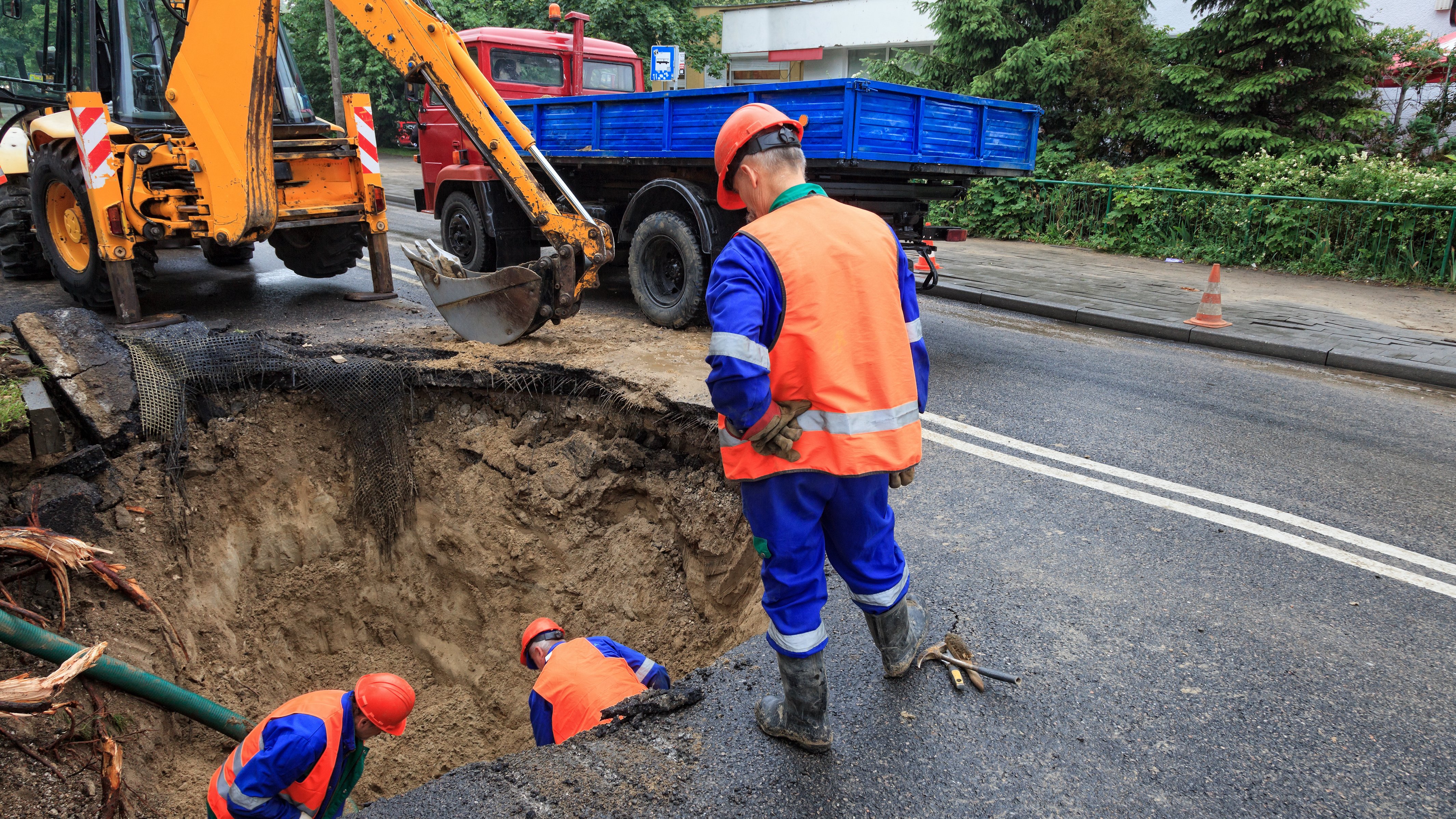
Workers on the road on construction site with excavator

When you live in the same house for many years, you know what sounds are normal and which are not.  We had our fourth washer and dryer set installed recently and didn’t expect anything different, other than hoping this set would last longer. 

Instead, at points during the wash cycle, it sounded like someone with a hammer was banging the pipes in our basement or the pipes under our kitchen sink. It was both amazing and concerning the noise that a one-inch water line could make! 

Despite the original water arrestors on the water line connections below the sink in the utility room, I had to purchase and install arrestors directly on the back of the machines to make the banging go away and prevent a potential leak or flood in my home.

The consequences of water hammer are even more significant at the municipality and industrial levels.

A 12-inch water pipe contains almost 50 pounds of water per foot, so depending on the pipe diameter and length in your application, the equivalent to a freight train may be running in the pipeline! 

Like a train, water moving in a pipe has a lot of momentum. With water being essentially incompressible, if a pump stops suddenly, there is no cushion and a spike in pressure travels as a shock wave through the pipe. 

Everything in that closed system – pumps, pipes and pipe joints, gaskets, gauges, flow meters, etc. – are subjected to forces that can be as much as 10 times the working pressure of the system. Serious equipment and collateral damage can occur, resulting in unexpected costs to repair the system and lost revenue associated with the downtime.

A common solution is to “soften” the dynamics of starting and stopping a pump, which can be achieved with a soft starter.  However, even soft starters have different methodologies that can be employed, such as a basic soft start/stop, pump control and sensorless linear speed.

Some methods may or may not solve a water hammer issue, but sensorless linear speed mode typically has the best performance and delivers smooth starting and stopping even with a varying load (see image to the left).

In one of our applications, a municipality pumping station was generating water hammer events that caused vibration alarms to go off at a bank some distance away.  Sensorless linear speed was the solution for their problem.

Design your systems to reduce the chance of water hammer events from occurring. High pressure spikes, audible hammer sounds and/or issues elsewhere in the system are signs of a potential water hammer event.  Should this occur, take preemptive action or risk a more costly action later on.  Visit our website to learn more about our family of low voltage soft starters.

Published August 12, 2019


Gregory Mears
Gregory Mears
Global Product Manager, Rockwell Automation
Connect:
EmailEmail
Subscribe

Subscribe to Rockwell Automation and receive the latest news, thought leadership and information directly to your inbox.

Subscribe

Recommended For You

Loading
  1. Chevron LeftChevron Left Rockwell Automation Home
  2. Chevron LeftChevron Left Com...
  3. Chevron LeftChevron Left News
  4. Chevron LeftChevron Left Blogs
  5. Chevron LeftChevron Left When Water Hammer Knocks, You Better Answer
Please update your cookie preferences to continue.
This feature requires cookies to enhance your experience. Please update your preferences to allow for these cookies:
  • Social Media Cookies
  • Functional Cookies
  • Performance Cookies
  • Marketing Cookies
  • All Cookies
You can update your preferences at any time. For more information please see our {0} Privacy Policy
CloseClose