The Shift from Automation to Autonomy
Manufacturers face mounting challenges—volatile demand, global supply chain disruptions, SKU proliferation and rising expectations for speed and customization. Labor shortages and cost pressures make manual processes unsustainable, and every delay or handoff in material movement ripples across production, impacting throughput, quality and profitability.
Production logistics is the backbone of manufacturing. It’s not just moving parts; it’s orchestrating material flow across the entire lifecycle. In today’s complex environment, it has become a strategic differentiator. Efficiency, flexibility and resilience depend on how well materials move through the plant.
Traditional systems built on static conveyors and manual handling can’t keep pace. Manufacturers need intelligent, connected solutions that integrate planning and execution seamlessly. This is where advanced motion and robotics take center stage.
Driving Autonomy in Material Movement
Traditional systems—built on static conveyors and manual handling—struggle to keep up with today’s demands for high-mix, low-volume production and rapid changeovers.
The shift from automation to autonomy marks a necessary and fundamental change in how manufacturers approach material movement. Automation was about replacing repetitive tasks with machines; autonomy is about creating intelligent systems that anticipate needs, adapt to change and optimize performance without constant human intervention.
Advanced motion and robotics are the technologies making this possible, transforming rigid, linear processes into dynamic, intelligent flows that span the entire production lifecycle.
Building the Foundation for Autonomous Material Flow
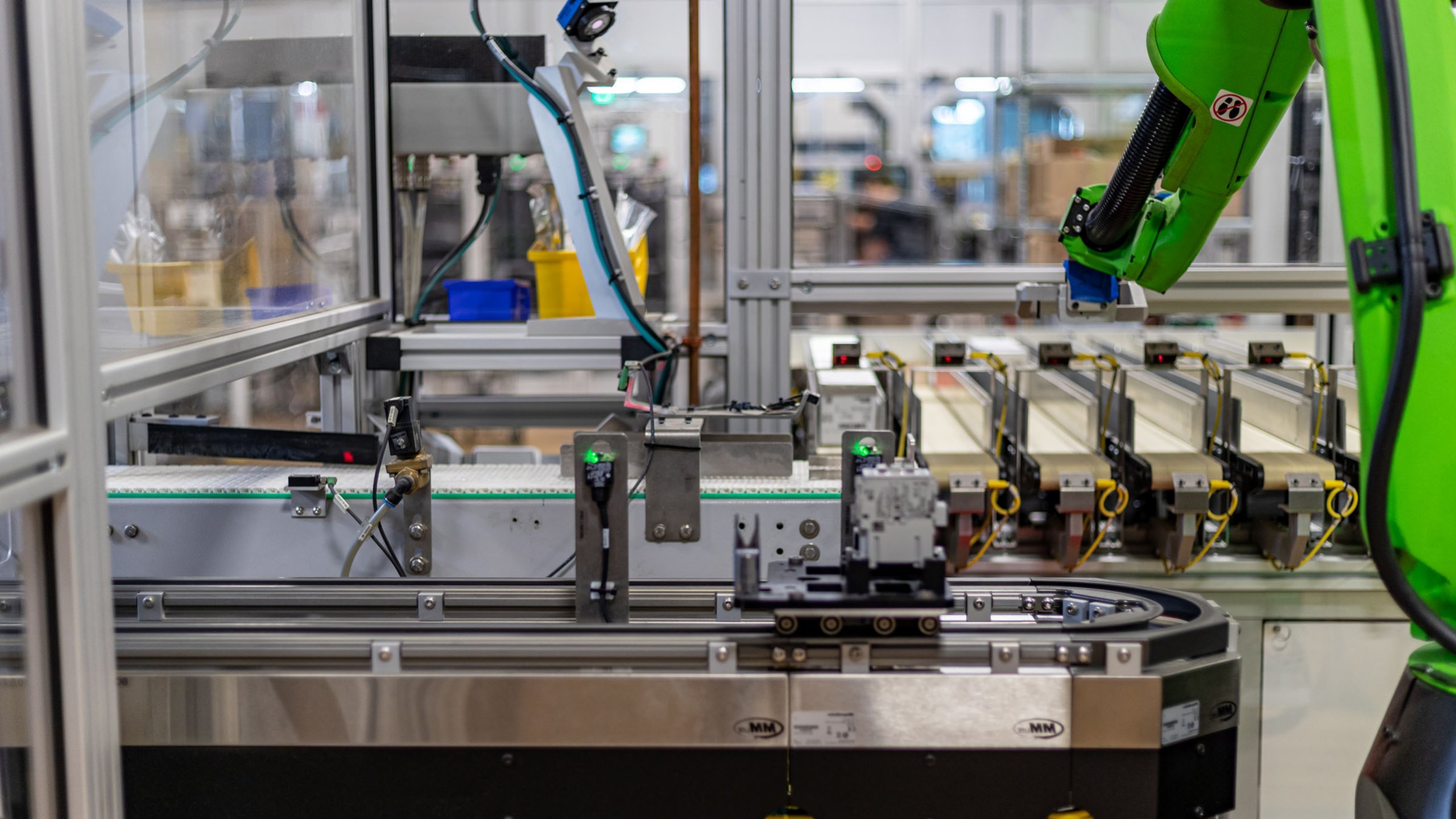
Unified control architectures eliminate complexity by consolidating robots, conveyors and safety systems into a single platform. This integration delivers synchronized performance across the plant and accelerates deployment by reducing the need for multiple controllers. Intelligent conveyance technologies, such as Independent Cart Technology, replace traditional belts and chains with magnetically driven carts that enable precise, high-speed movement. These systems support rapid changeovers and flexible layouts, making them ideal for high-mix, low-volume environments where agility is critical.
Autonomous Mobile Robots add another layer of intelligence by automating material transport between workstations. Equipped with AI-driven navigation and real-time coordination, these robots adapt to dynamic plant conditions, optimize workflows, and reduce labor costs while improving safety. Digital design and simulation tools, such as Emulate3D, allow manufacturers to model and validate logistics strategies virtually before implementation. This helps minimize risk, shorten commissioning time and deliver systems that perform as expected.
The Impact: From Efficiency to Intelligence
The combination of production logistics principles and advanced motion technologies doesn’t just improve operations—it transforms them. Manufacturers gain faster time-to-market through reduced commissioning times, higher throughput through synchronized systems, and significant labor savings by reducing manual handling. Safety improves through intelligent routing and integrated systems, and scalability becomes achievable with modular platforms that grow alongside business needs.
Here’s what manufacturers can expect:
- Faster Time-to-Market: Reduce commissioning time by up to 25% with simulation and modular architectures.
- Lower Labor Costs: AMRs and automated changeovers cut manual handling, reducing labor expenses significantly.
- Enhanced Safety: Intelligent routing and integrated safety systems minimize workplace hazards.
- Scalability: Modular platforms allow manufacturers to start small and expand as needs evolve.
Making the Transition to Autonomy
The journey from automation to autonomy begins with a clear understanding of the current state. Manufacturers must identify bottlenecks in material flow and quantify their impact on performance. From there, defining objectives aligned with business priorities—whether speed, flexibility, safety, or all of the above—sets the foundation for success. Partnering with solution providers who offer integrated platforms and proven industry expertise helps confirm that technology investments deliver measurable results. Starting small with modular systems allows manufacturers to pilot new approaches without disrupting existing operations, while digital tools provide the confidence of validated designs before deployment. Scaling quickly across lines and sites then becomes a natural progression, supported by flexible architectures and intelligent systems.
Make the Smart Move
Material movement is no longer a background process—it’s a strategic differentiator. By embracing advanced motion and robotics, manufacturers can unlock agility, efficiency and resilience in an increasingly complex world. The shift from automation to autonomy isn’t just about technology—it’s about positioning your business for long-term success.
Ready to take the next step?
Discover how advanced motion and robotics can help you orchestrate end-to-end material movement and build a future-ready factory.