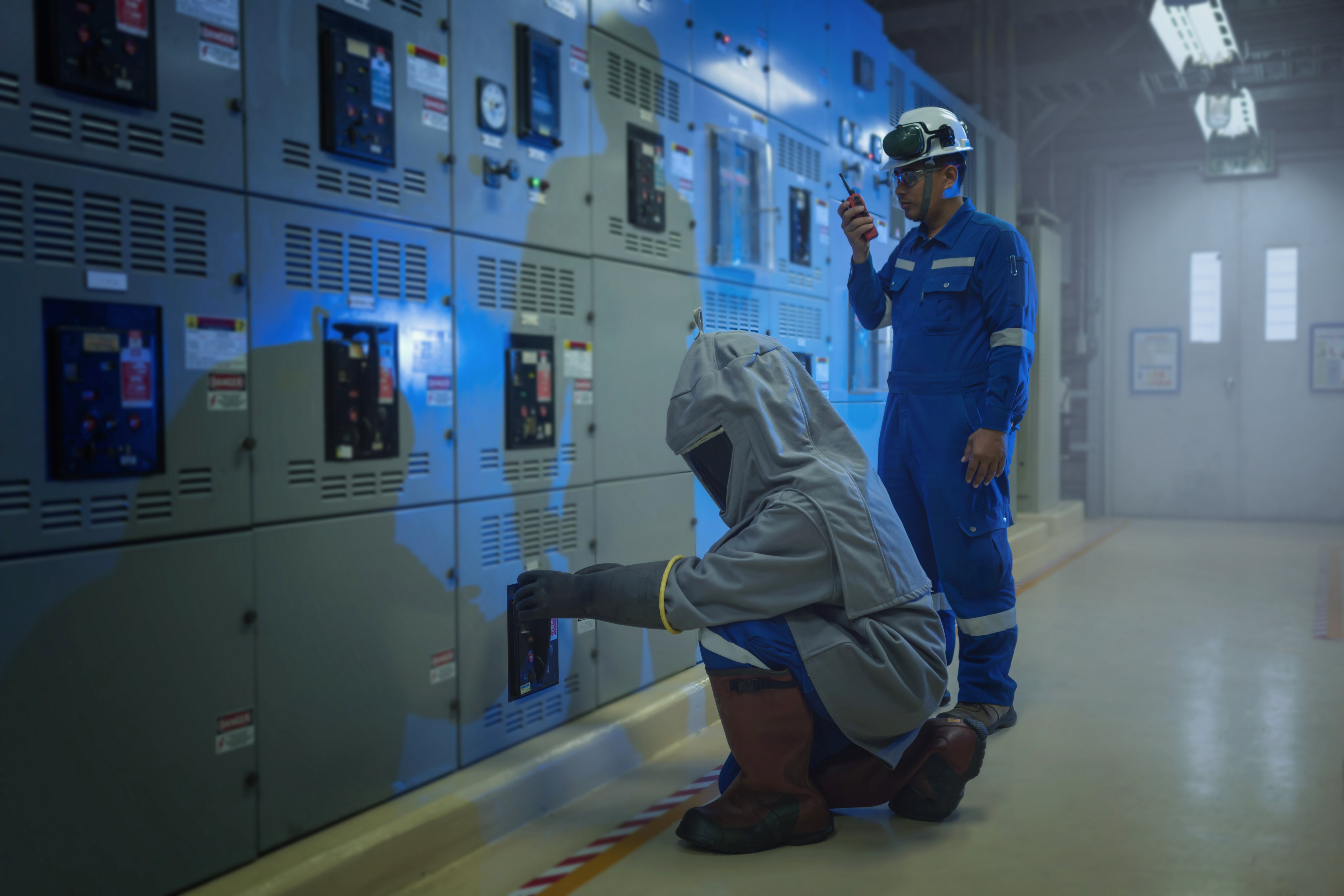
Motor Control Centers (MCCs) are the technological hubs controlling critical rotating equipment – such as submersible pumps, compressors, and pipeline boosters – across upstream, midstream, and downstream oil and gas operations. Given the enormous energy requirements and often hostile operating conditions characteristic of this sector, motor control centers are ground zero for one of the industry’s most serious electrical safety threats: the electric arc flash.
What is arc flash? An arc flash is the violent, rapid release of energy from an electrical fault, resulting in plasma temperatures that can exceed the surface of the sun and produce extreme pressure waves. For oil and gas personnel, an electric arc flash event carries the risk of severe, life-altering injuries and death. For the facility, it means the immediate disruption of critical processes, leading to multi-million-dollar losses in production and repair. The elevated stakes in oil and gas necessitate a rigorous, specialized approach to motor control center safety.
Unique Factors Elevating Electric Arc Flash Hazards in Oil and Gas
The distinct operational and environmental context of the oil and gas industry exacerbates general arc flash risks:
- High Incident Energy Potential: Large pumps and compressors require high-horsepower motors, leading to high-capacity electrical systems and high available fault currents. In combination with long feeder runs and complex impedance, this results in potentially immense incident energy if a fault occurs. Rigorous application of the IEEE 1584 calculation methodology is non-negotiable to accurately assess this energy.
- Harsh Environments and Corrosion: Motor control centers located in remote areas, offshore platforms, or coastal terminals are exposed to saltwater spray, high humidity, vibration, and corrosive vapors. This aggressive environment rapidly degrades insulation, erodes contacts, and causes connections to loosen – all common precursors to an arcing fault.
- Critical Uptime and Live Work: The economic pressure to maintain continuous flow often mandates "hot stand-by" systems or requires maintenance on energized equipment. This significantly increases the probability of human error initiating an electric arc fault, making arc-resistant motor control center designs, and isolation features crucial for helping to protect technicians who must work near live circuits.
- Hazardous Area Classification: Many motor control center electrical rooms fall within classified (hazardous) areas. The presence of flammable vapors means an electric arc flash event could not only injure workers but also ignite a facility-wide explosion, compounding the catastrophe.
Engineering Controls: Design Arc Flash Safety into Your MCCs
To counter these factors, modern motor control center specifications in oil and gas must prioritize engineering controls that reduce both the likelihood and the consequence of an electric arc flash:
- Arc-Resistant Construction: The motor control center structure must be designed and certified to contain or redirect arc energy (e.g., tested to standards like IEEE C37.20.7). This includes reinforced doors, internal barriers, and pressure-venting systems designed to direct blast forces away from personnel working in the front or sides of the motor control center lineup.
- Enhanced Isolation and Reliability: Features that allow for the safe isolation of individual units while the main bus remains energized are vital for upstream and downstream operations where total shutdown is cost-prohibitive. Furthermore, robust busbar bracing and phase isolation are necessary to help prevent an arc fault from propagating through the entire motor control center lineup, which is particularly critical where high vibration is present (e.g., offshore or near large machinery).
- Rapid Fault Clearance: Since arc flash energy is directly proportional to arc duration, specifying current-limiting circuit breakers and delivering extremely fast protective device coordination is paramount. Reducing the fault clearing time from hundreds of milliseconds to less than a cycle, which can dramatically reduce the calculated incident energy and the required PPE level.
- Remote Monitoring and Diagnostics: Integrating sophisticated motor control center systems with asset management platforms allows operators to remotely monitor unit status, temperature trends (via IR windows), and ground fault conditions. This capability minimizes the need for personnel to approach or open doors on energized equipment, thus keeping them outside the electric arc flash boundary.
Operational Discipline: The Safety Program Foundation
High-integrity equipment must be coupled with rigorous operational discipline compliant with NFPA 70E:
- Mandatory Arc Flash Assessment and Labeling: Every motor control center and feeder must be clearly labeled with the calculated incident energy and the required PPE category. In oil and gas, conservative scenario assessments should account for the worst-case fault current possible.
- Strict LOTO and ESWC Procedures: The principle of de-energization must be the default. Detailed lockout/tagout (LOTO) procedures must be flawless, particularly given the complexity of parallel and redundant systems common in this sector.
- Tailored PPE and Training: Workers must be trained and equipped with the correct arc-rated clothing and tools based on the incident energy of the specific MCCs they are servicing. Training must specifically address the unique hazards of working in corrosive or remote environments.
- Preventative Maintenance for MCCs: Regular motor control center inspections, infrared thermography, and mechanical checks of door integrity and locking mechanisms are essential. In harsh conditions, preventative maintenance programs are the single best defense against the insulation or connection failure that triggers an arc event.
By committing to arc-resistant equipment specifications and embedding a culture of safety discipline, the oil and gas industry can significantly reduce exposure to this catastrophic hazard, delivering the protection of personnel, continuity of operations, and long-term asset integrity.
Rockwell Automation offers three motor control center options, IntelliCENTER® MCC software and ArcShield™ arc flash containment technology to meet your safety program:
- The medium voltage CENTERLINE® 1500 motor control center meets UL 347 and NEMA standards
- The industry-leading low voltage CENTERLINE® 2100 motor control center meets UL 845 and NEMA standards
- The low voltage FLEXLINE™ 3500 IEC motor control center meets IEC 61439-1&2 standards
Planning a greenfield, plant expansion or legacy system upgrade project? Visit our motor control center product page to explore the specs and customize equipment for your operations.