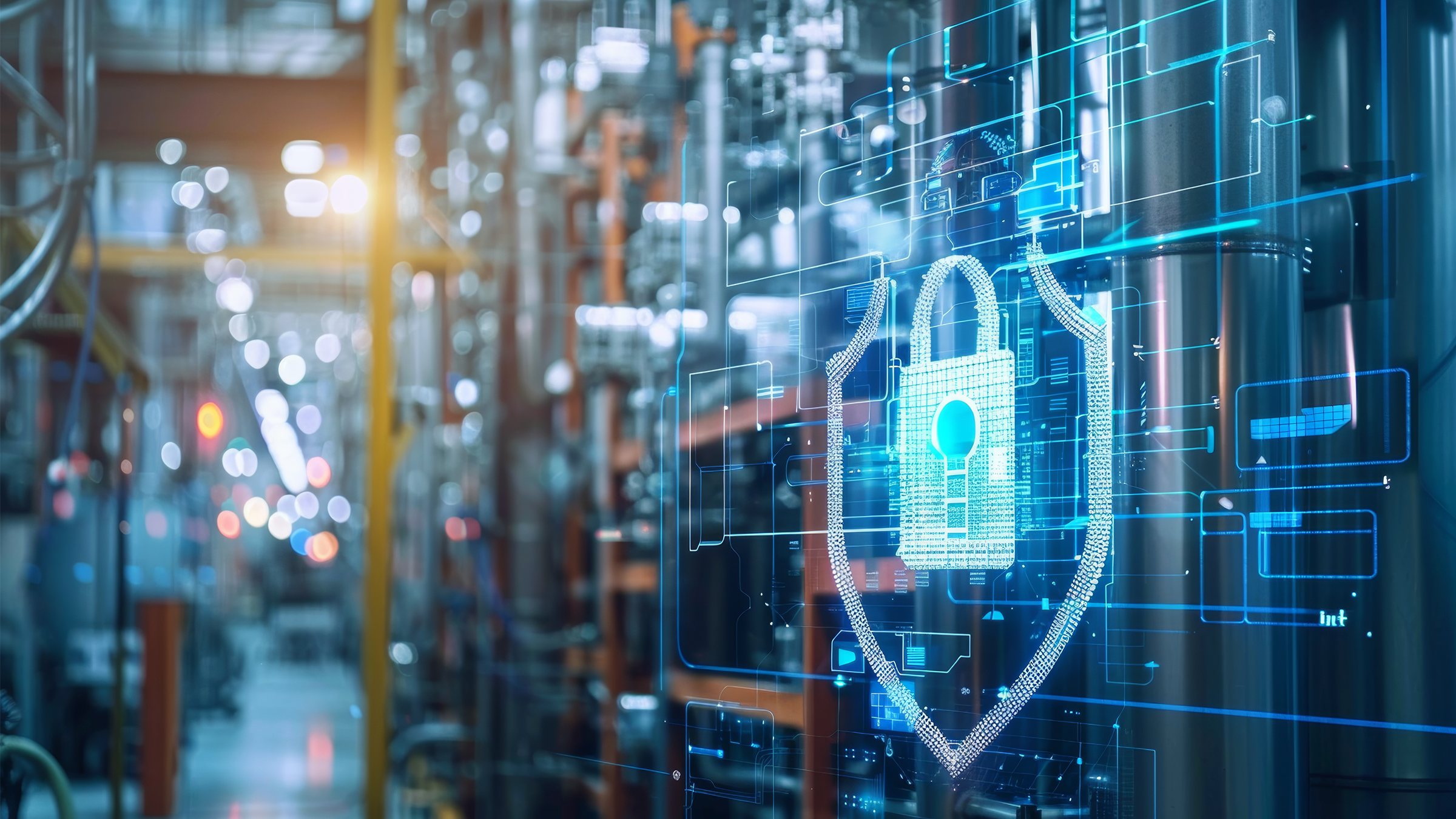
As digitalization accelerates, manufacturers are turning to AI-powered cybersecurity to defend against evolving threats and secure their interconnected operations.
The manufacturing landscape in the Asia-Pacific region is undergoing a profound transformation. As smart factories become the new standard, the very technologies driving unprecedented efficiency and innovation are also creating new, complex vulnerabilities.
Cybersecurity has surged to the forefront, no longer a niche IT concern but a critical business imperative. For Marcelo Tarkieltaub, Regional Director for Southeast Asia at Rockwell Automation, the challenge is clear: as factories become smarter, they must also become more secure.
The urgency of this issue is underscored by Rockwell Automation’s 2025 State of Smart Manufacturing report, which reveals that cybersecurity is now a top external challenge for APAC manufacturers. The rapid convergence of information technology (IT) and operational technology (OT) has blurred traditional security boundaries, creating a fertile ground for sophisticated cyber threats.
The New Battlefield: IT and OT Convergence The integration of IT and OT systems is the backbone of modern manufacturing, enabling real-time data analysis, remote operations, and streamlined production. However, this interconnectedness comes at a cost. “This shift is driven largely by the increasing convergence of IT and operational technology (OT) systems, which expands attack surfaces and heightens vulnerability to advanced threats such as ransomware and supply chain intrusions,” explains Tarkieltaub.
The statistics are stark. The manufacturing sector, with its high-value assets and critical infrastructure, has become a prime target. “Manufacturing now accounts for 21 percent of global ransomware attacks,” Tarkieltaub notes, highlighting the sector's disproportionate risk. The rise of remote and hybrid work models has further complicated the security landscape, introducing new access points that can be exploited by malicious actors. In this environment, a comprehensive and integrated cybersecurity framework is not just advisable; it is essential for survival.
Balancing Innovation with Fortification
As APAC manufacturers race to adopt AI, the Industrial Internet of Things (IIoT), and cloud technologies, they are navigating a delicate balancing act. The push for digitalization must be matched by an equally strong commitment to cybersecurity.
“As APAC manufacturers accelerate digitalization...cybersecurity is increasingly recognized as a strategic imperative,” says Tarkieltaub. This recognition is reflected in investment priorities, with cybersecurity platforms and AI ranking among the top technologies for capital allocation. However, the path to a secure digital future is fraught with challenges. Legacy systems, often designed without modern security considerations, create significant hurdles. Fragmented networks and a persistent shortage of cybersecurity skills further compound the problem.
To overcome these obstacles, Tarkieltaub advocates for a “secure-by-design” approach, where security is embedded into the OT environment from the outset. This involves rigorous risk assessments, network segmentation to isolate critical systems, and multilevel access controls to ensure that only authorized personnel can interact with sensitive machinery. Equally important is the human element. “Human error remains a leading vulnerability in industrial cybersecurity,” Tarkieltaub warns. Cultivating a cyber resilient culture through continuous workforce training and clear, well-rehearsed incident response protocols is crucial to mitigating this risk.
Under Siege: The Ransomware Threat to Manufacturing
The threat of ransomware looms particularly large over the manufacturing sector. As smart factories become more connected, critical OT components like Programmable Logic Controllers (PLCs) and Human Machine Interfaces (HMIs) are increasingly exposed.
“These systems often lack the robust cybersecurity protections of traditional IT environments and require continuous uptime, making them prime targets for cybercriminals,” Tarkieltaub states. A successful attack on these systems can have devastating consequences, halting production lines and leading to significant financial losses, supply chain disruptions, and reputational damage. Attackers often gain a foothold through common methods like phishing and then move laterally from enterprise IT systems into the production infrastructure.
The 2025 State of Smart Manufacturing Report reveals a concerning gap: while 95 percent of APAC manufacturers recognize cybersecurity as a key priority, 28 percent cite a lack of leadership awareness and an underestimation of cyber risks as major challenges.
“Addressing these vulnerabilities will require a coordinated approach that integrates cybersecurity best practices across IT and OT domains,” Tarkieltaub emphasizes.
From Reactive to Predictive: The Power of AI
In the face of these evolving threats, artificial intelligence and machine learning are emerging as game-changing tools. These technologies are enabling a crucial shift from reactive to proactive, predictive defense.
“AI and machine learning are enabling manufacturers to shift from reactive cybersecurity measures toward proactive, predictive defenses,” Tarkieltaub explains. “The report shows that nearly half of manufacturers globally plan to adopt AI/ML for cybersecurity within the next year.”
AI-powered systems can analyze vast amounts of operational data in real time, detecting subtle anomalies in network behavior or device activity that could signal an impending attack. This allows for faster, often automated, containment of threats before they can escalate.
“Automated responses can include isolating compromised systems, adjusting firewall rules, or alerting security teams immediately, significantly reducing incident response times,” says Tarkieltaub. Rockwell Automation is embedding these capabilities into its solutions, providing manufacturers with the visibility and intelligence needed to secure their converged environments.
At the company’s own Asia Pacific Business Centre (APBC), the implementation of the AI-driven FactoryTalk Energy Manager not only led to significant energy savings and emissions reductions but also enhanced workforce efficiency through real-time, data driven decision-making. This example illustrates the broader potential of AI to optimize operations while simultaneously strengthening security.
Building a Cyber-Resilient Future
Looking ahead, Tarkieltaub envisions AI and ML evolving into more autonomous and adaptive cybersecurity systems.
“Emerging technologies like generative AI and causal AI promise sophisticated threat modeling and behavior prediction, enabling earlier detection of subtle compromise indicators,” he predicts. In APAC’s rapidly digitizing manufacturing sector, these advancements will be vital.
Rockwell Automation’s approach is holistic, focusing on building long-term resilience. This extends beyond threat detection to comprehensive recovery planning, including asset inventory controls, regular incident simulations, and fostering cross-functional collaboration.
By working closely with leadership to align on strategy and with frontline staff to build a security conscious culture, Rockwell is helping manufacturers create a robust defense-in-depth.
The future of manufacturing in APAC is undeniably smart and connected. Securing that future requires a new paradigm of cybersecurity, one that is integrated, intelligent, and powered by AI. As Marcelo Tarkieltaub and Rockwell Automation are demonstrating, building a resilient operational environment is the key to unlocking the full potential of digital transformation, ensuring that innovation and security advance hand in hand.
Originally published on Industrial Automation Asia (pp. 20-22)