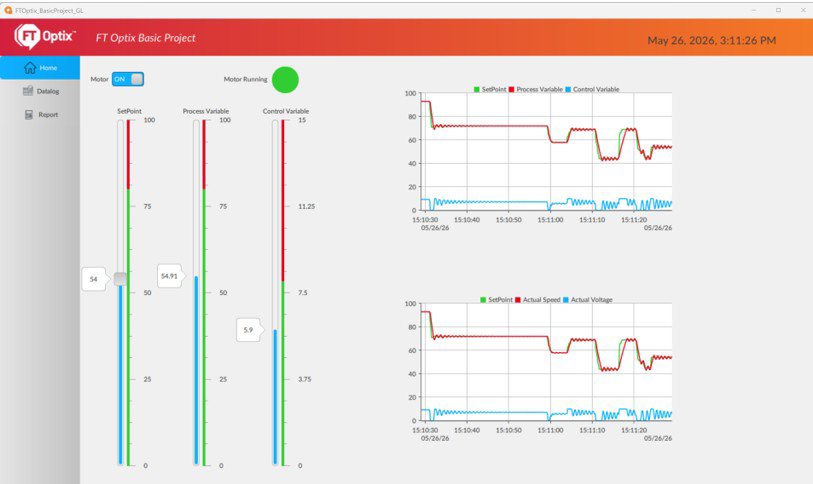
Step-by-step process for generating PDF reports from process variables of a simulated electric motor operation. This application also provides a base framework for developing a first application using FactoryTalk Optix. - [Implementation time: 30 Minutes]
The native generation of PDF reports without coding in FactoryTalk Optix enables automated digitalization of production, audit, and quality control data directly at the Edge. This function is critical for traceability compliance, allowing operators to export summaries of alarms, trends, and historical variables with a single click into a PDF file.
Additionally, the FT Optix application provides a reference framework for building your first FT Optix application.
Is this application relevant to me?
This is useful for users who have questions about how to create their first FT Optix projects, as well as for generating reports of process variables logged remotely from any database.
Application areas: Any type of industry that requires variable logging.
Downloads
Please note: You will need to agree to the Terms & Conditions for each download.
To better understand the objects used in the application, it is recommended to understand their meaning.
Navigation Panel - A user interface (UI) component designed to manage navigation between different application screens. It allows switching visual containers in an automated and structured manner using native events, enabling efficient and intuitive workflows for the operator without overloading the rendering thread.
Panel (Type) - A base visual node that acts as a general-purpose container in the user interface. As it is treated as a Type, it allows inheritance, mass instantiation, and the creation of custom templates (widgets). It can host local logic, variable collections, or complex layouts, serving as a modular building block of the interface.
DataGrid - An advanced tabular visual component designed for real-time visualization and editing of large volumes of structured data (such as database records, controller arrays, or alarm lists). It supports dynamic binding to data models (Model) and direct interaction with rows/columns exposed as objects within the session information model.
GridLayout - A UI layout control that automatically organizes its child nodes into a two-dimensional matrix structure of flexible or fixed-size rows and columns. It optimizes High-Performance HMI design, ensuring that diagnostic visual elements maintain consistent proportions and strict alignment when screen resolution changes or during remote web access.
Data Logger - A core module of FactoryTalk Optix responsible for sampling, storing, and transferring historical process and status variables into a data store. It supports time-based (periodic) or event-based (change-of-state) triggers, natively translating controller tags into relational structures compatible with IT systems.
Datalog Embedded - A specific storage engine configuration in which the history collected by the Data Logger is directly written to a local runtime database based on SQLite technology. This solution does not require external servers, making it ideal for Edge applications or closed devices such as OptixPanel, operating efficiently within the token-based licensing model (included with Data Logger).
Reports - A native component and rendering engine responsible for automated generation and export of reports in PDF format based on visual design templates (UI). It allows associating model variables and dynamic SQL queries directly with the final document for audit, quality control, and regulatory compliance (such as CFR21 Part 11).
To create and configure a PDF report using the native functions and interconnections of the Information Model in FactoryTalk Optix Studio, follow these steps:
Instantiate the Reports Engine and Visual Template
In the Project Panel, expand the main node of your project.
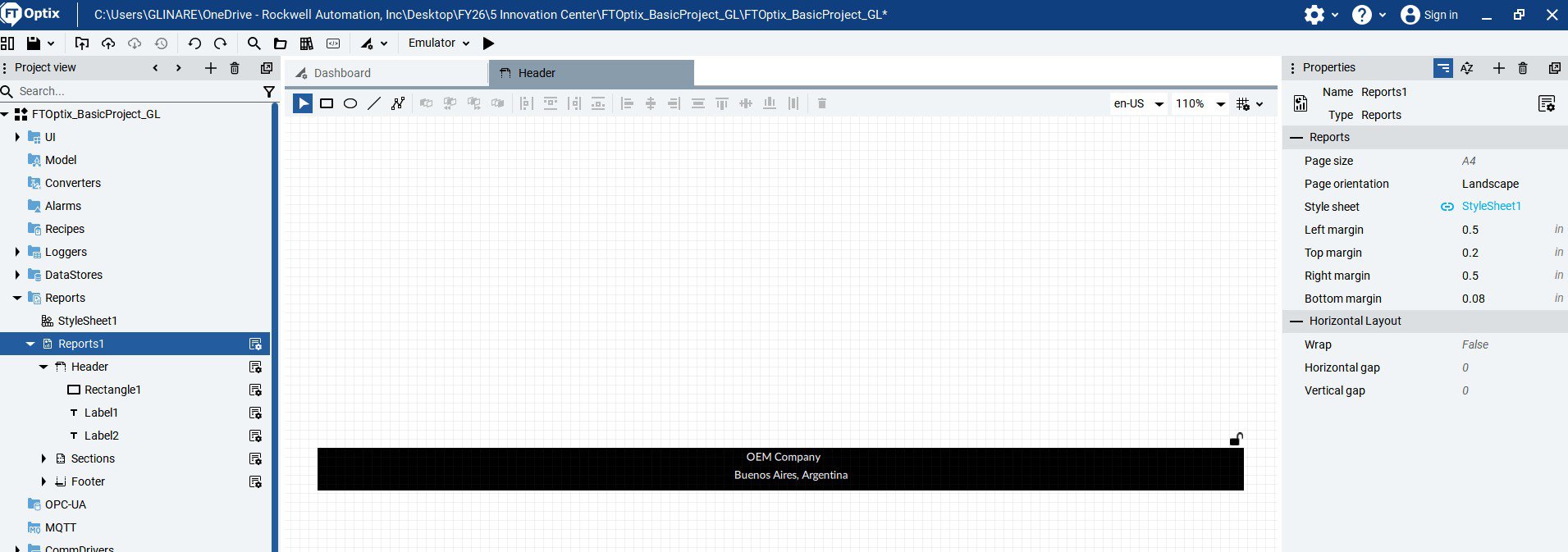
Right-click on the Reports folder (or on the root of the project) and select New -> Report. A new node will be created that will act as the generation engine. Name it Reports1.
When creating the report, a child visual container is automatically added under the UI folder. Expand UI -> Reports and locate the associated visual panel (usually named Reports1). This is the report template.
Double-click on this visual panel to open the graphical editor. Design the report format using High-Performance HMI guidelines:
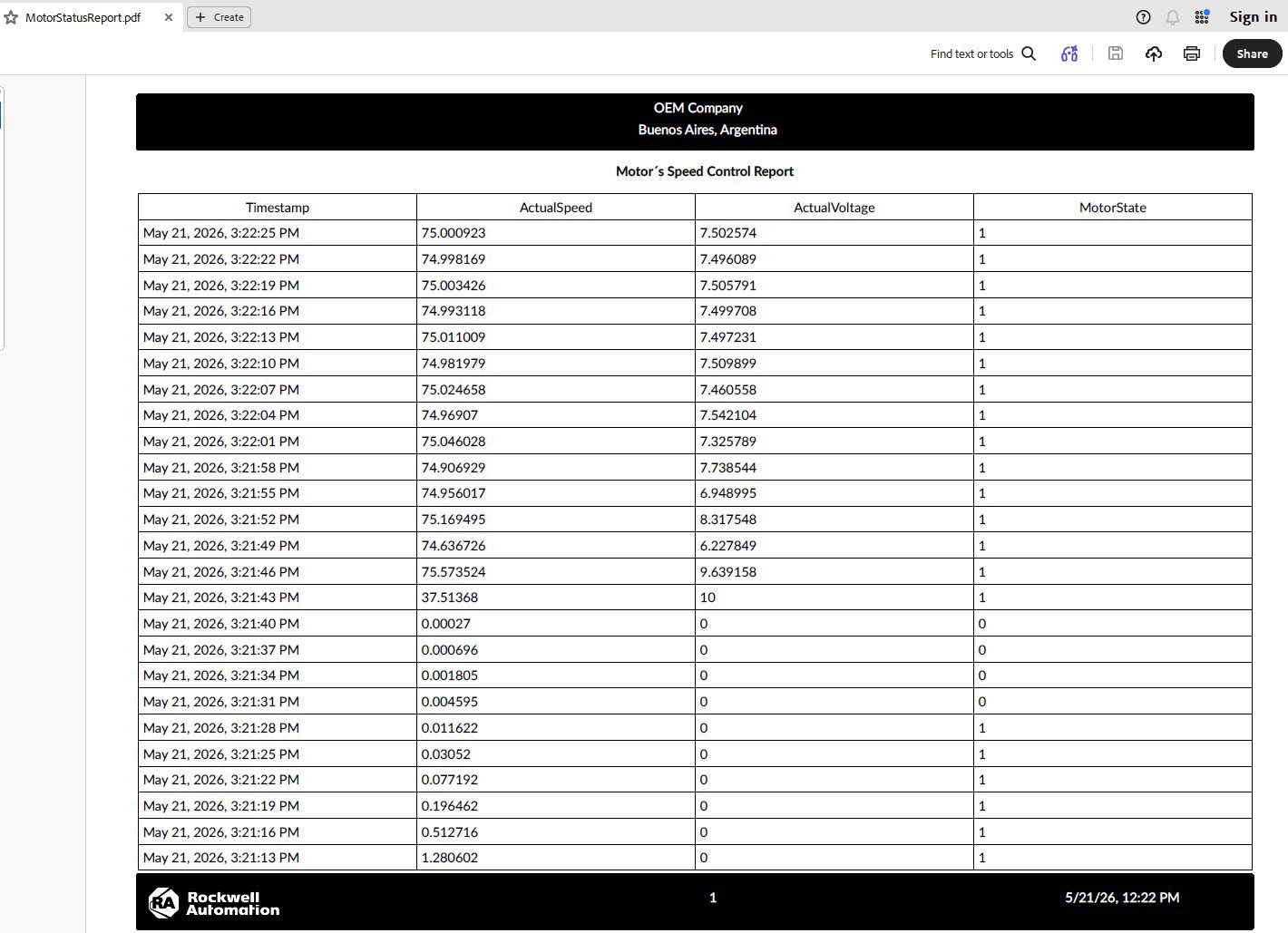
Insert a Label object in the Header section for the report title (e.g., "OEM Company Buenos Aires, Argentina") and other elements that appear below.
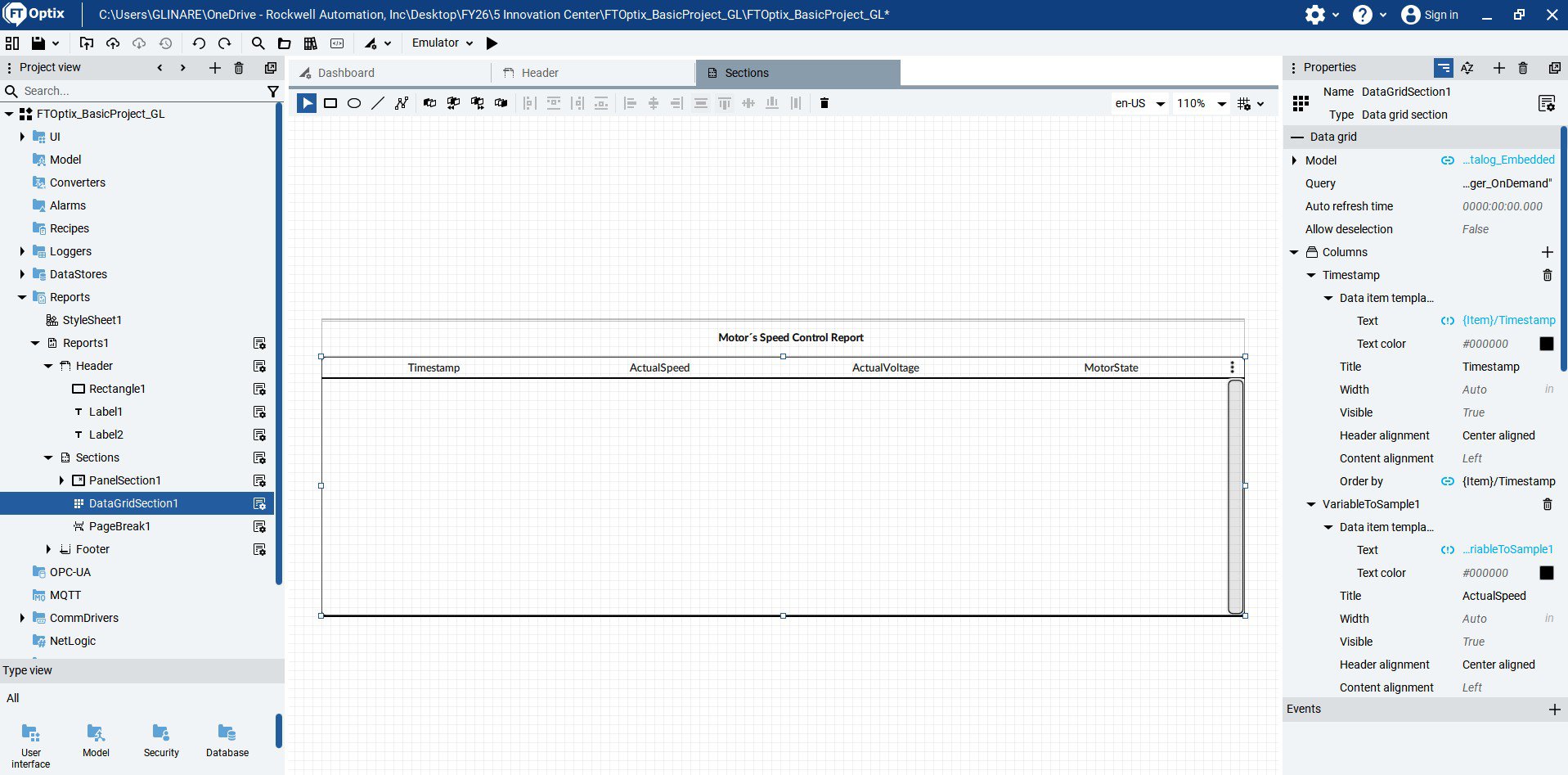
Select the DataGrid component that you inserted within the report visual template.
In the Properties panel (on the right), locate the Model property.
Click on the dynamic link icon (the Dynamic Link indicator diamond).
Navigate through the Information Model tree and point directly to your historical data source, for example: Model/DataLoggers/PlantDataLogger/DatalogEmbedded (or the Store table associated with the Data Logger).
The component will automatically map the relational database columns (timestamps, process variables, states) within the report view.
Configure the Generation Trigger in the UI (Trigger) and Configure the PDF Output Parameters
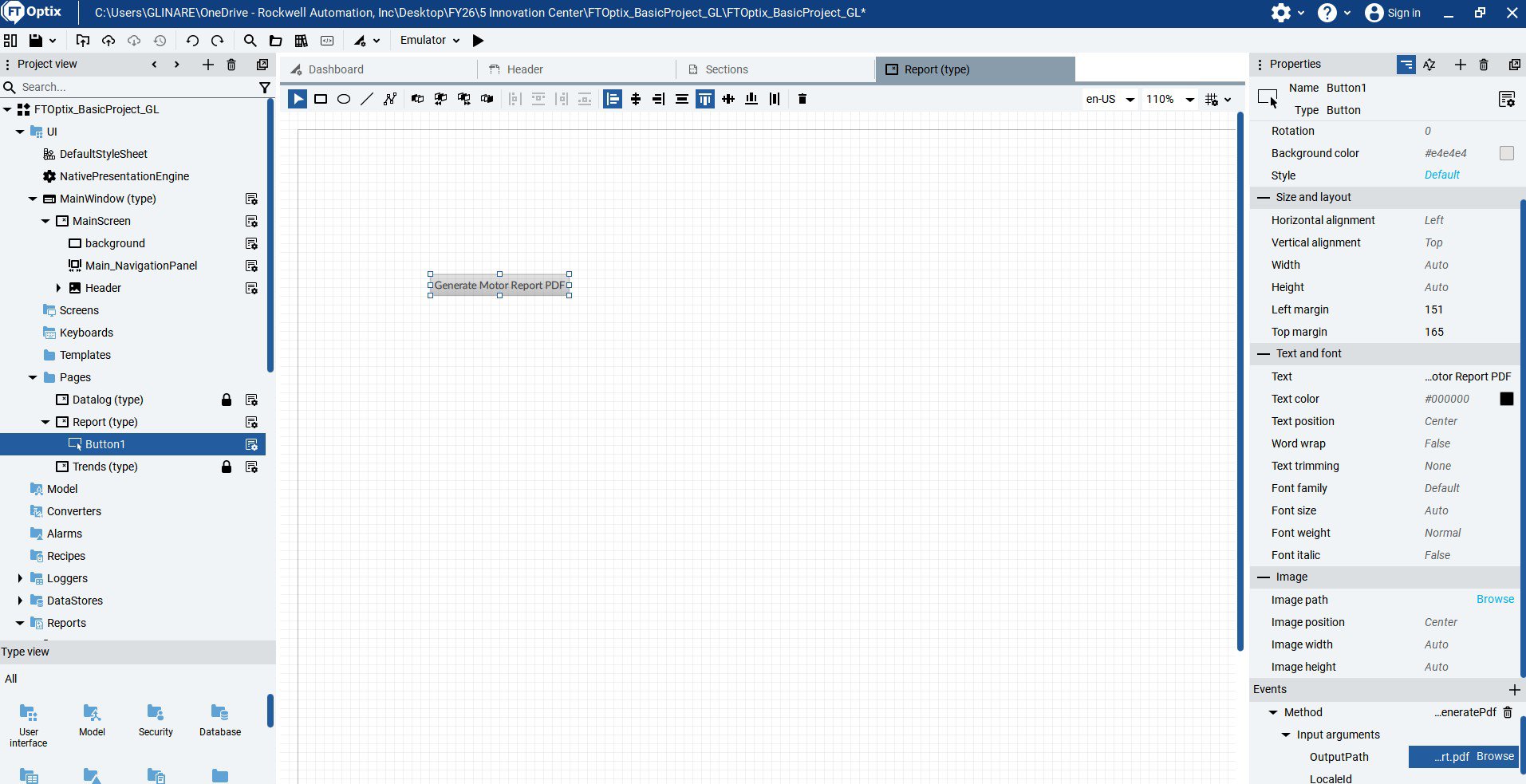
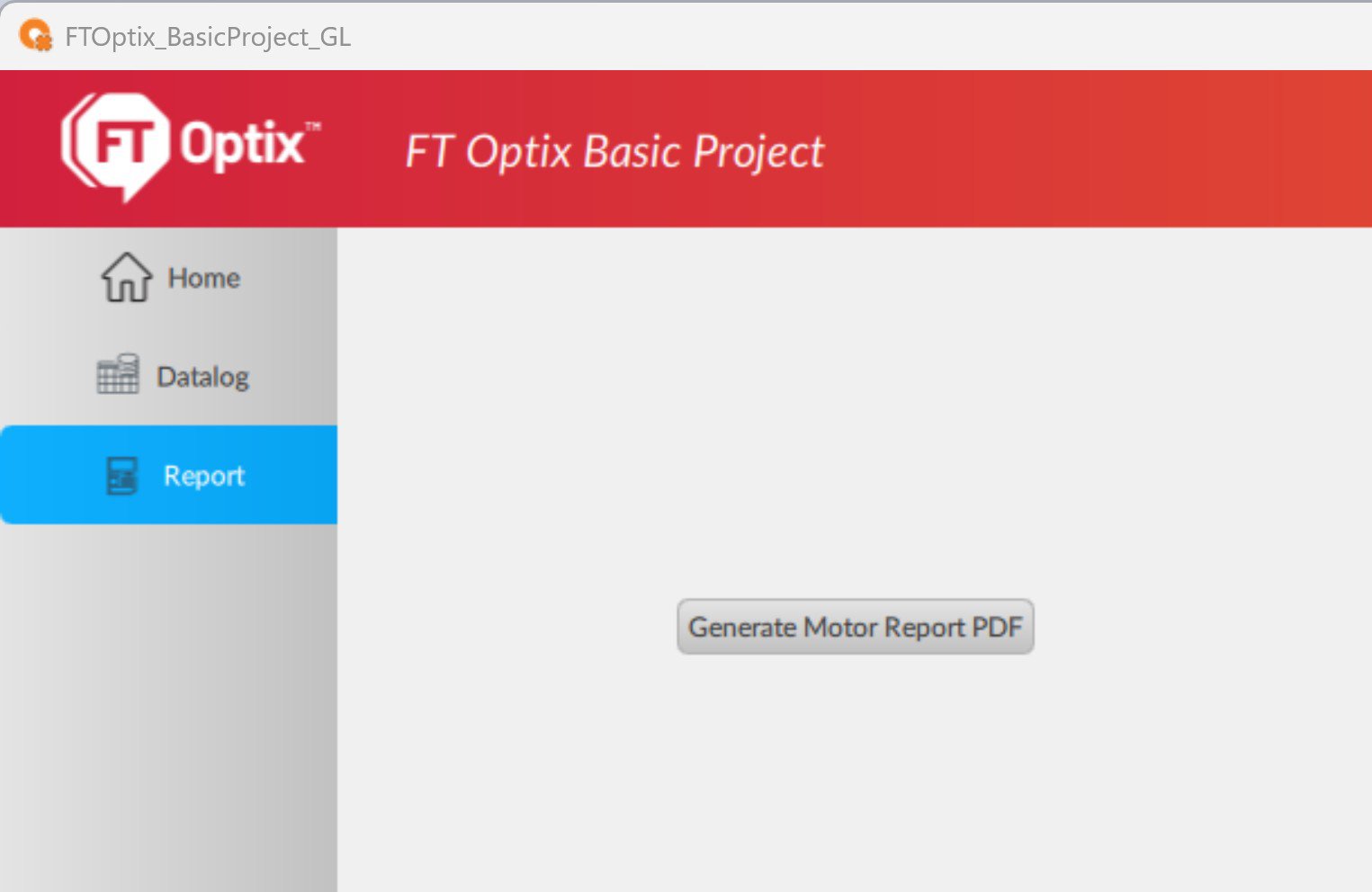
Go to UI -> MainWindow (Type) and add a Panel object (Type) named Report (Type) where the print button will be placed.
Insert a Button component and change its text to "Generate PDF Report".
Select the button, go to the Properties panel and locate the Events section.
In the MouseClick event, click the + button to add a new native action.
Select the ExecuteMethod action.
In the Method field, click the Information Model selector, navigate to your report node (Reports/Reports1) and select the native method GeneratePdf.
OutputPath: Path and name of the output file. To make it dynamic and compatible with any platform (Windows/Linux/OptixPanel), use the Runtime local storage syntax: Path\MotorStatusReport.pdf.