Loading
Magazine | Process Instrumentation
Recent ActivityRecent Activity

Q&A: Trends in Process Automation Smart Technology

Endress+Hauser’s Jason Pennington provides his insights on how digital transformation creates value in process automation.

Share This:

LinkedInLinkedIn
XX
FacebookFacebook
PrintPrint
EmailEmail
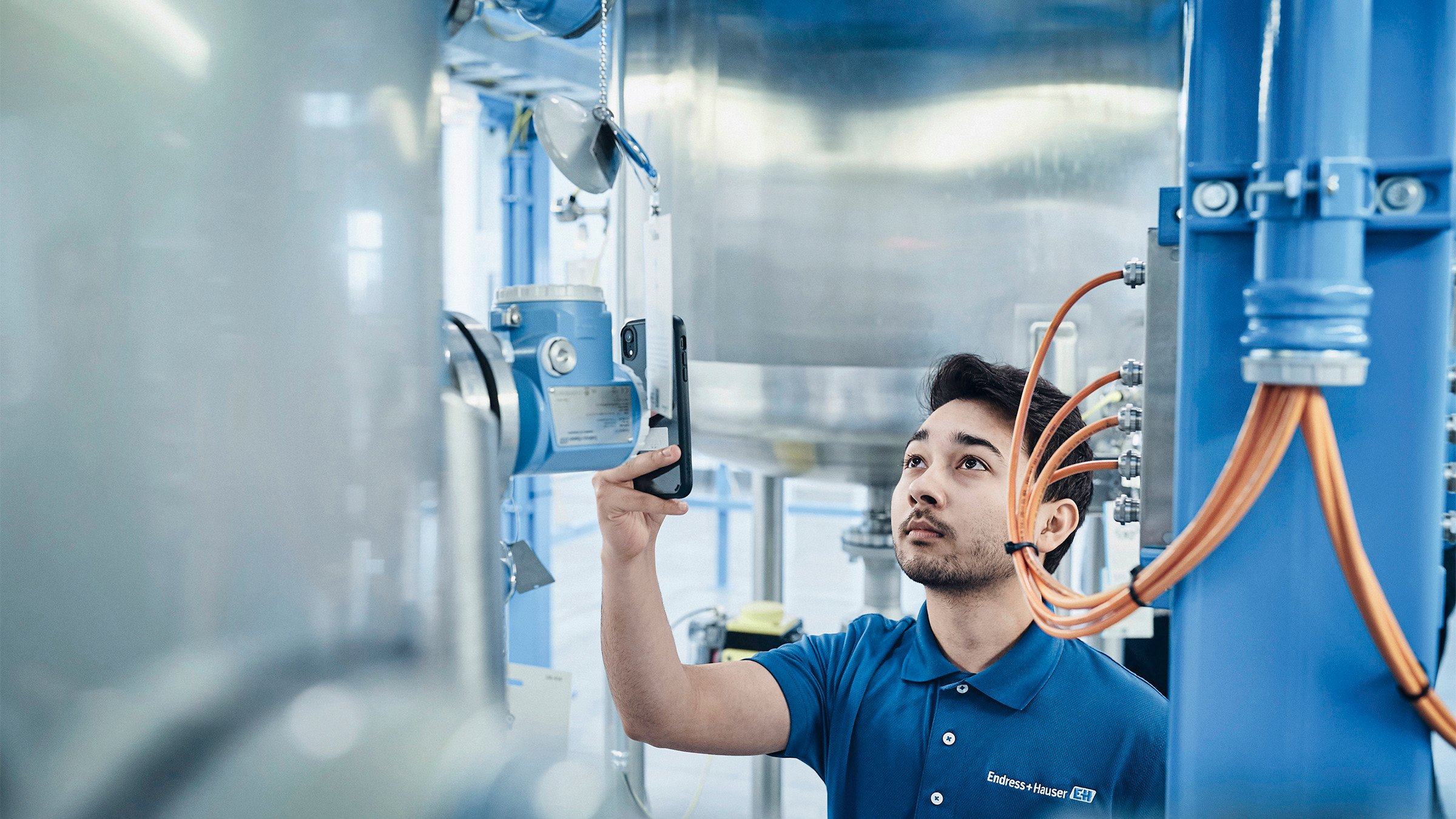
Engineer checking digitized process instrumentation in a manufacturing plant.

By Theresa Houck, Executive Editor

In this interview, I chat with Jason Pennington, Director of Digital Solutions at Rockwell Automation Strategic Alliance Partner Endress+Hauser, about trends affecting the increasing demand for digital transformation in process automation.

Also, learn about advancements in smart process instrumentation technologies and how Coriolis technology is improving operations. Enjoy this Q&A and listen to the “Automation Chat" podcast for the full interview (see sidebar).

Theresa: What trends are influencing the increasing demand for digital transformation?

Jason: We see digital transformation applications for process automation being data and analytics, but we also see different forms of digital transformation, such as business models or production models. Think services and integration of service-to-service, cloud-to-cloud and business-to-business. Digital transformation is part of the culture too, such as how a business is optimized.

The key is this: The more you might be willing to share strategically and securely, do you have an opportunity to create a competitive advantage for yourself and your partners?

Theresa: What are some downsides when a manufacturing leader doesn't take smart connected technology into consideration?

Jason: I think about that when an existing or future customer says, "We’re not going to do cloud. My IT group won't allow it."

My response is, "Have we just not really listened to that customer well enough? Have we not presented the right value? Are we capable of digging out their possible business or operational problems? And are we able to address them beyond the idea of just another company talking about cloud and throwing out buzzwords?"

In some cases, you have to do your homework. Put yourself in the customer's position and understand a little bit about its culture. Every company is different in terms of the boundaries and rules they follow. As a business, we have to consider integrating their business processes with our data and how our data might influence some of the decisions they make about their own operation. And that leads a lot to trust.

Theresa: Is there such a thing as being behind in digital transformation, and should plant managers compare themselves to competitors? How should plant managers measure where they stand with digital transformation?

Jason: This is a subjective reflection. What does it mean to be behind? I think that's a different answer for everyone.


Main Image
Enjoy The Journal’s Automation Chat Podcast

Join Theresa Houck, Executive Editor of The Journal From Rockwell Automation and Our PartnerNetwork™ magazine, as she talks with industrial automation and manufacturing leaders, implementers and other subject matter experts on the magazine’s “Automation Chat” podcast. Learn about the newest technologies and trends affecting your job every day.

Listen on your favorite podcast app or on the web, or watch their conversations on YouTube. And subscribe so you don’t miss an episode.

Listen Now Watch Now

By running unsupervised machine learning models on plant-floor machines on the plant floor in real time, does that mean you’re digitally transformed? Or, in some cases, I've seen a lot of companies that are just stuck in pilot purgatory, trying to find this nirvana of connected technology.

Then I've seen some companies a little slow to move, but very strategic in how they move, very methodical. Are those companies left behind just because they've been slower to adopt?

Or perhaps they're not left behind at all — they’re just taking more of a classical approach, writing charters for projects and putting subject matter expert (SME) teams together to think about what problem they’re trying to solve, and finding how investing in this technology can integrate into their larger enterprise?

What are some of the milestones they’re measuring before they really start to adopt this technology? We’ve seen the dynamic, almost kind of a psyche within the industry, of just an acceptance for cloud-first with a variety of containerized platforms able to deliver software that really is innovative and incremental to what enterprises are doing.

[Software] has been created with the ability to deliver some value independent of the hardware platforms they’re running, or not necessarily being reliant upon hardware they can't get. These have been some of the unique industry trends over the last couple years.

Theresa: And how do you see Coriolis and digital transformation working together to improve process automation?

Jason: Coriolis, it's only one technology, but it’s an important one. I'd position Coriolis as one of those unique technologies with multivariable aspects and a lot of evolution in the market. It's able to provide some outcome-based solutions.

There are other very much fit-for-purpose devices. When thinking about a temperature sensor or pressure sensor, there's some interesting diagnostics, little incremental features, but if I want to measure pressure in a steam line, that's about the extent of my specification.

With Coriolis, we have viscosity, density, mass flow, volume flow and a variety of diagnostics. So, we've started to call it “a window to the process.” It's an analyzer that also happens to measure flow accurately.

And thinking about UX (user experience) and UI (user interface), it’s interesting to see how system integrators bring the purity, the blending, the quality, or whatever outcome is needed.

Two engineers are now able to sit in a room in Midwest USA, operating quality systems, delivering coatings, or whatever that they're doing, in 30 to 40 countries. Not only can they benchmark all those sites in the cloud, but they can have a device that's documenting itself and telling the user the pipe’s building up, for example.

Joey Zheng
Podcast
How Digital Transformation Creates Value in Process Automation

In this episode of “Automation Chat” podcast from The Journal From Rockwell Automation and Our PartnerNetwork magazine, Executive Editor Theresa Houck chats with Jason Pennington, Director of Digital Solutions at Endress+Hauser, about trends affecting the increasing demand for digital transformation.

Also learn about some of the downsides when manufacturing leaders don’t take advantage of digital tools; advancements in smart process instrumentation; and how Coriolis technology is improving process automation.

Listen on your favorite podcast app or on the web, or watch their conversation on YouTube.

Listen Now Watch Now

And there’s that cultural aspect. If a company doesn't want it to happen, it's probably not going to happen. Your options are to embrace that change and think about how it fits in your culture, versus looking at other companies, saying, "Oh, that's what we want to be." You have to adopt technology that works for you.

Endress+Hauser, a global provider of process measurement instrumentation, services and solutions, is a Strategic Alliance Partner in the Rockwell Automation PartnerNetworkTM program. Together, Rockwell Automation and Endress+Hauser deliver integrated pre-engineered, pre-tested, supported, and maintained instrumentation and control and information solutions that provide plant-wide advanced diagnostics and process system life-cycle management.


Like this article? Sign up for the digital magazine (4X/year) of The Journal From Rockwell Automation and Our PartnerNetwork.


The Journal From Rockwell Automation and Our PartnerNetwork™ is published by Endeavor Business Media.

Topics: The Journal Digital Transformation Smart Devices Production Automation
Recommended for You
Loading
The Journal’s Full May 2024 Magazine
Magazine
Magazine
The Journal’s Full May 2024 Magazine
Download the full PDF of the May 2024 issue of The Journal From Rockwell Automation and Our PartnerNetwork.
Q&A: Colonial Pipeline Cyberattack Lessons Learned
Magazine
Magazine
Q&A: Colonial Pipeline Cyberattack Lessons Learned
Editor Theresa Houck talks with a cybersecurity expert about what manufacturers and infrastructure utilities can learn to help fortify their networks.
  1. Chevron LeftChevron Left Rockwell Automation Home
  2. Chevron LeftChevron Left Com...
  3. Chevron LeftChevron Left News
  4. Chevron LeftChevron Left The Journal
  5. Chevron LeftChevron Left Q&A: Trends in Process Automation Smart Technology
Please update your cookie preferences to continue.
This feature requires cookies to enhance your experience. Please update your preferences to allow for these cookies:
  • Social Media Cookies
  • Functional Cookies
  • Performance Cookies
  • Marketing Cookies
  • All Cookies
You can update your preferences at any time. For more information please see our {0} Privacy Policy
CloseClose