Loading
Magazine | Food and Beverage
Recent ActivityRecent Activity

6 Ways to Fight the Food & Beverage Worker Shortage

Modern digital technologies can help food and beverage companies attract, retain and empower their workforce while improving efficiency.

Share This:

LinkedInLinkedIn
XX
FacebookFacebook
PrintPrint
EmailEmail
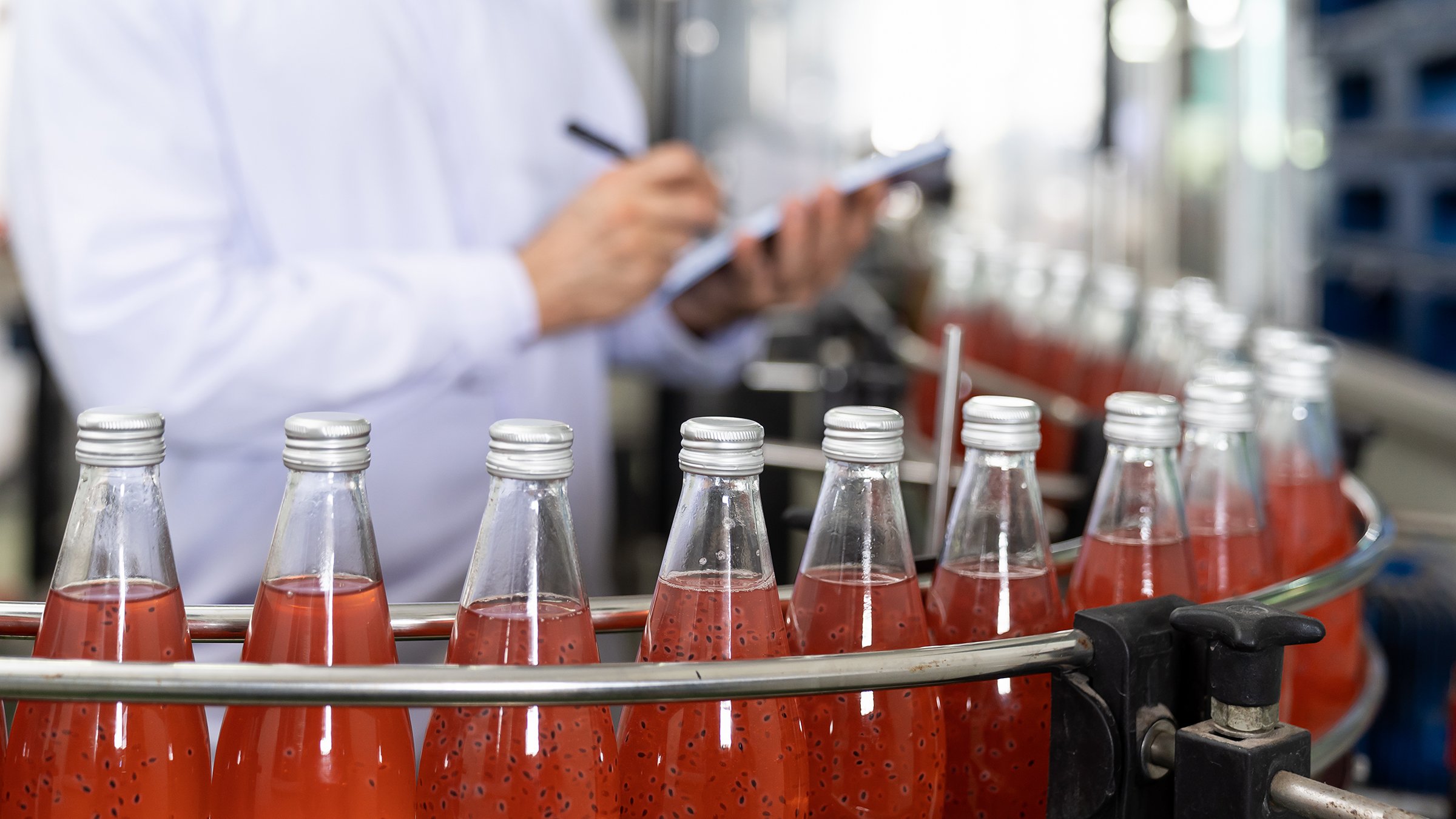
Male quality-control worker writing notes about Basil seed with fruit on beverage manufacturing bottling line.

By Todd Gilliam, Americas Industry Manager for Consumer Packaged Goods, Rockwell Automation

The food and beverage industry is severely impacted by workforce challenges. From pandemic disruptions to looming retirements, employers need a way to extend their workforce. Finding and keeping talent are two of the top challenges identified by food and beverage company leaders.

And they are not alone. According to the 2023 Annual State of Smart Manufacturing Report that compiles feedback from hundreds of manufacturers, skilled worker shortage, supply chain disruption and security/risk management are top challenges for business. Survey results show the No. 1 challenge is employee retention.

Without modern tools, technologies and work processes to drive efficiency, producers will struggle to be successful and remain competitive.

The good news is that by using innovation, technology and data to make decisions, employers can equip workers with the right tools while supporting the path for success through learning and development.

Companies embracing digital transformation can gain more productivity from their workforce and combat the decline in institutional knowledge that’s diminishing as a generation of skilled workers ages out of the labor force and current workers leverage their career mobility.

The U.S. shortage of skilled manufacturing workers — more than 600,000 before the pandemic — is projected to be 2.4M by 2028, according to the Pew Research Center.

Automation systems need to be more flexible and sophisticated than ever, and they also need to present your workforce with a more intuitive and transparent user experience.

Because workforce demographics are changing dramatically, consider the devices you use and the employee experience. Make information easy to consume and role specific. For example, a video library is an easy way to consume information and simple to adopt.

Engage remote assets and expert assistance to avoid downtime and boost productivity by augmenting people with team collaboration tools, mixed reality (MR) guides, Industrial Internet of Things-enabled machines and Artificial Intelligence-enhanced applications.

Keep up with food & beverage automation trends and technologies
workers in a cookie food manufacturing plant
Subscribe to The Journal
Keep up with food & beverage automation trends and technologies

Subscribe to The JOURNAL from Rockwell Automation and Our PartnerNetwork™, and receive the latest news and information directly to your inbox. Enter your email address and check the box for "The Journal." It's that easy to keep up with updates in the food and beverage industry!

Subscribe

How to Start

With these overarching themes in mind, here are six practical suggestions you can immediately incorporate to begin this augmentation and empowerment journey.

1. Support operators and maintenance teams with augmented reality (AR), virtual reality (VR) and MR. Extended reality (XR technology) encompasses virtual, mixed and augmented reality and is a powerful tool in training and retaining employees.

HoloLens, RealWear tablets and smartphones are some of the tools from Rockwell Automation to give workers knowledge transfer abilities using AR expert guidance. With VR-enabled work instructions and a digital twin, you can train workers with remote assistance to increase efficiency, productivity and safety.

Remote support also provides maintenance staff with help when they need it. With AR remote assistance, the subject matter expert can visualize what’s happening remotely and help the technician correct the issue using remote visibility.

AR also is used to help train new employees with remote assist and work instructions. Video training for employees allows them to retain information more effectively than in a classroom setting, and is also easier for language translation, if needed.

2. Prepare with simulation and predictive modeling. Emulation facilitates low-cost, offline controls verification, taking logical controls testing off the project’s critical path. It also allows users to model physical assets and start controls testing earlier and safer so they can carry out more exhaustive testing and conduct tests that aren't possible on the real system.

Simulation allows technicians to create repeatable test schedules and conduct testing off-site. The virtual process saves time and money at commissioning.

The advantage of virtual commissioning and simulation/emulation is using a dynamic digital twin of a machine or system as an offline method to simulate, test and debug the control system under realistic operating conditions. The key factor is data — getting valuable feedback and quickly going through iterations to develop the right model.

With emulation, workers can also model processes by using model predictive control or multi-variant control to collect data and then adjust the process in real time.

3. Empower with information. Company leaders want actionable insights aligning with the Connected Factory Worker concept for effectively troubleshooting and resolving plant disruptions, and predicting future issues before they result in costly downtime, or product or safety issues.

Production monitoring technology (overall equipment effectiveness tools) or asset performance management technology available in an easy-to-deploy cloud environment — such as computerized maintenance management systems (CMMSs) — gives workers access to data in one pane with no data silos. This allows the enterprise to move from a reactive to proactive digital strategy.

4. Enable faster machine changeovers. With a marketplace with constantly and rapidly changing demand, manufacturers must focus on machine design and working with OEM partners to create adaptable machines that can better enable a flexible manufacturing production line.

Man with backpack standing in front of colorful blurred speeding train.
Podcast
Now Boarding: Digital Transformation for Process Automation

In this “In Case You Missed It” episode of our award-winning Automation Chat” podcast, we bring the written word to life! Author Carol Schafer at Rockwell Automation reads her article from The Journal From Rockwell Automation and Our PartnerNetwork magazine, “Now Boarding: Digital Transformation for Process Automation.”

Considering the true value of modernized continuous and batch operations, you’ll learn why process manufacturers don’t need to fear digital transformation because of how it helps address challenges such as lack of flexibility & agility, unplanned downtime, skilled worker shortage, sustainability and compliance needs.

And of course, get your family-friendly, silly Joke of the Day.

Listen on your favorite podcast app or on the web.

Listen Now

For example, with adaptive technologies such as independent cart technology, you can create a variable-pitch production or packaging line that can produce multiple sizes and configurations in a smaller, more configurable footprint. Automatic changeovers can be done by pushing a button to produce greater production.

In addition, the linear motor technology of this type of machine reduces friction, which extends equipment life and minimizes the need to change parts during changeovers.

5. Extend with robotics. Even in the consumer packaged goods (CPG) industry, robotics usage has exploded by as much as 50%, according to Jim Taylor, industry consultant, Consumer Packaged Goods, Rockwell Automation.

“Robots are rewriting the manufacturing world," he explains. "Typically, robots have a separate system, and the idea of integrating all the systems by making the control information available is now happening. This unified robotic control provides a much simpler approach, reducing the need for dedicated robot controllers and separate programming environments. Instead, workers can leverage seamless communication and synchronization through a single, familiar platform."

Manufacturers can realize additional value of robotics with collaborative robots, called cobots. With cobots and new safety features like safe-speed and safe-torque, humans and robots can stand and work side by side.

6. Attract the next generation of workers. Manufacturers can help make their company an attractive destination with technologies and a modern work environment. The new generation of workers wants a safe and technologically advanced workplace. Here are a few ways to attract new talent:

  1. Begin or continue a digital transformation journey that uses one or more of these technologies discussed above to optimize and improve efficiencies while nurturing the growing global population in a safe and sustainable manner. In other words, be an exciting, on-mission place to work.
  2. Meet the digitally savvy generation of workers where they are. Their user experience in the plant-floor environment should align with the expectations they’ve developed in their consumer experience.
  3. Seek alternative pools of labor, such as veterans exiting active military duty who already have a technology background.
  4. Simplify training using digital technologies to offer an enriched, exciting learning experience.
  5. Outsource additional, external managed-services resources to provide specific domain expertise such as cybersecurity or infrastructure and network services to provide workers a safer and more secure workplace.


Like this article? Sign up for the digital magazine (8x/year) of The Journal From Rockwell Automation and Our PartnerNetwork and get articles like this delivered right to your inbox.


The Journal From Rockwell Automation and Our PartnerNetwork™ is published by Endeavor Business Media.

Topics: The Journal Digital Thread Digital Transformation Smart Manufacturing Food & Beverage Emulate3D Digital Twin
Recommended for You
Loading
  1. Chevron LeftChevron Left Rockwell Automation Home
  2. Chevron LeftChevron Left Com...
  3. Chevron LeftChevron Left News
  4. Chevron LeftChevron Left The Journal
  5. Chevron LeftChevron Left 6 Ways to Find Food & Beverage New Hires
Please update your cookie preferences to continue.
This feature requires cookies to enhance your experience. Please update your preferences to allow for these cookies:
  • Social Media Cookies
  • Functional Cookies
  • Performance Cookies
  • Marketing Cookies
  • All Cookies
You can update your preferences at any time. For more information please see our {0} Privacy Policy
CloseClose