Loading

FactoryTalk Analytics VisionAI

See what you have been missing with AI-driven insight and analytics
Try It Now
Manufacturing factory with small bottles of green beverages on conveyor belt

FactoryTalk® Analytics™ VisionAI™, an AI-powered machine vision system, takes a no-code approach to vision inspection to improve quality, maximize yield and gain critical insight from real-time production data.

Throughout the entire user workflow (from camera configuration and capturing images to training and deploying models, and even for analyzing quality performance), our machine learning and vision inspection helps quality personnel and plant operators view the information they need to achieve their quality performance targets. 
5 AI Secrets to High-Quality Products & Less Waste
Blog
Blog
5 AI Secrets to High-Quality Products & Less Waste
New AI machine learning technology improves the quality inspection process. Machine vision delivers higher yields & better quality. Less downtime & waste.
Read Now
See What You’ve been Missing with AI-driven Insights & Analytics
high-tech close-up image of an eye seeing digital data
Data Sheet
See What You’ve been Missing with AI-driven Insights & Analytics

FactoryTalk® Analytics™ VisionAI™ takes a no-code approach to artificial intelligence vision inspection. Improve your product quality, maximize your yield and gain critical production insights from real-time data.

Download Now

Identify and classify defects

FactoryTalk Analytics VisionAI finds defects, previously impossible to detect, driving insights and actions.

Advanced Defect Detection

Train a specialized AI model for your product with FactoryTalk Analytics VisionAI, delivering a lightweight yet highly effective solution for detecting even the subtlest and rarest anomalies in production.

Classification and Root Cause Analysis

Go beyond simple pass/fail judgments with the Rockwell Automation cloud-based platform, offering detailed anomaly analysis and enabling corrective actions.

Edge and Cloud Integrations for Controls

Once we’ve detected your defects, the results of your quality inspection can be shared at the edge with control systems and in the cloud via API to your MES/QMS.

FactoryTalk Analytics VisionAI pass fail scan

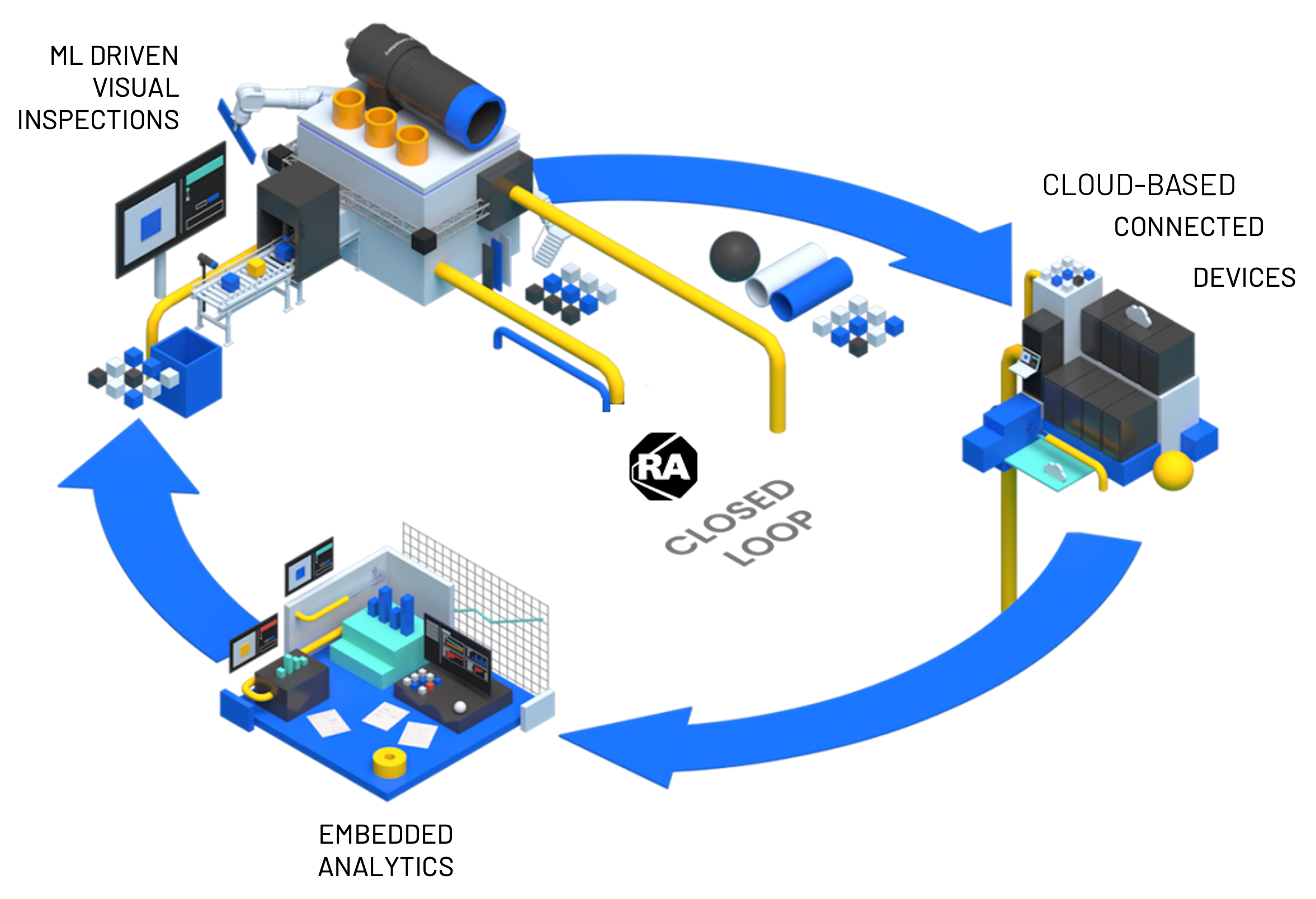
Built in the cloud for closed loop quality at the edge

Artificial intelligence (AI), machine learning and model management in the cloud to deliver unparalleled, advanced quality inspection

FactoryTalk Analytics VisionAI closed loop quality diagram

Simplify quality inspection

Rockwell Automation combines vision inspection hardware, AI vision software and domain expertise to simplify quality inspection

Hardware

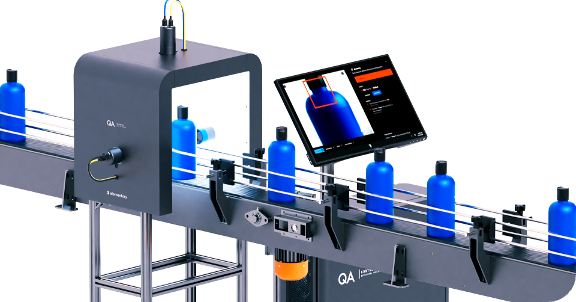
product anomaly scan production line
 

Real-time inspections at manufacturing speeds with an integrated solution

Essential automation integration via standard industrial protocols

Scalable hardware using off-the-shelf components to fit any inspection application

Software

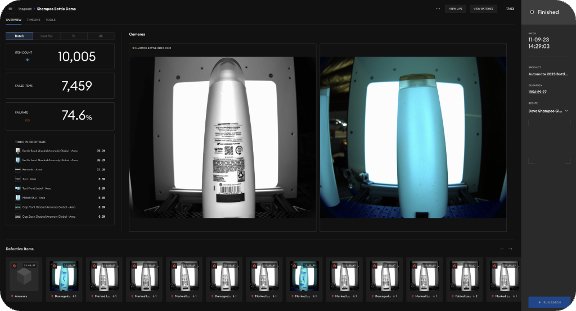
product anomaly scan views
 

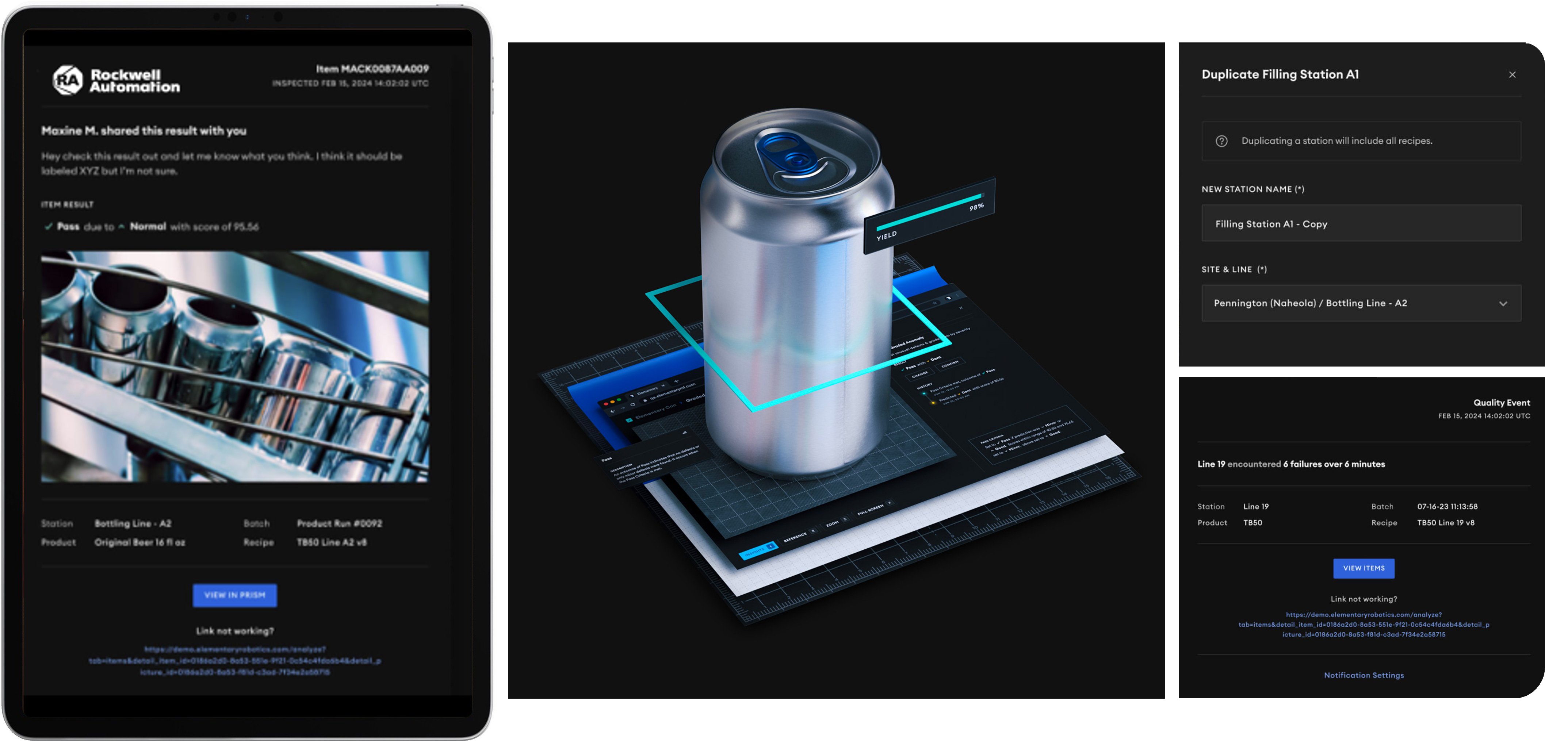
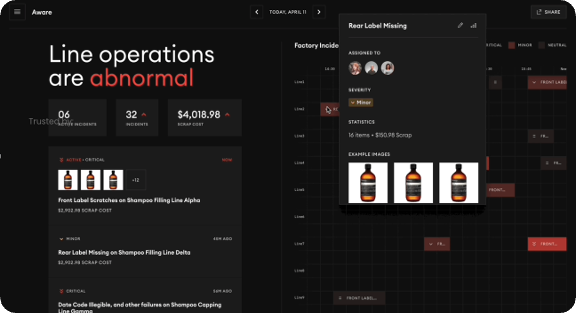
Essential analytics stores all image data, exposes through APIs and AI-driven insights

Remote operations allows the production line to be updated from the cloud in real time

Machine learning model management means AI that scales efficiently

Domain Expertise

product anomaly notification screen
 

Integrations to allow alerting and management from anywhere

Enterprise manageability scale the ROI on your deployments

Cybersecurity is a core principle and FactoryTalk Analytics VisionAI is built on SOC 2 compliant technology

Fit for many manufacturing industries

Out-of-the-box analytics for discrete and hybrid industries

toothpaste icon

CPG

car icon

Automotive

prescription bottle icon

Medical

fizzy bottle icon

Food & Beverage

Circuit icon

Electronics

AI for machine vision systems

Our end-to-end FactoryTalk Analytics VisionAl workflow enables manufacturers to easily deploy machine learning models across their facilities. Model development relies on production experience and a clear understanding of what good and bad quality products look like, reducing the need for machine vision expertise to create or update models. Once models are deployed, the AI in FactoryTalk Analytics VisionAI brings a more intuitive analysis of images, allowing for a human-like interpretation of the product during the inspection process.

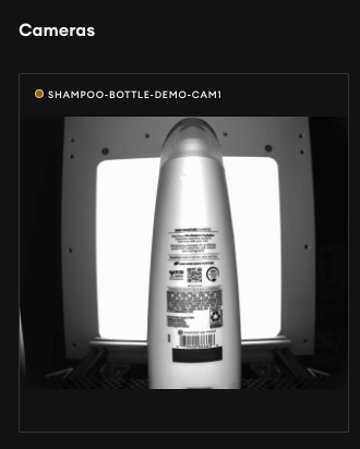
Capture

Inspect

product anomaly camera view

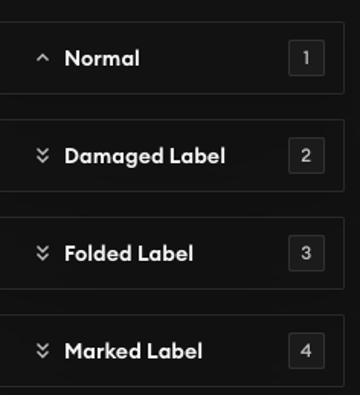
Label

Create - Labeling Gallery

product anomaly scanning software labeling

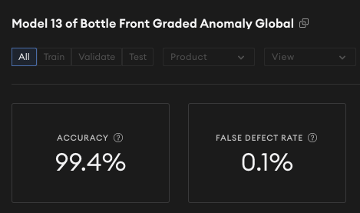
Train

Create - Training Management

product anomaly scanning software training management

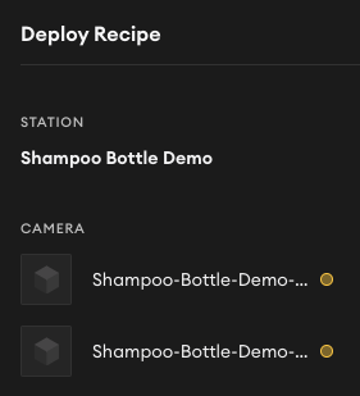
Deploy

Create - Recipe Management

product anomaly scanning software recipe management

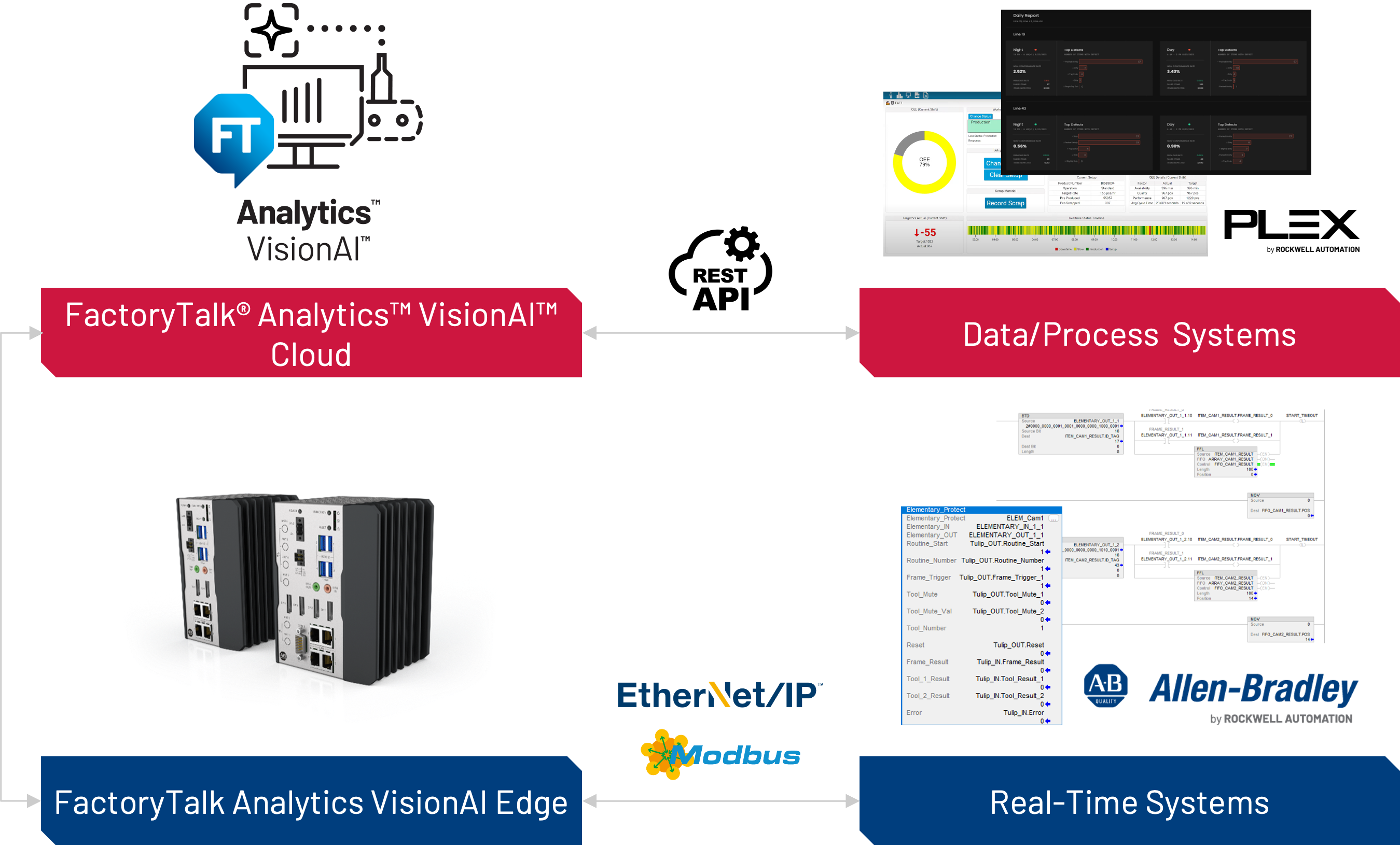
Integrations through the cloud and industrial protocols

Cloud Integrations

  • Typically used for data analytics or process management applications
  • Integrate via bidirectional Rest API
  • Examples: BI tools, MES/QMS systems

Factory Floor Integrations

  • Typically used for real-time command and control of systems on the factory floor
  • Integrate via Ethernet/IP
  • Examples: Rejection systems, conveyors, factory devices
FactoryTalk Analytics VisionAI hardware software cloud integrations

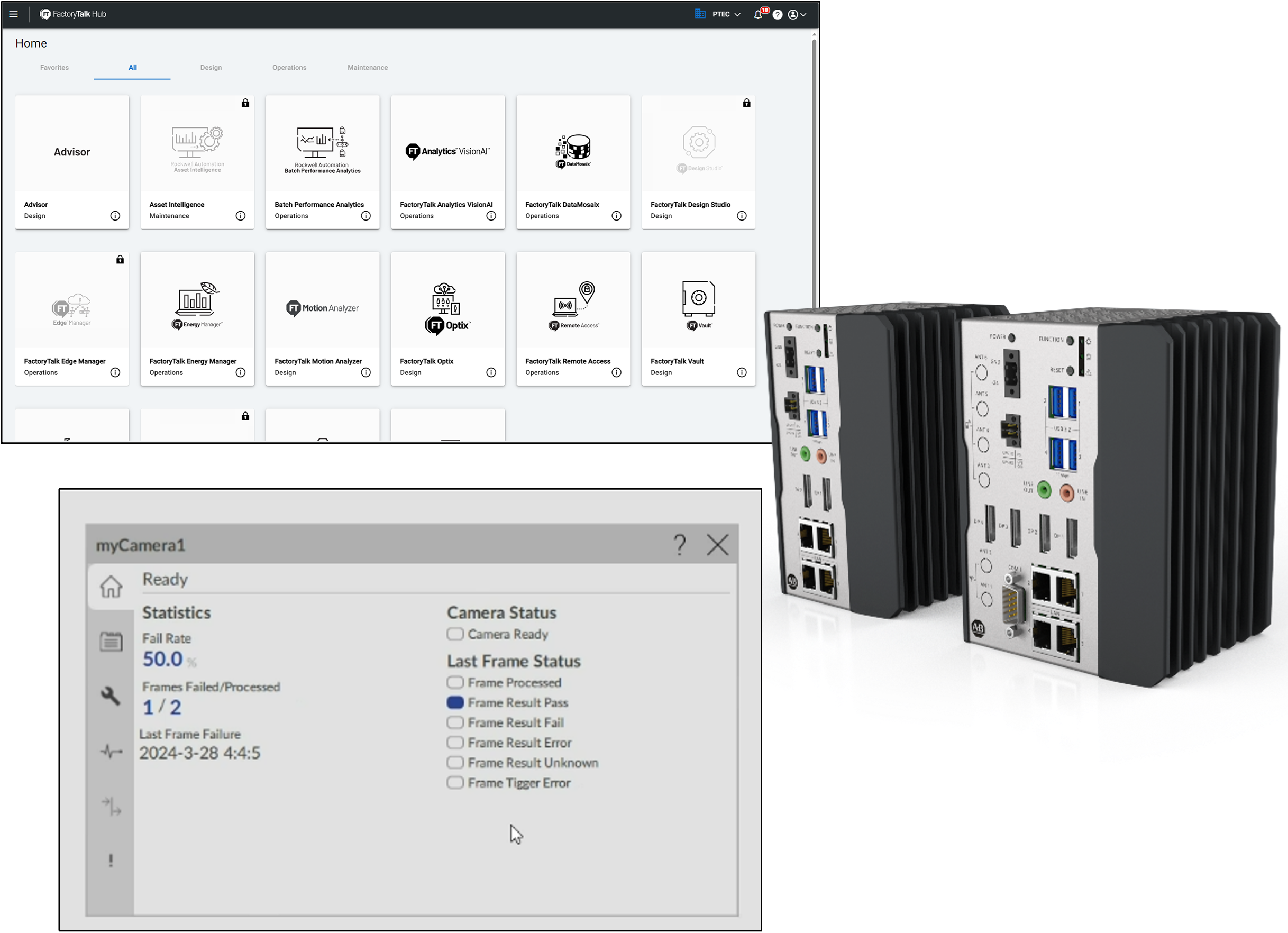
Rockwell Automation Integration

Rockwell Automation provides an integrated solution, simplifying installation and shortening the time value

Cloud

  • Simplified cloud access via FactoryTalk® Hub™

Hardware

  • Architecture built on Allen-Bradley ASEM™ IPC and Logix PLCs

Control System

  • Add-on Profile for premier Logix Integration
  • FactoryTalk® Optix™ Object Library for visualization integration
Factorytalk Analytics VisionAI Rockwell Automation products and cloud integrations

The Rockwell Automation Difference

workflow symbol

Scalable solution with intuitive, OT focused workflows that don’t depend on specialists

network icon

Data-driven quality decisions empowered by out-of-the-box advanced analytics

person at computer with hard hat icon

Smart vision that integrates with control to deliver value in closed-loop

Handshake

Frictionless integrated vision, control and operations in one platform from one supplier

What are Machine Vision Systems?

Machine vision systems in manufacturing are automated technologies that use cameras, sensors and advanced software to capture and interpret visual information on the production line. These systems act as a set of “digital eyes,” enabling machines to inspect products, verify quality, guide robotic movements and detect defects with speed and precision. By analyzing images in real time, machine vision helps manufacturers improve accuracy, reduce human error, streamline operations and maintain consistent product standards. As a result, it plays a critical role in modern automation strategies and overall manufacturing efficiency.

How do Machine Vision Systems Work?

Machine vision systems operate by combining imaging hardware with intelligent software to inspect and guide manufacturing processes. They analyze visual data in real time to ensure products meet quality standards and support automation. The process typically involves several key steps:

  • Image Acquisition: Industrial cameras capture images of parts or products under controlled lighting to ensure clarity and consistency.
  • Preprocessing: The system enhances images by adjusting contrast, removing noise or correcting distortions to improve analysis accuracy.
  • Feature Extraction: Algorithms identify important characteristics such as shape, size, color, texture or surface defects.
  • Analysis and Decision Making: Software compares extracted features against predefined standards to detect defects, measure dimensions or verify assembly.
  • Action/Output: The system communicates results, such as pass/fail signals or instructions to robotic equipment, enabling real-time corrections and automation.

Key Components of Machine Vision Systems

Machine vision systems rely on a combination of hardware and software components that work together to capture and analyze visual information. The essential components include:

  • Cameras: Capture high-resolution images of products or parts, often using specialized sensors for color, monochrome or 3D imaging.
  • Lighting: Provides consistent illumination to highlight features, reduce shadows and enhance image quality for accurate analysis.
  • Lenses: Focus and magnify the image for precise inspection, ensuring that small details are clearly visible.
  • Image Processing Software: Analyzes images using algorithms for pattern recognition, measurement, defect detection and classification.
  • Processing Hardware/Computers: Handle the computational workload required for real-time image analysis and decision-making.
  • Communication Interfaces: Connect the vision system to other machines, robots, or manufacturing execution systems (MES) for automated responses.
  • Mounting and Enclosure: Secure the cameras and lighting in stable, protective setups suitable for industrial environments.
Ready to talk to a Rockwell Automation consultant?

We offer industry expertise to help design, implement and support your automation investment.

Contact Us

You may also be interested in

Loading
Loading
Loading
Loading
  1. Chevron LeftChevron Left Rockwell Automation Home
  2. Chevron LeftChevron Left Pro...
  3. Chevron LeftChevron Left Software
  4. Chevron LeftChevron Left FactoryTalk
  5. Chevron LeftChevron Left FactoryTalk Analytics VisionAI
Please update your cookie preferences to continue.
This feature requires cookies to enhance your experience. Please update your preferences to allow for these cookies:
  • Social Media Cookies
  • Functional Cookies
  • Performance Cookies
  • Marketing Cookies
  • All Cookies
You can update your preferences at any time. For more information please see our {0} Privacy Policy
CloseClose