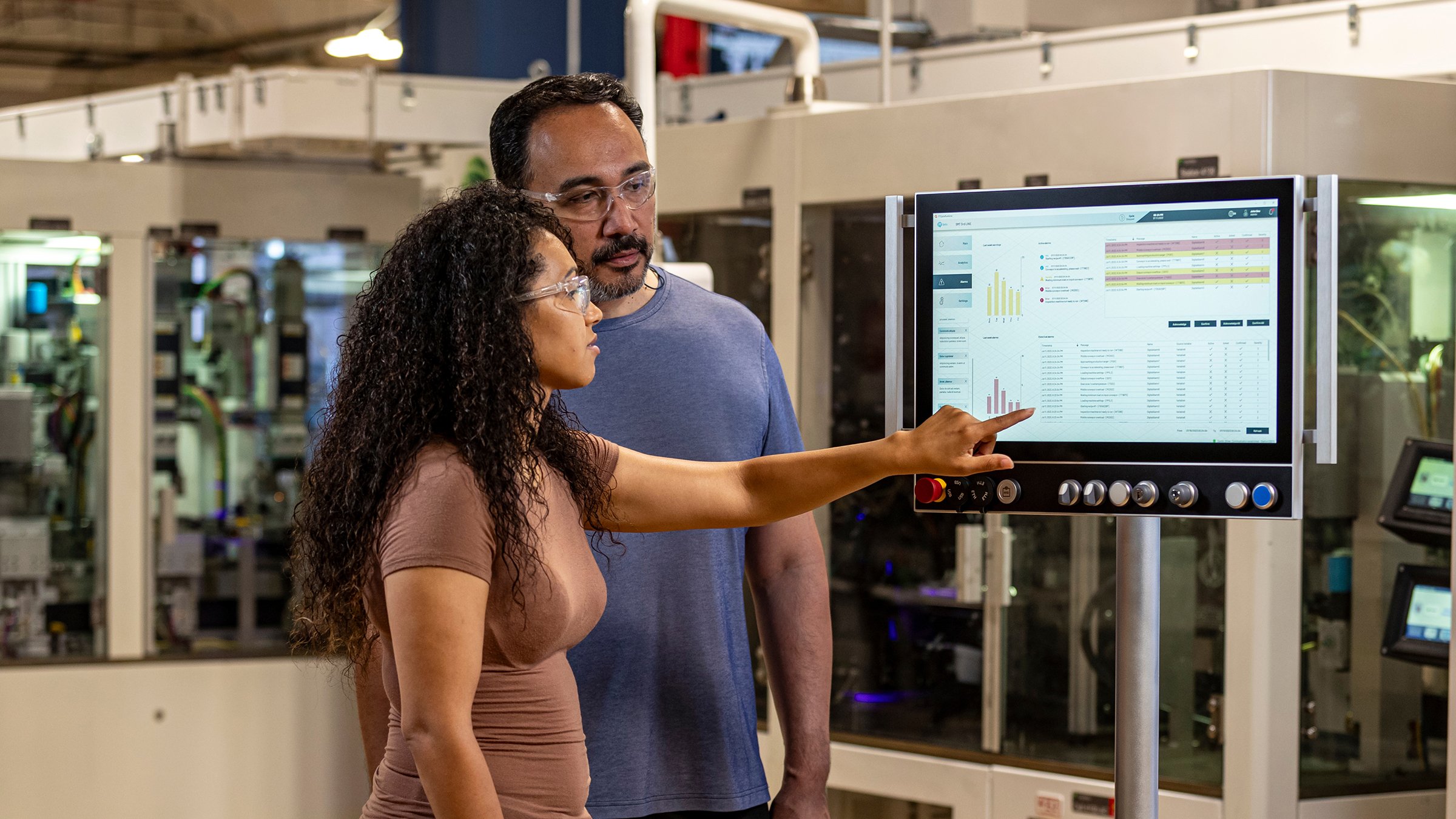
Every time we face an industrial revolution, a similar existential question emerges: is technology going to replace us, or will it increase our capabilities? This is a recurring question in the world of manufacturing, and the concept of “work” is being redefined at a pace that few expected in recent years.
The 11th Annual State of Smart Manufacturing Report shows that 93 percent of organizations expect an evolution of their workforce as smart manufacturing advances, and 40 percent have reskilled employees in the past year alone.
The drivers are clear. Rising complexity, tighter margins, and ongoing workforce constraints are forcing manufacturers to rethink how work gets done and who does it. At the same time, digital technologies are moving deeper into everyday operations, changing how decisions are made on the plant floor and across the enterprise.
Time and again, once established, these technologies have consistently evolved the way people work. This time around, it has the potential to expand our human possibilities by supercharging us with physical and intellectual abilities that will enable us to do more, faster, safer in a collaborative and ever connected environment. The possibilities are so vast that it is normal for us to experience these feelings of concern and excitement at the same time.
This shift marks a change in focus in how to address accelerating retirements and skills gap shortages. The challenge is now how to redesign work so people can operate more effectively in increasingly connected, data-driven environments.
From Labor Constraints to Capability Gaps
For years, workforce challenges in manufacturing were framed primarily as a labor shortage. While attracting and retaining talent remains important, the State of Smart Manufacturing findings point to a broader issue.
Manufacturing environments have become more dynamic, more connected, and more dependent on real-time information. Operators, engineers, and plant leaders are expected to manage higher levels of complexity while maintaining performance, quality, and uptime. In many cases, the systems supporting them have not kept pace. Data is always available, but not always in a form that is timely or in-context to the problems facing teams on the plant floor.
This disconnect creates friction in daily work. Teams spend unproductive time gathering information, validating inputs, or reconciling differences across systems instead of focusing on improving outcomes. As variability increases, so does the burden on individual experience and institutional knowledge to keep operations running smoothly.
Addressing this challenge requires more than adding headcount or training against existing roles. It requires rethinking how work is structured in the first place. Leading manufacturers are focusing on how to equip people with the information and tools required to act quickly and consistently.
Connected systems play a central role here, too. When operational and enterprise data come together in a shared environment, teams gain a clearer view of what is happening and what actions to take next. Advanced analytics can then surface relevant insights within context, reducing the need for manual interpretation and improving outcomes.
This shift raises the value of workers by equipping them with more concrete, contextualized data, improving high-impact decisions. Experience still matters, but it is supported by real-time insight and consistent information.
As manufacturers move forward, the organizations that adapt most effectively will be those that treat workforce challenges as an execution issue. The goal is to enable people to perform at a higher level within connected, intelligent operations.
Interoperable Data at the Point of Work
As integrated technologies move deeper into day-to-day operations, their impact is most visible at the point of work. For many manufacturers, the challenge is how to manage and interpret all of the data from existing systems to support the people using them.
For example, consider a manufacturer builds and deploys equipment across a wide range of industries. As the company expands, its teams eventually spread across multiple platforms and systems, each with its own interfaces, requirements, and learning curves. This fragmentation makes it harder to scale expertise across the organization and increases the time required to design, deploy, and support new systems.
To address this, manufacturers are standardizing their approach, bringing engineering tools, control systems and data into a unified environment. The shift means teams no longer needed to navigate multiple systems and allows engineers to apply their knowledge more effectively and efficiently.
Teams can move faster without compromising quality in a unified, integrated data environment. Most importantly, engineers spend less time managing system complexity and more time solving problems, improving designs, and delivering value to customers.
At the point of work, these changes have concrete consequences. They show up in shorter design cycles, fewer manual adjustments, and clearer lines of sight into performance. People still decide, but they are doing so with better information and fewer barriers.
The organizations seeing the most impact are not introducing new tools in isolation. They are simplifying the systems around their workforce so that data, analytics, and AI can support execution in a consistent way. That consistency is what allows knowledge to scale, teams to adapt, and operations to keep pace with growing complexity.
Making Work More Effective, Every Day
The 11th Annual State of Smart Manufacturing Report shows that manufacturers aren’t waiting to address workforce challenges, they are redesigning how work gets done. As operations become more connected, success depends on how well organizations can turn information into action.
Success requires teams to access actionable, contextualized information and use it to act more quickly than ever before. Today, many organizations still struggle to capitalize on the data they generate. Closing that gap is what allows digital investments to improve day-to-day execution.
This is how smart manufacturing is changing work. It does not remove the need for skilled people, conversely, it increases their impact. By supporting human judgment with timely, relevant insight, manufacturers are making it easier to respond to change, maintain performance and improve outcomes over time.
As it has happened in the past, the most successful organizations will build on the connection between people, technology, and decisions. They will create environments where information is both available and usable, where systems support work instead of slowing it down. In that context, the shift from tasks to decisions becomes measurable in speed, consistency and results.
The findings in this blog are from our 11th annual State of Smart Manufacturing Report. This yearly publication provides benchmark data, best practices, and key insights from manufacturers at all stages of digital transformation worldwide. Please visit rok.auto/sosm to download the full report.