How to use:
1 - The reactor volume 1.1 [m³]
2 - First order reaction with respect to the concentration of propylene oxide and zero order with respect to excess water, reaction model is followed.
3 - Representation of the reaction.


Context: Reactors in many industries are key equipment for transforming raw materials into intermediate products or final products. To achieve this transformation, in some cases temperature control is required to guarantee the operating temperature.
Objective: Use temperature control to guarantee the operation of the performance of chemical reactions.
How to use:
1 - The reactor volume 1.1 [m³]
2 - First order reaction with respect to the concentration of propylene oxide and zero order with respect to excess water, reaction model is followed.
3 - Representation of the reaction.
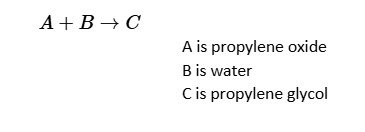
4 - The activation energy is


Downloads
Please note: You will need to agree to the Terms & Conditions for each download.

Need Help?
If you need help with an application or have feedback from the Innovation Center, please contact us.
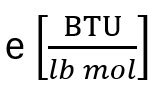
5 - The units are
6 - Conversion of reaction is assumed to be 85%
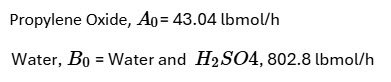
7 - Initial Flow,
In the current configuration, the chosen reactor is an ideal perfect mixture reactor (ideal CSTR) so that in the liquid inside, it is assumed that:
Problem to be addressed: The idea is to have an initial configuration element, in which temperature is an important parameter to produce Propylene Glycol.
The temperature and reaction control model is useful because it can be used by other developers to represent the reaction model that is influenced by temperature.
How can I make it work?
Requirements: products, tools, prior knowledge.
Software:
Tools: PlantPAX Process Libraries.
Prior knowledge

Open FactoryTalk Logix Echo, add a new controller and connect it.
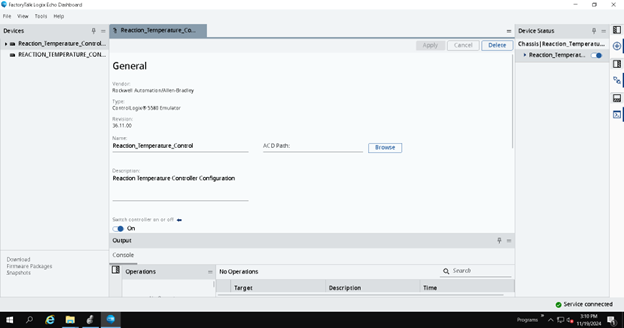
temperature-model-in-reactors_Paso01
Download the .ACD setup to your desktop and run it from Studio 5000.
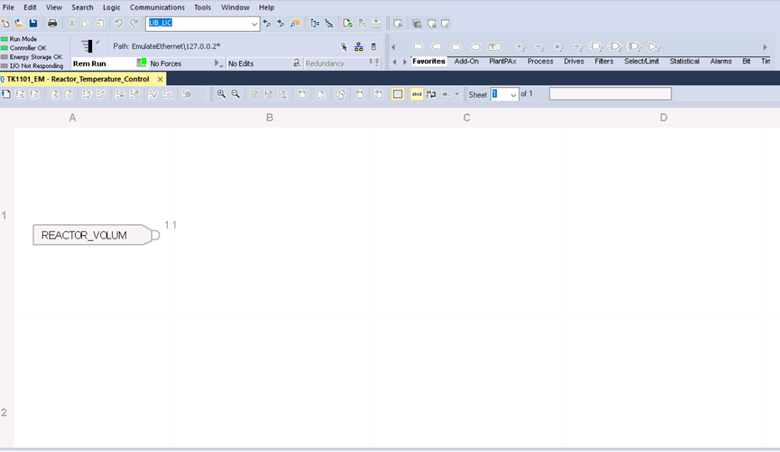
Determining the volume of the reactor is super important, because it gives us key parameters such as the time the reaction will last, which is why we created a label called Reactor Volume, which has a fixed value of 1.1 m3 and coincides with the established assumptions, above.
temperature-model-in-reactors_Paso03
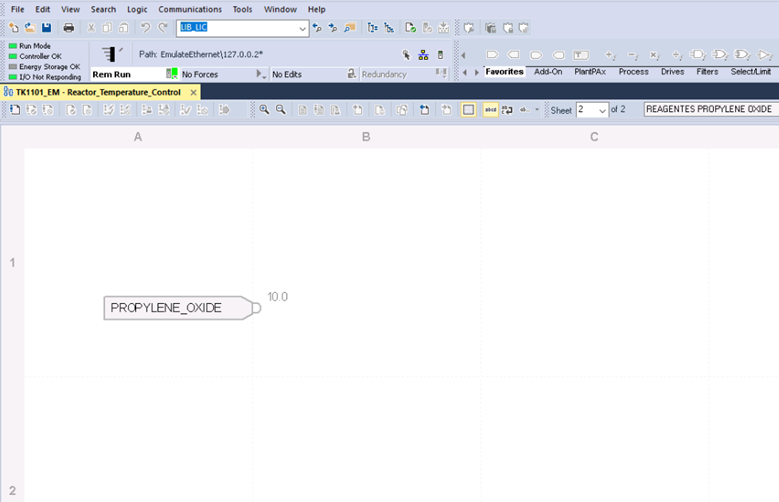
As in all reactions, the appropriate stoichiometry between reactants is important and considering that one of its components is propylene oxide, the tag associated with Propylene Oxide, reagent A, is created.
Which was explained in the assumptions and determined that the Propylene Oxide has an average flow of 10m3/h and this value is established as its input flow.
temperature-model-in-reactors_Paso04
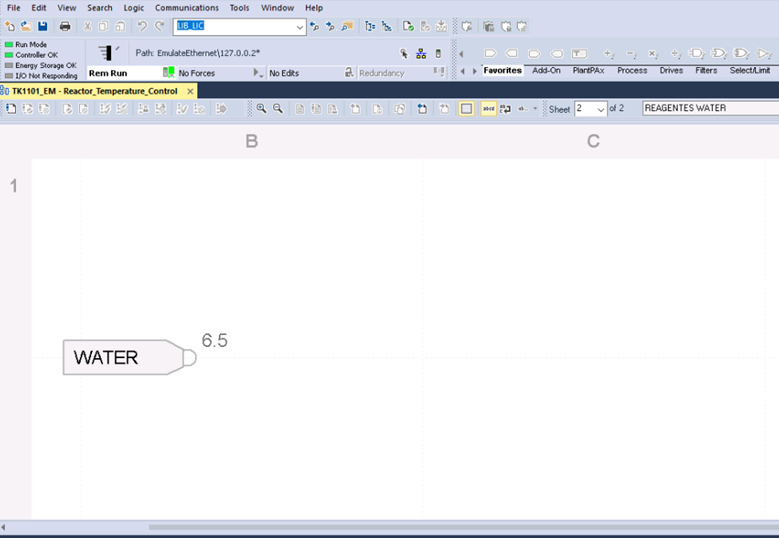
As mentioned in the previous step, it is important to be able to estimate the water flow rate, which would be 6.5 m³/h, corresponding to Reagent B, as previously explained.
Let us recall that this water stream contains traces of H₂SO₄ as a catalyst.
The reaction has propylene oxide and water as reactants in units of [m³/h], initially propylene oxide has 10 [m³/h] and water 6.5 [ m³/h].
The reaction takes place in a reactor of 1.1 [ m³] and with an activation energy of
temperature-model-in-reactors_Paso05
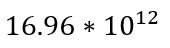
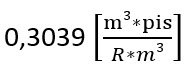
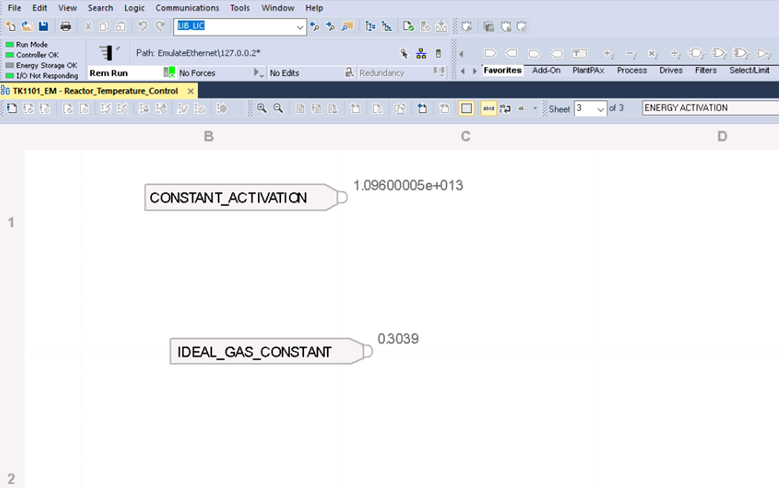
At this point we need the activation energy configuration, for this we will assign a single page in the configuration, there we will enter the different constants in their order.
temperature-model-in-reactors_Paso06
After the reaction starts, the formation of products such as propylene glycol uses the interaction between reactor volume V, activation energy, propylene oxide compositions A, and this mathematical model is followed.
The production of propylene glycol is given in the following units in
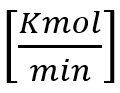

As shown below.
Part A
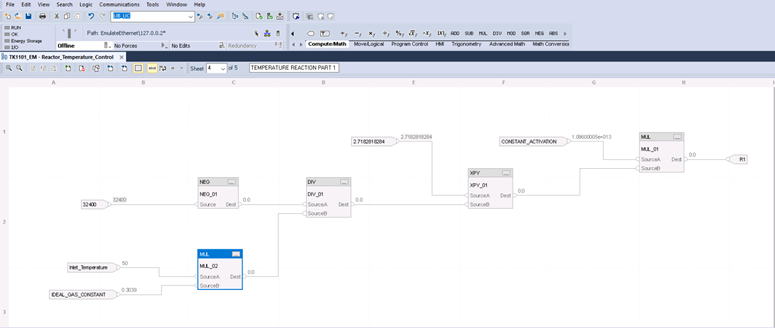
temperature-model-in-reactors_Paso07-1.png
Part B
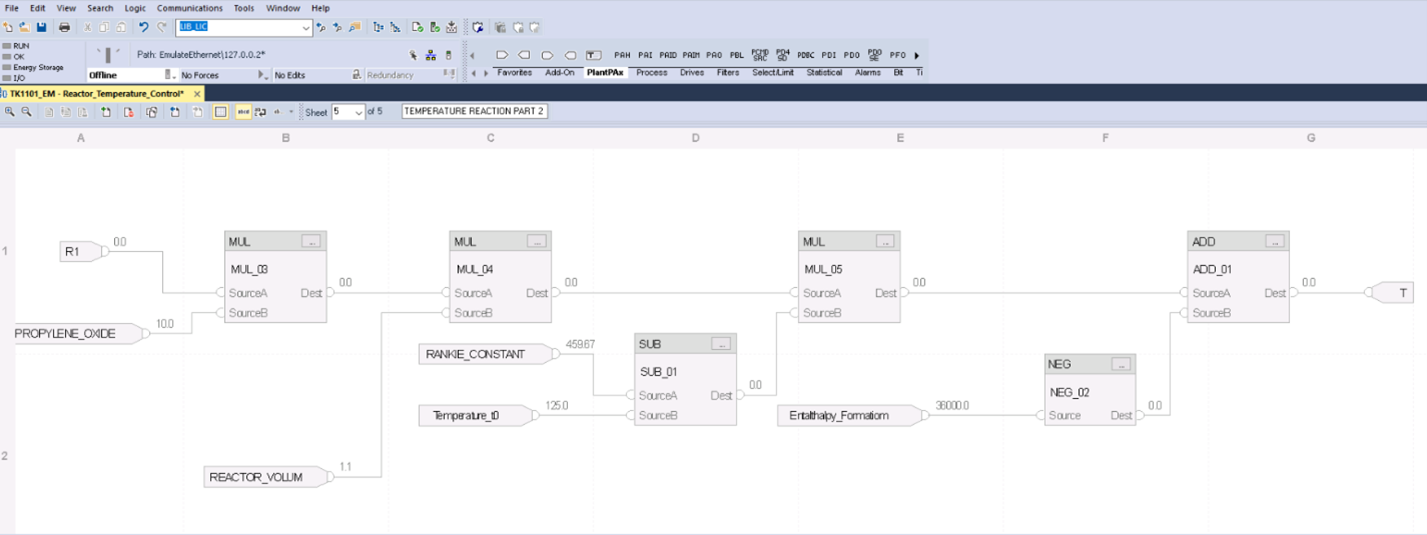
temperature-model-in-reactors_Paso07-2
After the reaction starts, the temperature inside the reactor uses the interaction between the initial reactor temperature, the formation energy, and the temperature constant to determine the temperature inside the reactor.
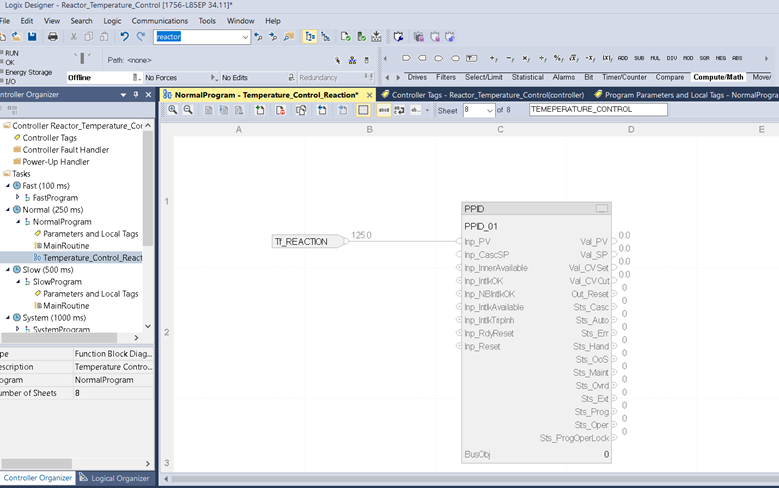
temperature-model-in-reactors_Paso08
Temperature Model in Reactors
Version 2.1 - August 2026
