Loading
Blog
Recent ActivityRecent Activity

From fragmented systems to orchestrated operations

How IT/OT orchestration enables autonomous material movement

Share This:

LinkedInLinkedIn
XX
FacebookFacebook
PrintPrint
EmailEmail
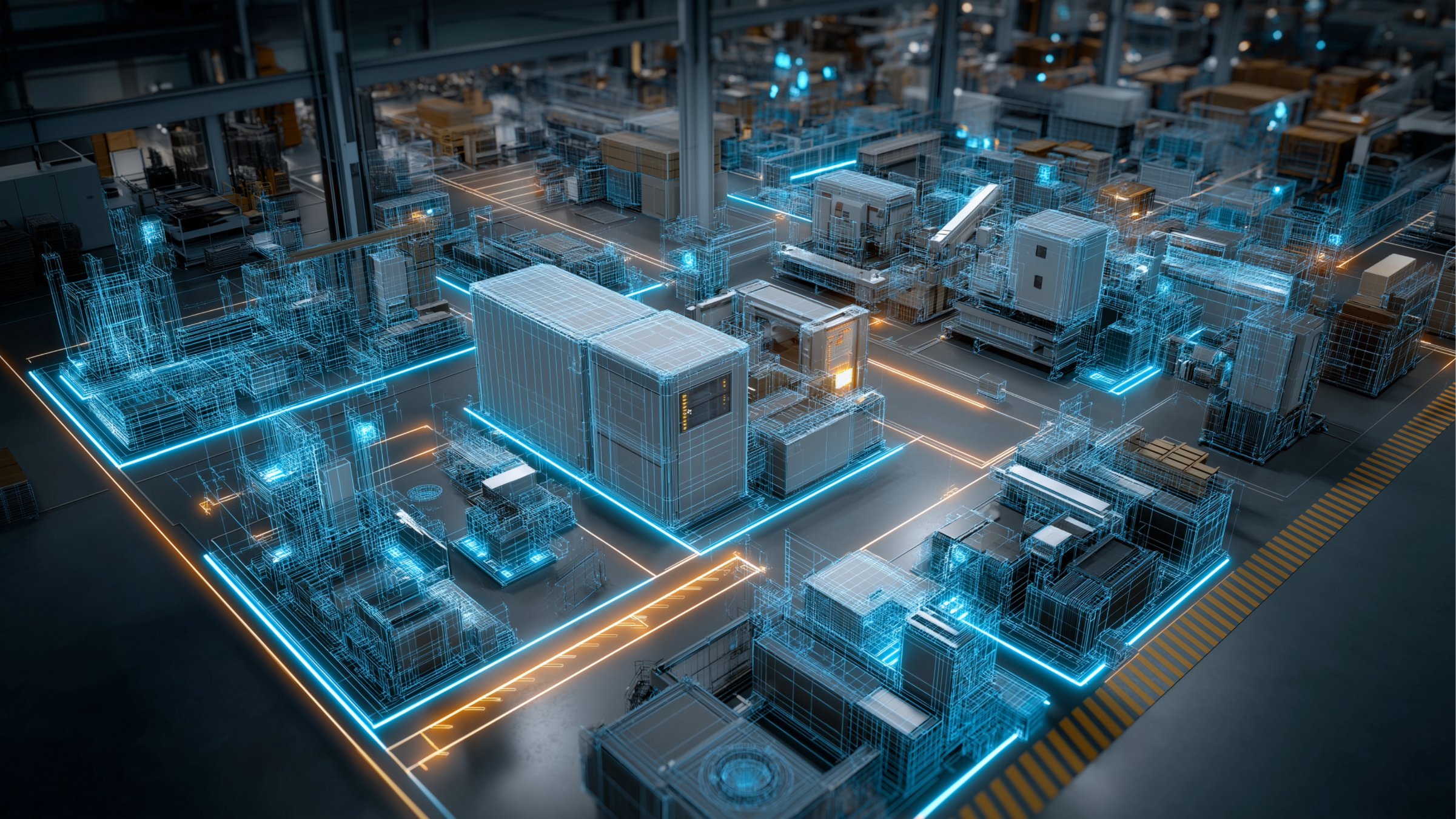
A smart factory with a blue digital overlay on top of it showing data and connectivity

Manufacturers are under increasing pressure to improve productivity, respond to changing demand, and do more with existing resources. As a result, many are investing in technologies such as autonomous mobile robots (AMRs), manufacturing execution systems (MES), and advanced analytics.

Yet for most manufacturers, adding more technology doesn't automatically translate into greater efficiency. The next stage of digital transformation is focused on enabling those systems to work together. As manufacturers move toward end-to-end autonomous operations, the ability to coordinate information, materials, and workflows across the enterprise is becoming a critical competitive advantage.

The coordination gap in modern manufacturing

Manufacturers have invested heavily in automation, but many facilities still operate with disconnected systems. Enterprise platforms manage production schedules and inventory, while operational technologies execute work on the plant floor. These IT and OT systems often function as islands of automation that create delays and struggle to respond to changing production needs.

In fact, while 86% of manufacturers say IT/OT integration is critical, only 23% have progressed beyond basic convergence. At the same time, only 30% of manufacturers can deliver real-time data to frontline workers, limiting visibility and slowing decision-making when conditions change.

“Survey respondents have more data than ever but only a fraction becomes usable intelligence...The real competitive divide isn’t data collection; it’s the ability to connect, contextualize, and act on data across systems.” 

11th annual State of Smart Manufacturing report, page 12
Production Logistics
Redefine what’s possible in your operations using end-to-end autonomous material movement that‘s centrally managed and driven by data.
Learn More

Why the gap persists

This challenge of siloed solutions is reinforced by underlying system complexity. Many organizations still rely on legacy OT systems (50%), as well as standardized control approaches or custom middleware integrations that can be costly, complex, and difficult to scale. As a result, even well-funded automation initiatives often remain isolated rather than delivering end-to-end operational impact.

As production environments become more dynamic, facilities are increasingly requiring real-time coordination across systems.

From automation to orchestration

As manufacturers connect IT and OT systems, many are discovering that integration alone does not create end-to-end autonomous operations. While automation executes individual tasks and integration enables systems to share data, it is orchestration that coordinates workflows and drives execution across those systems in real time. Orchestrated operations enable manufacturers to:

  • Trigger workflows in real-time based on demand
  • Coordinate activities across plant and enterprise systems
  • Reduce manual intervention in execution
  • Improve responsiveness to changing production conditions

Research suggests that manufacturers with connected operations can achieve up to a 20% increase in production output and productivity, while unlocking up to 15% additional capacity.

How FactoryTalk Orchestration software fills this gap

To enable this level of coordination, manufacturers need more than point-to-point integrations. They need a central orchestration layer that connects enterprise systems (such as MES, WMS, ERP) and scheduling platforms with plant-floor technologies like AMRs, fleet managers, PLCs, conveyors, robotics, and simulation tools.

FactoryTalk® Orchestration™ software was designed to fill this role. Acting as the central orchestration layer across IT and OT systems, it:

  • Translates information between systems
  • Coordinates workflows and execution
  • Optimizes performance using real-time operational data
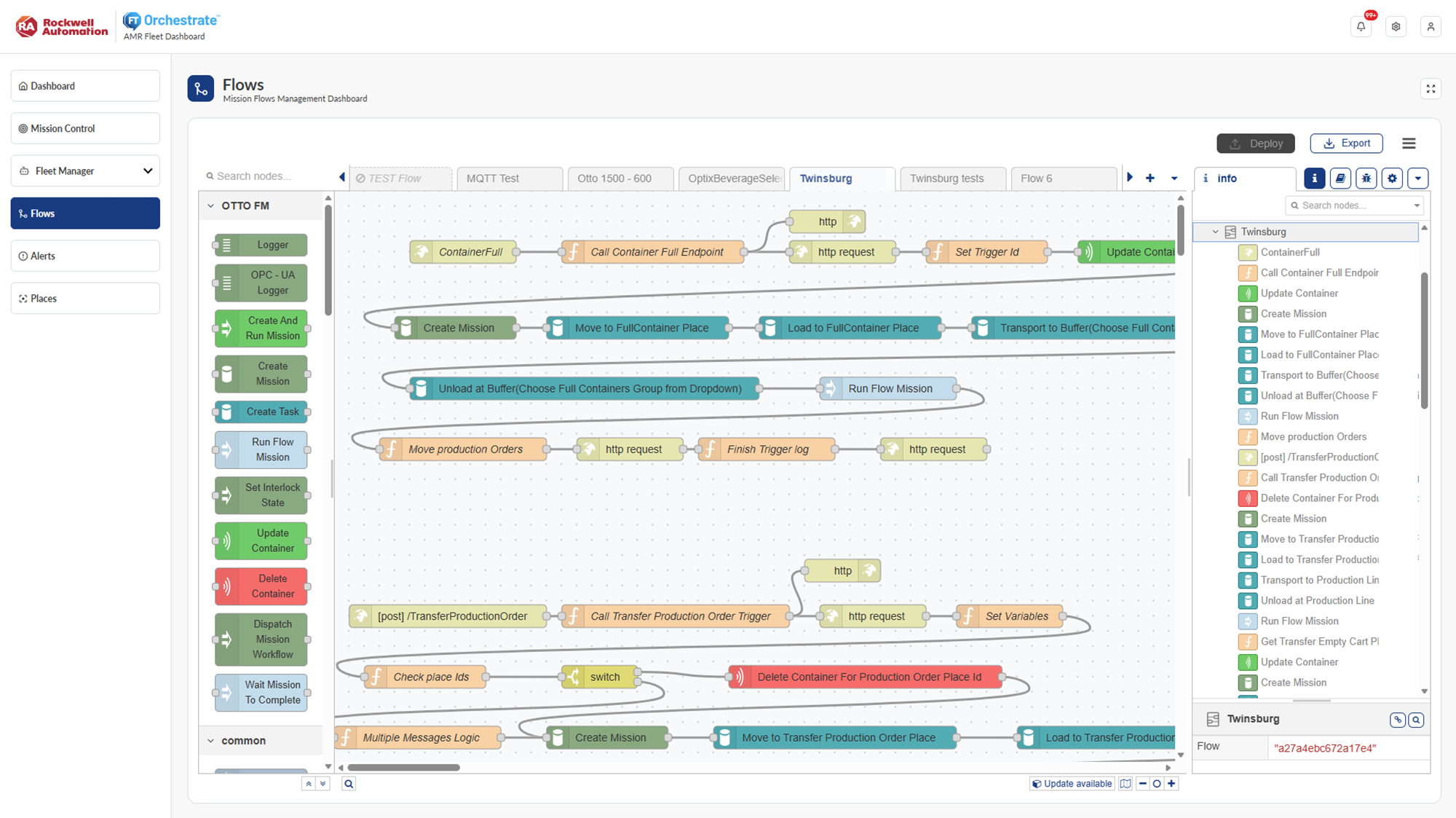
A FactoryTalk Orchestration software screen showing the flow builder chart.

How materials flow between IT/OT systems from start to finish using FactoryTalk Orchestration software.

How FactoryTalk Orchestration software improved space utilization by 70%

At the Rockwell Automation Twinsburg facility, an initial deployment combining integration and AMRs generated approximately $162,000 in annual labor savings. With the addition of FactoryTalk Orchestration software, the facility achieved a 20% increase in operational efficiency, reduced work-in-process inventory by 50%, and improved space utilization by 70%.

 OTTO® AMRs in action at the Rockwell Automation Twinsburg facility.

As manufacturers continue their digital transformation journeys, integration will remain a critical foundation. The greatest gains will come from organizations that move beyond connecting systems to orchestrating them.

Learn more about how FactoryTalk Orchestration software helped the Twinsburg facility coordinate workflows, connect IT and OT systems, and accelerate the path toward autonomous material movement in this webinar.

Published June 22, 2026

Topics: Optimize Production Empower People Accelerate Digital Transformation Advanced Motion & Robotics Life Sciences Automotive & Tire Emulate3D Digital Twin Motion Control

Ara Surenian
Ara Surenian
Production Logistics Business Manager, Rockwell Automation
Ara serves as the leader of the Production Logistics business unit at Rockwell Automation where he develops approaches to integrate advanced motion and robotics solutions to help customers automate and optimize end-to-end material movement for future-ready factories. Previously, he oversaw the company’s production planning and scheduling software portfolio. With four decades of experience in plant operations, lean manufacturing and digital transformation, Ara has consistently delivered significant enhancements across various manufacturing sectors.
Subscribe to Rockwell Automation

Receive the latest news, thought leadership and information directly to your inbox.

Subscribe now

You may also be interested in

Loading
Loading
Loading
Loading
  1. Chevron LeftChevron Left Rockwell Automation Home
  2. Chevron LeftChevron Left Com...
  3. Chevron LeftChevron Left News
  4. Chevron LeftChevron Left Blogs
  5. Chevron LeftChevron Left From fragmented systems to orchestrated operations
Please update your cookie preferences to continue.
This feature requires cookies to enhance your experience. Please update your preferences to allow for these cookies:
  • Social Media Cookies
  • Functional Cookies
  • Performance Cookies
  • Marketing Cookies
  • All Cookies
You can update your preferences at any time. For more information please see our {0} Privacy Policy
CloseClose