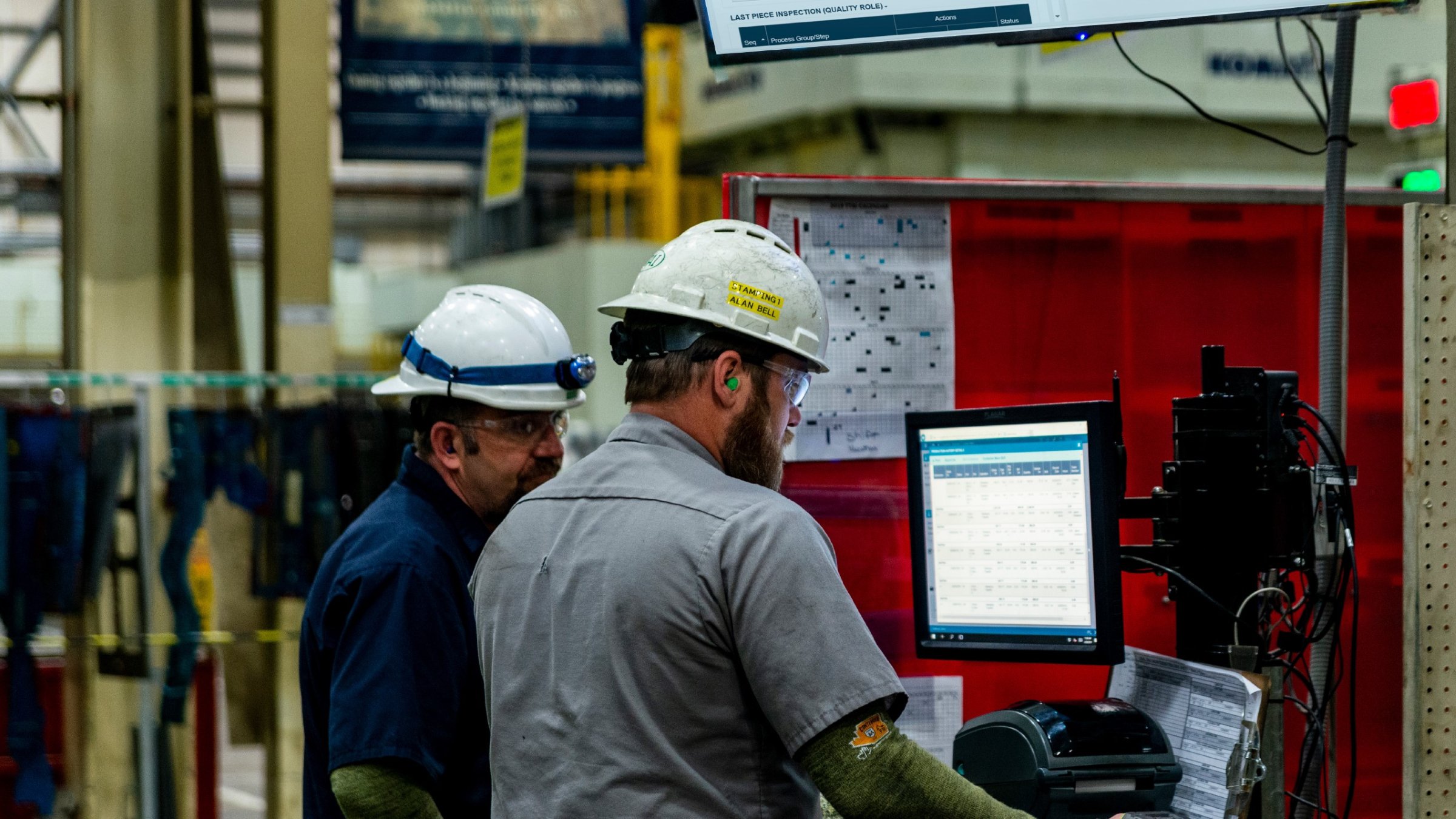
The manufacturing industry is facing operational and workforce challenges in the current environment. There is a skilled worker shortage, with existing workers retiring, causing a loss of knowledge, and new employees needing to be trained and onboarded quickly on increasingly complex products.
Digital work instructions can address many of these issues and provide many benefits to manufacturing operations: lower training costs and better employee retention, reduced downtime, higher product quality, reduced scrap, and higher operational efficiency. The ability to transform static documents into visually engaging, dynamic, interactive work instructions can engage workers, improve operational efficiency, and enhance safety.
Plex MES delivers digital work instructions with real-time, step-by-step guidance and interactive elements to enhance operational efficiency and product quality.
Guided Work Instructions
When best practices are established and procedures are standardized for every step of the production process, setup time is reduced. Embedded quality checksheets and real-time quality alerts help streamline quality steps and detect problems early. Placing comprehensive, step-by-step guidance directly into the hands of operators promotes both production capacity and quality. The ability to capture details of quality issues and record start and completion times for each task helps operators document activities and verify when/who/how long it took to finish each task. With increased visibility into daily operations, supervisors can track activity and eliminate bottlenecks.
Interactive Work Instructions
Authoring interactive, model-based work instructions, by leveraging 3D and 2D multimedia integrated to the PLM system, helps democratize design and engineering knowledge across the entire organization and simplify change management. When frontline operators can access an interactive interface, they better understand the products and processes they are working on, which drives engagement and reduces the time and expense of training. Delicate quality processes are explained in detail to ensure they are done right, improving quality and reducing scrap.
Automated Work Instructions
Automated Work Instructions elevate the manufacturing process by enabling engineering teams to define precise specifications for tools, tool recipes, and parts. With real‑time recipe transmission to smart tools, operators receive consistent, automated instructions—eliminating manual hand‐offs and ensuring that executed parameters match engineering intent. By integrating with machine state, job context, or material flow, WI are delivered automatically and accurately at the right moment. The result is faster setup, fewer errors, and improved overall line performance. Built-in compliance features ensure parts are within specification before work begins. Engineering and quality teams have real-time communication and feedback loops to identify and correct issues quickly. Automated WI ensure data is captured continuously, supporting traceability and continuous improvement initiatives across the plant.
Advanced Work Instructions
Advanced Work Instructions provide operators container‑level instructions with real-time Bill of Materials (BOM) visibility at each step of the production. Operators can view the exact container BOM at each step of production and are required to verify components by serial, lot, or part numbers before proceeding. This helps ensure the correct materials are used at every step of production. Similarly, production supervisors can monitor progress at the same container level and receive alerts when mismatches occur, enabling rapid intervention and reducing rework or downtime. With this level of precision and control, manufacturers can improve compliance, quality, and operational consistency simultaneously.
“We now have embedded images as well as full tasks for work instructions. Previously it was just the wall of text, those barely getting reviewed…with Guided Work Instructions, I can rely on someone who’s been here five years or someone who’s been here a month. I should not be seeing a discrepancy in terms of what they’re doing, how they’re doing it and the quality of things that they’re producing.”
Christopher Giles, Sr. IT ERP Analyst Recaro Automotive
Increased Operator Efficiency
- Role-based instructions provided in a granular and task-based system help operators break down complex production flows into smaller guided steps that are straightforward and easier to follow. When operators feel confident in a job well done, this increases employee satisfaction and retention.
- Sharing model-based and interactive digital work instructions with frontline operators makes design data more accessible and helps to streamline change.
Single Source of Truth
- Maintaining and updating paperbased documentation is difficult. Saving and making instructions available in Plex ensures operators always have the most current version of work instructions.
- Operators can access clear and concise instructions when they need them, with a direct link to the document control system that has all of the required information and instant access to multimedia content within Plex.
Better Quality
- Complex production flows are broken down into smaller guided steps reducing the chances of error, ensuring consistent operation, reducing scrap, and enhancing the quality of product.
- Operators are provided real-time quality alerts, so they can detect and fix problems before moving on. Errors from inadequate or hard-to-follow instructions are reduced, even for complex processes.
Discover how Guided Work Instructions in Plex can streamline your operations. Watch the interactive demo here.
Related Content